


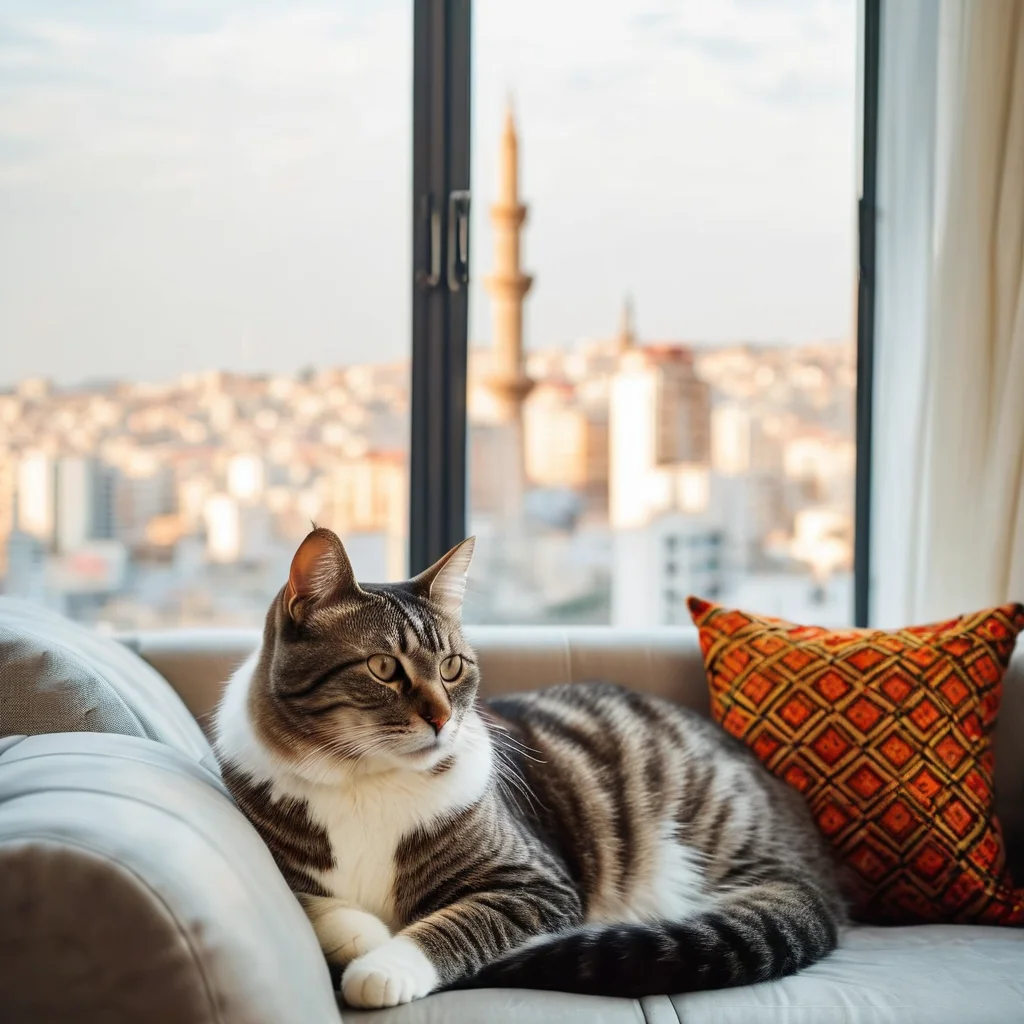

Ankara is the capital of Türkiye, with a population of 5+ million and a growing cat culture. While it isn't as dense as Istanbul, cat ownership in Ankara has spread quickly over the last 10 years. In large districts such as Çankaya, Yenimahalle, Etimesgut and Keçiören, apartment life with a cat is an established reality. In this post we take a detailed look at what owning a cat in Ankara involves: how life differs by neighborhood, the vet network, the cost breakdown and the ways to adopt.
1. Cat Culture in Ankara
Ankara's cat culture isn't as visible as Istanbul's, but it has a strong support network. The population, made up largely of university students and civil servants, is generally animal-friendly. In recent years, municipalities have been active on animal welfare, and shelter construction and spay/neuter campaigns for stray animals are common. In the cold winter months, "cat houses" for street cats are a common sight in neighborhoods.
2. Apartment Living: Across Ankara
- Usually not a problem: Building managers and neighbors tend to be flexible about cats.
- Apartments are usually large: Two bedrooms plus a living room is average, so there is room for a cat.
- Balcony use: Ankara apartments usually have wide balconies. Netting and safety measures are a must.
- Lease agreements: Pet bans are generally rare.
- Gated complexes: Modern complexes may have "pet bylaws," so check the building rules.
3. Life by Neighborhood: Çankaya
Ankara's largest and most developed district:
- Central Çankaya (Kavaklıdere, Kızılay): A dense urban area with plenty of vet clinics and lots of cat cafés and pet shops.
- Bahçelievler - Beşevler: A university area with a cat-friendly culture and mid-range prices.
- Çayyolu - Ümitköy: Modern complexes and houses with gardens. An ideal setting for a cat.
- Or-An - Yıldız: Quiet, with spacious apartments. Vet access is moderate.
4. Life by Neighborhood: Other Areas
Yenimahalle - Batıkent - Demetevler: Spacious apartments in areas where families live. A good vet network.
Keçiören: A traditional neighborhood layout with a high density of street cats. Vet access is moderate.
Etimesgut - Eryaman: Modern complexes, close to the airport. A good option for families. The vet network is developing.
Mamak - Sincan: More affordable, with slightly lower vet access.
5. The Vet Network
Ankara has a large number of vet clinics:
Clinic density: the busiest areas and 24-hour emergency care cluster around the animal hospitals; which one is open on a given night varies.
On the DoldurKabı platform, you can see the clinics in your neighborhood on a map.
6. Monthly Cost Items (Ankara)
- Food
- Litter
- Vet visits and vaccines
- Medication and parasite protection
- Toys and equipment
The fee depends on the city, whether it's a clinic or a hospital, after-hours visits, imaging or hospitalization, and your pet's weight and age. The provincial Chamber of Veterinarians (Veteriner Hekimleri Odası) publishes an annual minimum fee schedule; the schedule is a floor, not the final bill. Ask the clinic for a written or verbal estimate.
7. Climate: What Ankara Means for a Cat
Ankara has a continental climate:
- Summer (June-August): Hot and dry. Usually 30-35°C. Use air conditioning or a fan indoors and provide plenty of water.
- Winter (December-February): Very cold, with snow. It can drop to -10°C. Keep the indoors heated, the balcony closed, and provide blankets and a warm bed.
- Spring/Fall: Moderate temperatures, the most comfortable time for a cat.
- Low humidity: Street cat health is good, and parasite pressure is lower than in Istanbul.
8. Ways to Adopt
- The DoldurKabı app: Adoption listings in Ankara.
- Ankara Metropolitan Municipality: Sokakhayvanlarini.gov.tr, temporary shelter and adoption.
- District municipalities: The Çankaya, Yenimahalle and Etimesgut shelters.
- Associations: Patiyi Tut Ankara, Cankoruyucular, Hayvanat Sevdaları Derneği.
- University shelters: Care units for street cats on the ODTÜ, Hacettepe and Ankara University campuses.
- Adopting from the street: Common. A vet check, vaccines and spaying/neutering are a must.
9. Ankara-Specific Tips
- Prepare before winter: A thick bed, a heating mat and sealing under the doors. Ankara winters are tough on cats.
- Summer dryness: Hydration is critical, so use a water fountain and wet food.
- If you live near a university: Students come and go, so have a plan ready for moving your cat and for temporary care.
- Civil servant life: Long working hours; for a cat that's left alone, a second cat could be worth considering.
- Read the complex's agreement: Bylaws in modern complexes are detailed, so check them.
10. 5 Practical Tips
- Get to know the vet in your neighborhood: traffic in Ankara is heavy in the afternoon, so a nearby vet is practical.
- Microchip plus DoldurKabı digital registration: quick identification in Ankara if your cat gets lost.
- Prepare your home for winter: a warm bed, a dry floor and plenty of water.
- Parasite protection before summer: start in early May.
- Visit the municipal shelter: get to know the animals before adopting, and they get to know you, too.
Owning a cat in Ankara, in a calm living environment, in spacious apartments and within the capital's culture, is an enjoyable and sustainable experience. In the DoldurKabı app, you can find adoption listings, vet clinics and pet-friendly places in your Ankara neighborhood.









