


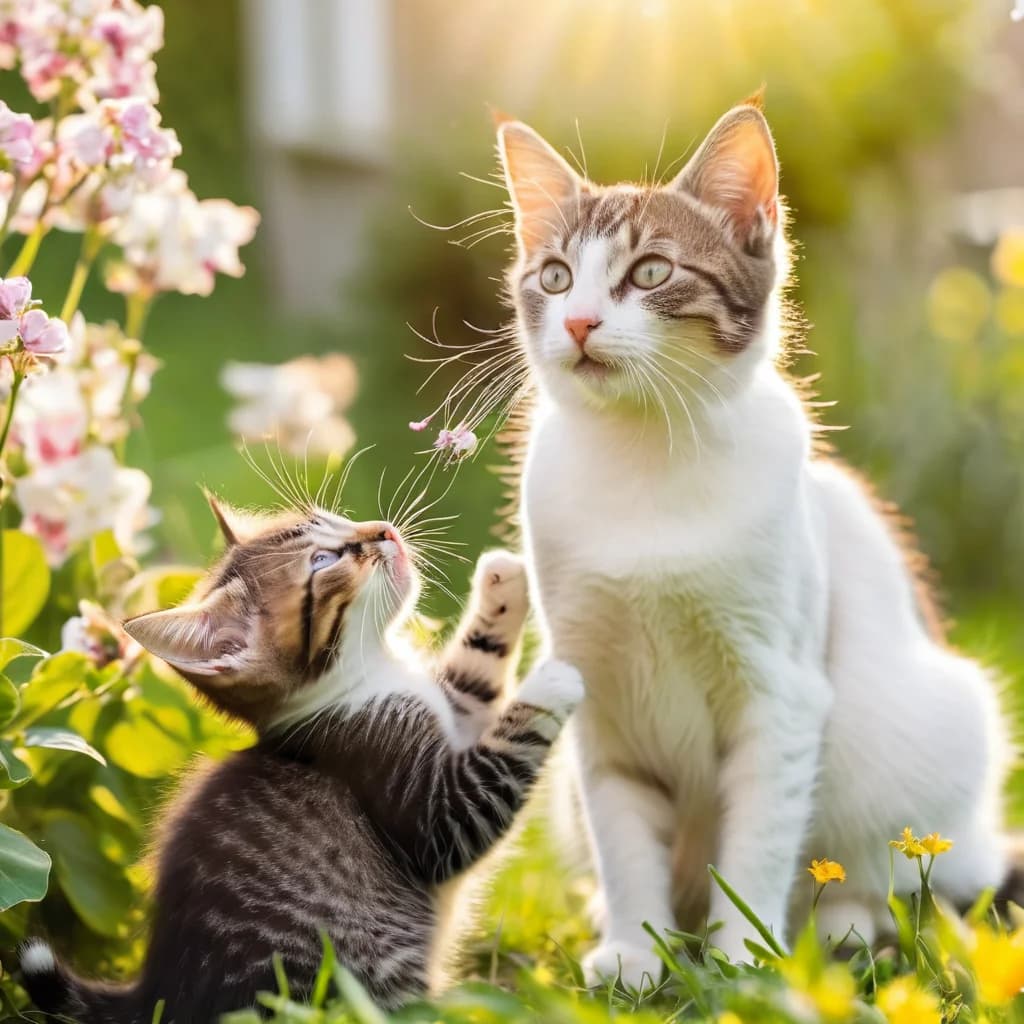

Spring is breeding season for pets: there's a boom of kittens and puppies on the street, and shelters hit peak capacity. By nature, cats and dogs breed in spring and summer. Over 90% of pregnant street cats are not spayed. Encouraging spaying/neutering, a guide to adopting young pets, care in the first weeks, feeding the mother cat: in this article, we take a detailed look at the spring baby season.
1. The Spring Breeding Cycle
- Cats: peak from March to September, limited in winter.
- Dogs: twice a year (spring and fall).
- A street cat gives birth 2-4 times a year.
- Each litter has 3-6 kittens.
- In theory, 1 cat can have 420,000 descendants in 7 years.
- This is what drives the boom in stray animals.
- Municipalities and nonprofits can't keep up.
2. Why Spaying and Neutering Matter
- It's the only solution for the stray animal population.
- Municipalities run free spay/neuter programs (in certain months of the year).
- Nonprofits offer free and reduced-cost options.
- Private vet clinics
- Dogs
- 3 months+ is the ideal age.
- Spaying before the first heat prevents cancer.
- For street cats you feed, trap-neuter-return (TNR).
The price depends on the city, whether it's a clinic or a hospital, after-hours timing, imaging or hospitalization, and the animal's weight and age. The provincial Chamber of Veterinarians (Veteriner Hekimleri Odası) publishes a yearly minimum fee schedule; the schedule is a floor, not the final bill. Ask the clinic for a written or verbal estimate.
3. Pregnancy in Street Cats
- Signs: the nipples become more visible (at 3 weeks).
- The belly grows at 4-6 weeks.
- Birth comes at 63-65 days.
- A street cat looks for a safe place to give birth (an apartment basement, a garage).
- How you can help: a dry, soft box, with food and water nearby.
- Keep your distance, since the mother may be stressed.
- Stay away for 2 weeks after the birth.
4. The First 4 Weeks
- Eyes stay closed for 7-10 days.
- Ears open at 14-21 days.
- Mother's milk is the only food.
- Surroundings of 30-35°C.
- If the mother's milk isn't enough, supplement with a bottle (KMR).
- If the mother has died, the owner takes over (feed every 2-3 hours).
- Introduce food slowly after 4 weeks.
5. Weeks 4-8
- Teeth come in at 3-4 weeks.
- Introduce soft puppy or kitten food.
- Potty training begins.
- Mother's milk decreases.
- 8 weeks is the earliest age to separate them from the mother.
- First vaccine at 6-8 weeks.
- Deworming from 2 weeks on.
6. Adopting a Young Pet
- 8-12 weeks and up is the ideal age.
- The first vaccine and deworming should already be done.
- Separation from the mother is stressful.
- The socialization window is 3-12 weeks (critical).
- Getting along with other pets is easier at this age.
- On the first day, a quiet room and familiar items.
- After 2 months with the owner, vaccines should be complete and a microchip in place.
7. Caring for the Mother Cat
- She needs a lot of calories while nursing.
- The quality of her milk depends on her diet.
- 3-4 times her normal food.
- Kitten food is ideal for the mother.
- Plenty of water, rich in calcium and protein.
- Once the kittens have homes, spay the mother as soon as possible.
- 6 weeks after weaning is the ideal time to spay.
8. Helping Babies on the Street
- What do you do when you find kittens or puppies on the street with no mother?
- Wait 2-3 hours (the mother usually comes back).
- If the mother doesn't return, call a nonprofit or take them in yourself.
- A vet visit on the first day (health check and parasites).
- Bottle feeding (KMR).
- Getting them accepted by another nursing mother is hard.
- Connect with a nonprofit or shelter (for experienced support).
- A rescue on your own is hard, so get help.
9. The Ethics of Adopting Young Pets
- Buying from pet shops: BANNED, and not just as a moral matter.
- Shelters and nonprofits are the source.
- A baby on the street, then nonprofit registration, then a legitimate adoption.
- Ethical paid breeders are few in Türkiye.
- First vet check, vaccines and microchip.
- Adopting an adult pet means less stress and known behavior.
- A young pet isn't just "cute"; it's a responsibility.
10. Keeping the Whole Season in Check
- Let your neighborhood know about spay/neuter programs.
- Feed street animals responsibly (a dry bowl and water).
- When you see babies, look for the mother.
- In an emergency, contact a vet and a nonprofit.
- The whole family decides before adopting.
- A pet's life is a long responsibility (15+ years).
- Loving spring babies isn't a solution to uncontrolled growth in the pet population.
The spring baby season comes down to one formula: spaying/neutering is a must, plus nonprofit support, ethical adoption and care for mother and babies. It's a balance between love for young pets and responsibility. The solution to the stray animal boom is spaying and neutering, through cooperation between nonprofits, municipalities and owners. The day you adopt a young pet, you change a life. The DoldurKabı app has adoption listings, a nonprofit map and spay/neuter programs.









