


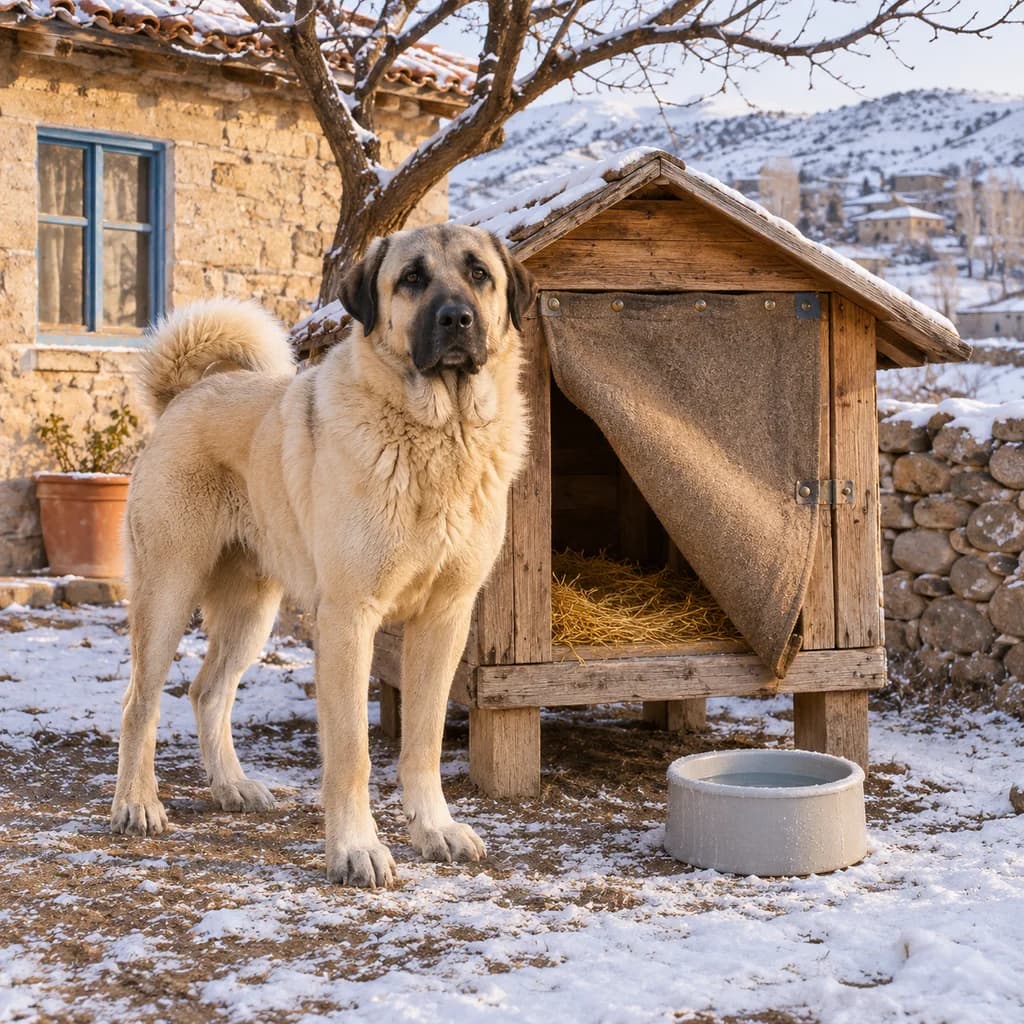

In Türkiye, many dogs live in the yards of detached houses, the courtyards of village homes or the gardens of housing complexes. Some of these dogs are cold-hardy, thick-coated shepherd dogs. Others are short-haired, medium-sized dogs that were moved out to the yard later on. When winter comes, their needs aren't the same, but they all need protection from wind, wetness and frozen water.
This article offers a practical routine to help an outdoor dog get through winter more comfortably, from the doghouse to water, and from food to daily checks. It also asks an honest question: can your dog really stay outside?
Can every dog spend the winter in the yard?
Double-coated, dense-furred shepherd dogs like the Kangal Shepherd Dog and the Akbash are breeds adapted to the cold. But their toughness has limits. A wet coat, harsh wind and long periods without moving are hard on these dogs, too.
Spending winter nights outside isn't suitable for these dogs: short-haired breeds, small and medium-sized dogs, puppies, seniors, thin or sick dogs, dogs with joint problems and dogs that lived indoors all summer and were moved to the yard in the fall. For these dogs, you need to find at least an indoor space, a garage, an entryway or a heated room for the nights.
Doghouse: size and location
A bigger doghouse isn't always better. The dog's body heat warms the inside of the doghouse; a doghouse that is too big can't hold that heat. Your dog should be able to stand up, turn around and lie down comfortably inside, but it doesn't need more than that.
- Raise it off the ground. Don't put the doghouse directly on soil or concrete. Raising it about a hand's span with wooden pallets or bricks cuts off the cold and moisture coming from the ground.
- Door direction. Turn the door away from the prevailing wind. If possible, place the doghouse in the shelter of a wall or building.
- Door flap. Hang a thick, flexible tarp or strip curtain over the doorway. Your dog can go in and out easily, and the wind doesn't blow inside.
- Insulation. If the doghouse walls are thin, you can add insulation panels to the outside. Make sure the insulation material isn't left exposed anywhere your dog could chew it.
- Roof. Make sure the roof doesn't leak and can hold the weight of snow.
What should you put inside?
Blankets and towels laid inside the doghouse don't dry quickly once they get wet, and they can freeze on cold nights. Dry, clean straw holds less moisture and lets your dog burrow in and warm up. Check the straw regularly and replace it when it gets wet or dirty. If you want to use a blanket, check every day that it's dry.
Putting an electric heater in the doghouse may be tempting, but it carries the risk of cable chewing, fire and burns. Never put a heater that isn't made for outdoor use in the doghouse.
Water: winter's hidden problem
In winter, the water bowl in the yard freezes overnight and the dog goes without water until morning. Animals still need water in the cold; that need doesn't go down in dry air or while it snows.
- Check the water several times a day, and if it's starting to freeze, refresh it with lukewarm water.
- Use thick plastic or ceramic bowls instead of metal ones. In very cold weather, a tongue can stick to a metal bowl.
- Place the bowl in a corner of the doghouse area that's sheltered from the wind and gets sun.
- Don't add salt, sugar or anything else to the water to keep it from freezing.
Food: a dog living outside burns more energy
Keeping the body warm in the cold takes energy. An outdoor dog's energy needs in winter may be different from its needs in summer. Instead of greatly increasing portions on your own, track your dog's weight and body condition regularly, and if a change is needed, decide together with your veterinarian. Store food in a closed container; food left out gets wet, freezes and also draws other animals into the yard.
Chains, tethering and room to move
A tethered dog can't escape the cold. If the chain is short, it may not reach the doghouse; if the chain gets tangled, the dog may be stuck on wet, cold ground for hours. If possible, let your dog roam free in a fenced area instead of tying it up. If you have to keep it tethered, set the tie-out point close to the doghouse and check every day that the chain isn't tangled. A dog that can move around can warm up by working its muscles.
Rain, mud and the yard surface
Snow isn't the only thing that makes the yard tough in winter. Days of rain turn the soil into mud, and the area in front of the doghouse becomes a puddle. If your dog keeps walking on wet ground, its coat never dries and irritation can start between its toes.
- Put gravel, a wooden grate or a concrete step in front of the doghouse. That way your dog doesn't carry mud inside when it goes in.
- Fill in the holes where water collects in the yard, or dig a small channel for drainage.
- Add an overhang on top of or beside the doghouse. That gives your dog a sheltered spot even when it's standing outside in the rain.
- After heavy rain, dry your dog off with a towel; even in double coats, the wetness can reach the skin.
If there are substances like fertilizer, pesticides or antifreeze in the yard, store them in a closed shed. In courtyards where cars are serviced in winter, antifreeze dripping on the ground is a serious danger to dogs because of its sweet taste.
Daily checklist
- Cracks or wounds on the paws, or ice balls between the toes.
- Coldness, color changes or tenderness at the ear tips and tail.
- Shivering, not wanting to leave the doghouse or stiffness when walking.
- Changes in appetite and water intake.
- Whether the inside of the doghouse is dry.
If you see any of these signs, take your dog somewhere warm and consult your veterinarian. You can find clinics near you on the vet list.
The indoor option on cold nights
When it gets very cold, with harsh wind or heavy snow, it's a good idea to bring even a hardy dog inside for the night. A garage, coal shed, storage room or entryway can be more sheltered than the doghouse because it blocks the wind, even if it isn't heated. In these spaces, make sure substances like paint, thinner, rat poison and medications are out of your dog's reach. If your dog isn't used to being indoors, it may be restless the first few nights; putting out its bed, water and a familiar blanket makes it easier to adjust.
Frequently Asked Questions
Is a doghouse enough for my Kangal?
A dry doghouse that's raised off the ground and sheltered from the wind is a good start for most shepherd dogs. Still, if your dog is old or sick, or the cold is very harsh, consider bringing it into a sheltered indoor space.
Should I put a blanket or straw in the doghouse?
Dry straw holds less moisture, so it's the more practical choice in winter. If you use a blanket, check every day that it's dry and replace it right away when it gets wet.
My dog won't go into the doghouse. Why could that be?
The doghouse may be too big, too small, facing the wind or damp inside. Some dogs also won't go in simply because the doghouse is unfamiliar. Try moving it and putting something with a familiar scent inside. If your dog is shivering and won't go into the doghouse at all, it's better to bring it inside.
Should my outdoor dog wear a coat in winter?
Most thick-coated shepherd dogs don't need a coat, and a coat may even disrupt the natural insulation of their fur. If a short-haired dog lives in the yard, though, the real solution isn't a coat but a sheltered indoor space at night. If you use a coat, take it off when it gets wet; a wet coat chills your dog instead of warming it. Check a coat worn outdoors every day and look over any areas where it rubs.









