


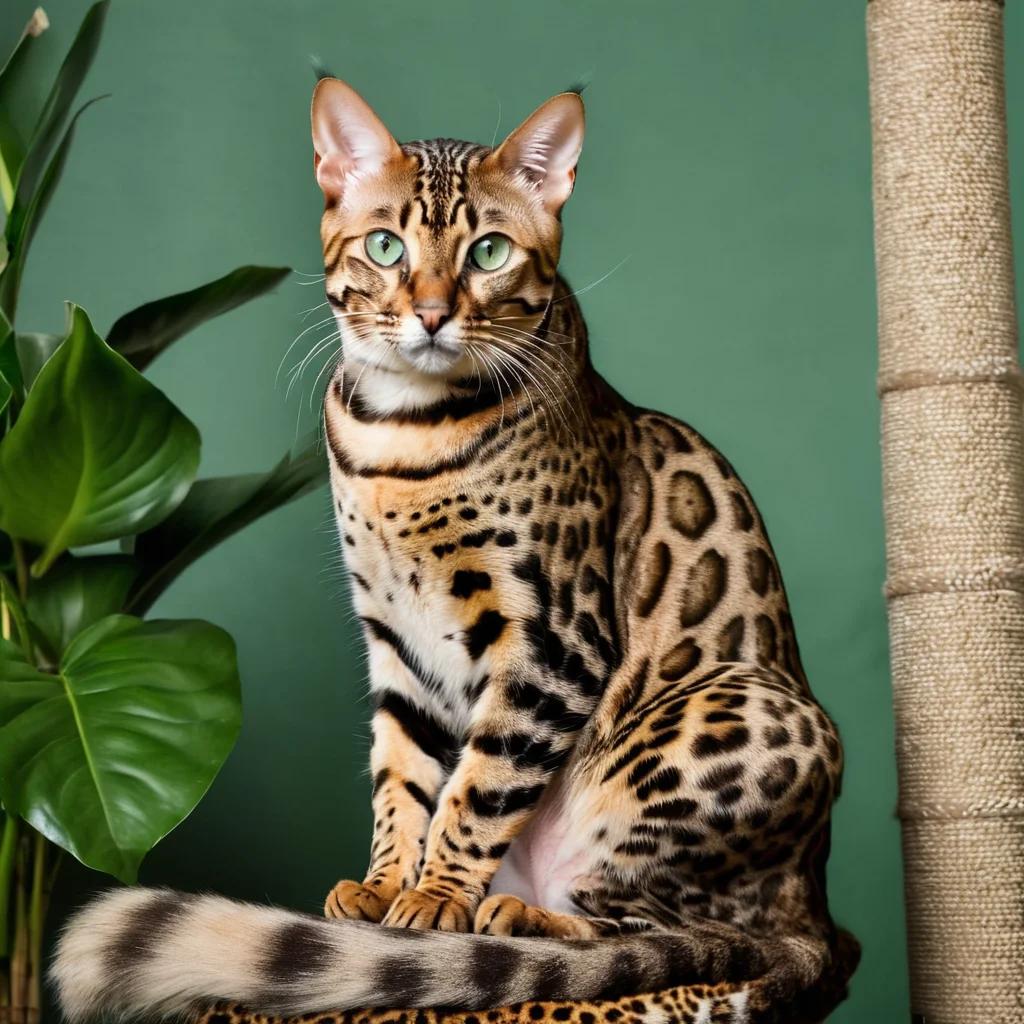

The Bengal cat is a breed developed in the US in the 1970s as a hybrid of the Asian Leopard Cat (ALC) and the domestic cat. With its leopard pattern, athletic body, exceptional intelligence and high energy, it is the very symbol of a cat that "looks wild but is domestic." It is ideal for active families and experienced cat owners. But its high energy, intelligence and tendency toward rough play lead to destructive behavior when it doesn't get enough stimulation. HCM (heart), PRA (eyes) and other inherited diseases are genetic risks. In this article, we look at the details of Bengal cat care.
1. Bengal Personality
- Very smart: Can be trained "like a dog."
- High energy: 1-2 hours of active play a day.
- Athletic and acrobatic: Can jump 2 meters.
- Loves water: Enjoys running water and even baths.
- Social: Good with family and other animals (if introduced as a kitten).
- Talkative: Trills, chirps and meows.
- Independent: Not a "lap cat."
- Hunting instinct: A danger to small birds and rodents.
2. Physical Traits
- Weight: Males 5-7 kg, females 3.5-5 kg.
- Coat: Short and glossy, with a "glitter" quality (shimmering fur).
- Pattern: Spotted, marbled.
- Color: Brown, snow, silver.
- Lifespan: 12-16 years.
3. Managing Energy (Critical)
A Bengal without enough stimulation gets destructive:
- 2-3 play sessions a day (30-45 minutes each).
- Interactive toys: feather wands, bird simulators, lasers.
- Puzzle feeders and hiding food.
- A tall scratching post and cat tree (180+ cm).
- Cat shelves for vertical space.
- A screened window for bird watching.
- A second Bengal or another active cat as a companion.
- Even walks on a leash and harness are possible.
4. Coat Care
- Brushing once a week is enough.
- The "glitter" coat is glossy and low maintenance.
- Since Bengals love water, baths aren't a problem: every 1-2 months.
5. Breed-Specific Health
- HCM (heart): Yearly echocardiogram screening from age 2.
- PRA-b (Progressive Retinal Atrophy): A Bengal-specific mutation; genetic testing.
- PKD: Less common.
- Sensitivity to anesthesia: In some individuals.
- Urinary crystals (FLUTD).
- Food allergies.
6. Nutrition
- Kittens: kitten food until 12 months.
- Adults: 60-90 g a day of high-protein dry and wet food.
- High protein is critical for Bengals (a wild diet from their ancestors).
- They may have sensitive stomachs, so change food gradually.
- Plenty of water (to prevent FLUTD).
7. Training
- Positive reinforcement: Bengals learn fast thanks to their high intelligence.
- "Sit," "come" and "bed" commands.
- Clicker training works well.
- Nail trimming and tooth brushing from kittenhood.
- Leash and harness training for walks is possible.
8. Socialization
- Interaction with people and animals from kittenhood.
- Gets along with other cats and dogs (if introduced as a kitten).
- Small animals (birds, hamsters) are at risk because of the hunting instinct.
- Get them used to strangers and guests from kittenhood.
9. Things to Consider Before Adopting (Critical)
- Monthly costs: 2,000-3,500 Turkish lira (premium food and energy management).
- Ethical breeder: F5+ generation (reduced wild DNA), parents tested for HCM and PRA.
- F1-F4 kittens: Too much wild DNA, legal issues and very difficult care. It's unethical, so don't get one.
- A lifestyle that can meet their high energy: An active family and enough playtime.
- A spacious home with vertical space.
- 12-16 years of responsibility.
- In Türkiye, F1-F4 is not legal; F5+ is the TICA/CFA standard.
10. Lifespan and Costs
- Lifespan: 12-16 years.
- Total lifetime cost: 300,000-600,000 Turkish lira.
The Bengal cat is athletic, smart and lovable, but it needs a lot of care and energy management. It is an exceptional companion for active families and experienced cat owners. An ethical F5+ breeder is a must. In the DoldurKabı app, you'll find Bengal adoption listings and vet clinics, all on a map.









