


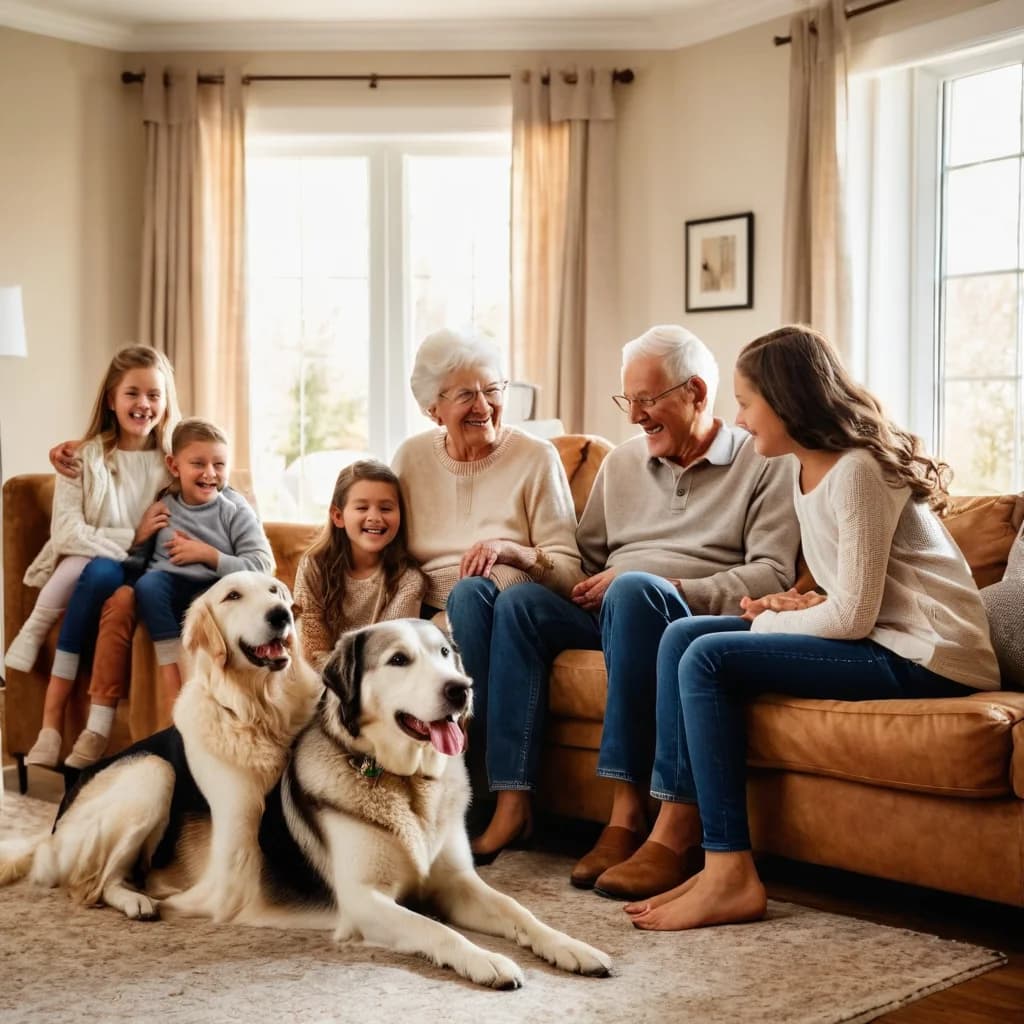

Grandparents, parents and kids under one roof with a pet: everyone benefits. Seniors get social activity, kids learn, and responsibility is shared. It takes managing your pet's stress, and everyone interacts with the pet differently. In a multigenerational home, the love for a pet is shared. In this post, we take a detailed look at multigenerational families and pets.
1. Benefits of a Multigenerational Home
- Several family members share pet care.
- Seniors are not alone: the pet is a social companion.
- Kids grow up with a pet and learn empathy.
- Parents get balanced help with pet care.
- More love for the pet.
- Shared costs.
- Backup caregivers for vacations and work trips.
- A family bond built around the pet.
2. Choosing a Pet
- A pet suited to every age in the family.
- A calm, social temperament.
- Medium size (easy for seniors to handle, not scary for kids).
- An adult pet (puppies and kittens are very active).
- Get to know their temperament before you decide.
- Adoption with support from a nonprofit.
- Research breed traits.
- A shared decision based on everyone's opinions.
3. Sharing Responsibility
- Every family member has a role.
- Kids: Age-appropriate tasks (water, food, play).
- Teens: Walks and cleaning.
- Parents: Vet visits and finances.
- Grandparents: Love and supervision.
- A written chore chart helps.
- Rotate weekly.
- The pet does not belong to one person; it belongs to the family.
4. Seniors and Pets
- Benefits backed by science.
- Less loneliness.
- Physical activity (walks).
- Mental stimulation.
- Fewer signs of depression.
- Lower blood pressure.
- More social interaction.
- Love and responsibility for a pet.
- A calm pet is easier for seniors.
5. Kids and Pets
- Developing empathy and responsibility.
- Social skills.
- Less anxiety.
- Learning respect for animals early.
- Lower allergy risk (early exposure).
- A stronger immune system.
- A love of pets passed down through generations.
- Family photos and memories.
6. Kids and Pet Safety
- Teach kids to read and respect a pet.
- Do not disturb a pet while it sleeps or eats.
- Constant adult supervision.
- Learn to recognize signs of stress in a pet.
- Pulling tails and ears is FORBIDDEN.
- Age-appropriate interaction.
- Kids give the pet love and take on responsibility.
- Preventing bites.
7. Managing Your Pet's Stress
- A calm space for the pet (a separate room, a covered bed).
- Fewer distractions from kids and seniors.
- Quiet time for the pet as a family.
- Clear training and boundaries.
- Protect the pet's routine.
- Signs of stress = time for a break.
- One family member as the caregiver each day, on rotation.
- Rules for picking up and touching the pet.
8. Family Meetings and Decisions
- Decide on getting a pet together as a family.
- Regular family meetings about the pet.
- Talk about problems and solutions.
- Update the care schedule.
- Share updates on the pet's health.
- Plan finances together.
- Vacation and emergency plans.
- A family bond built around the pet.
9. Seniors and Aging Pets
- A senior pet and a senior owner are a good match.
- Lower energy needs.
- Shared family care as the pet ages.
- Vet costs shared within the family.
- Pet care after a senior owner passes away (the family carries on).
- Continuity of love for the pet.
- The family bond is preserved.
10. Costs and Financial Planning
- A pet costs 15,000-50,000 Turkish lira a year in care.
- Family members contribute.
- A shared emergency vet fund.
- Pet insurance.
- Food and supplements in the family budget.
- Care costs during vacations.
- The pet as a shared family value.
- Several owners = less burden for each person.
Multigenerational families and pets: the formula is shared responsibility, benefits for seniors, learning for kids, safety and managing your pet's stress. Family and pet benefit each other. The pet gets love from many people. The family bond grows deep around the pet. In the DoldurKabı app, you can find support for pet owners and a family guide.









