


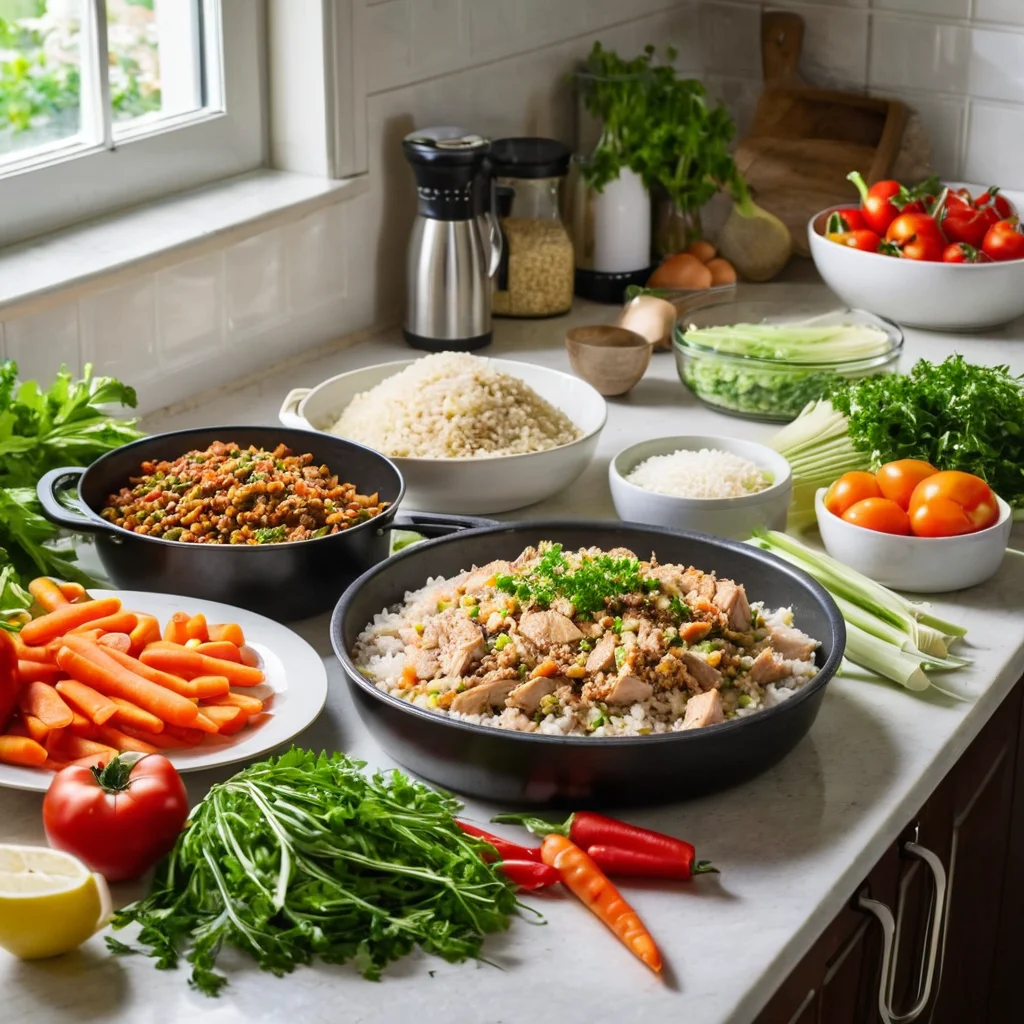

Complete homemade food for your pet: recipes from a veterinary nutritionist, the challenge of balancing it, vitamin and mineral supplements, and which situations it suits (allergies, a sensitive stomach). A sample 7-day menu. The owner is in control instead of relying on commercial food. In this post, we take a detailed look at homemade pet food.
1. Advantages of Homemade Food
- The owner controls the ingredients.
- Tailored for pets with allergies.
- Easier on a sensitive stomach.
- Fresh, quality ingredients.
- NO dyes or preservatives.
- Flavors your pet loves.
- Less dependence on commercial food.
- The cost to the family budget varies.
2. Risks and Challenges
- Nutritional imbalance is a common mistake.
- Vitamin and mineral deficiencies.
- A plan from a veterinary nutritionist is a must.
- Preparation takes a lot of time.
- Cost (quality ingredients).
- Proper storage.
- The owner needs to learn how.
- Doing it poorly = your pet's health suffers.
3. Veterinary Nutritionists
- Limited in Türkiye (mostly in big cities).
- Online consultations (Petdiet, Balance IT).
- An individual nutrition plan for your pet.
- Age, weight, activity and health.
- Vitamin and mineral calculations.
- Recipes and portions in writing.
- Regular updates.
- Cost
The price depends on the city, whether it's a clinic or a hospital, after-hours visits, imaging or hospitalization, and the animal's weight and age. The provincial Chamber of Veterinarians (Veteriner Hekimleri Odası) publishes a yearly minimum fee schedule; the schedule is a floor, not the final bill. Ask the clinic for a written or verbal estimate.
4. Basic Dog Recipe
A sample daily amount for an adult medium-size dog (10-25 kg):
- 200-300 g cooked chicken breast (lean).
- 200 g cooked brown rice or quinoa.
- 100 g mixed vegetables (carrot, zucchini, broccoli).
- 1 tablespoon mashed pumpkin.
- 1 egg (3-4 times a week).
- 1 tablespoon olive oil.
- A multivitamin and mineral supplement.
- Calcium (bone or a supplement).
5. Basic Cat Recipe
A sample daily amount for an adult cat (4-6 kg):
- 100-150 g cooked chicken breast.
- 50 g cooked liver (twice a week).
- 30 g vegetable puree (zucchini, carrot).
- 1 egg yolk (2-3 times a week).
- A taurine supplement is ESSENTIAL (250-500 mg).
- A vitamin A supplement.
- A multivitamin and mineral.
- A little fish oil.
- PLENTY of water.
6. A 7-Day Dog Menu
- Monday: Chicken, rice, carrot and supplements.
- Tuesday: Beef, quinoa and broccoli.
- Wednesday: Chicken, sweet potato and spinach.
- Thursday: Turkey, rice and pumpkin.
- Friday: Fish (salmon), quinoa and zucchini.
- Saturday: Chicken, mixed vegetables and egg.
- Sunday: Beef, rice and carrot.
- Variety and balanced nutritional value.
7. Cooking and Storage
- Cook meat thoroughly (Salmonella).
- Cook vegetables soft (easier to digest).
- NO salt or spices.
- Onion and garlic are FORBIDDEN.
- Serve cool (room temperature).
- 3 days max in the fridge.
- Frozen portions keep 1-3 months.
- Hygienic equipment.
8. Supplement List
- Multivitamin and mineral: A vet-approved pet product.
- Calcium: Powdered eggshell or a supplement.
- Omega-3: Fish oil.
- Probiotics: Digestive health.
- Taurine (essential for cats): 250-500 mg/day.
- Vitamin B complex.
- Vitamin E.
- Zinc and copper.
9. Forbidden Ingredients
- Chocolate, caffeine.
- Grapes, raisins.
- Onion, garlic.
- Xylitol.
- Avocado.
- Macadamia nuts.
- Salty foods.
- Fatty leftovers.
- Raw meat and eggs (Salmonella).
- Cooked bones (they splinter).
10. Monitoring and Adjusting
- Track your pet's weight.
- Body condition score.
- Coat and skin condition.
- Activity level.
- Appetite.
- A yearly blood test (for deficiencies).
- A vet checkup every 6 months.
- Adjust the diet if your pet has problems.
- The family shares responsibility for sticking to it.
Homemade pet food follows a formula: a plan from a vet specialist, essential supplements, variety, proper storage, care with forbidden ingredients and monitoring. It is helpful for pets with special needs. The risk of imbalance is high. It is a NO without a vet specialist. A mix of commercial and homemade food is a middle ground. In the DoldurKabı app, you can find a list of vets with nutrition expertise on a map.









