


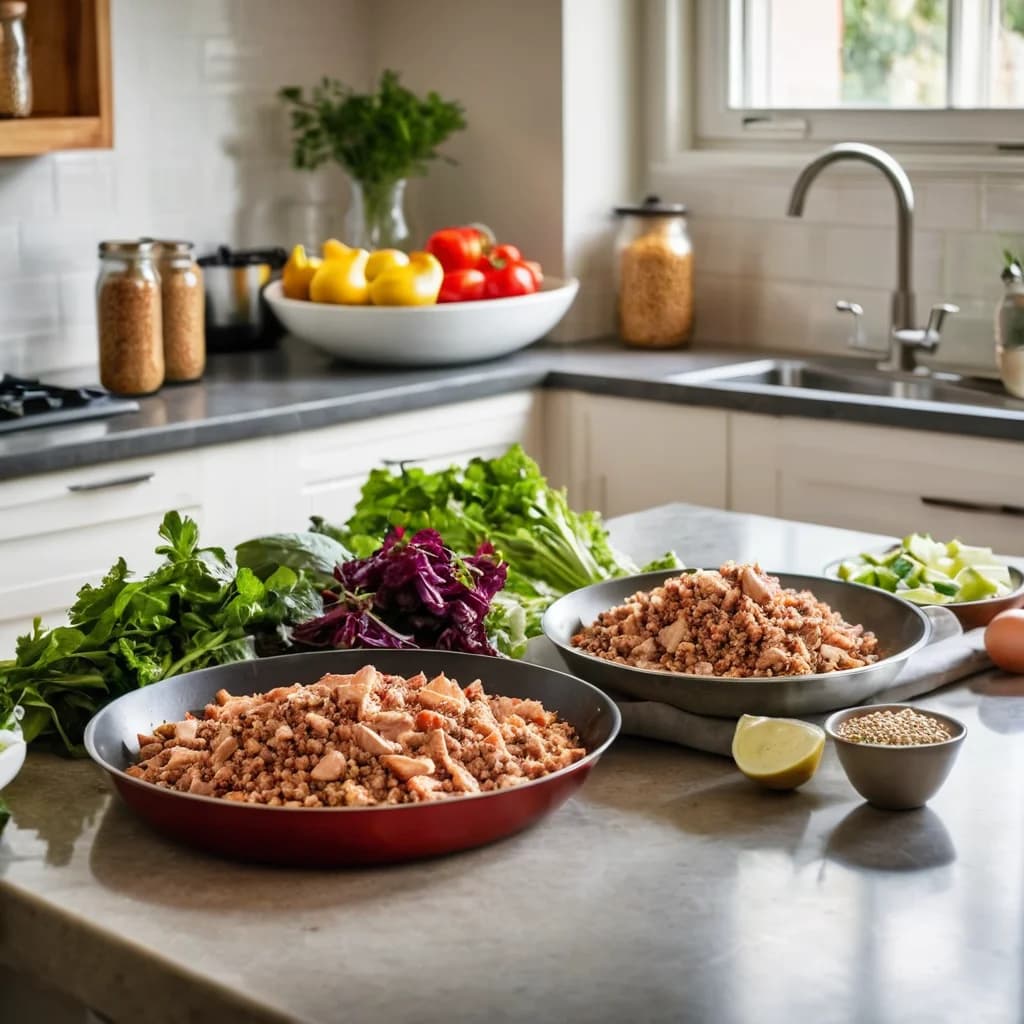

Homemade cat food is much harder and riskier than homemade dog food. Cats are obligate carnivores (they must eat meat), and deficiencies in taurine, B12, vitamin A and arachidonic acid cause PERMANENT DISEASE. The wrong formulation can lead to heart disease, blindness or death within a few months. Under the supervision of a veterinary nutritionist and with the right supplements, it can be safe. In this article, we look at how to formulate homemade cat food correctly, with 3 sample recipes.
1. Cat Nutrition Basics
- Obligate carnivore: 80%+ of the diet should come from meat.
- Taurine: Cats can't synthesize it, so they must get it from meat.
- Arachidonic acid: Comes from animal fat; plant sources aren't enough.
- Vitamin A: Cats can't convert beta-carotene (carrots) into vitamin A. Liver or fish oil is essential.
- B12 (cobalamin): Only from animal sources.
- High protein: 30-40% minimum.
- Low carbohydrate: Under 10% is ideal.
2. What Happens If It's Done Wrong
- Taurine deficiency: Dilated cardiomyopathy (enlarged heart) and retinal degeneration (blindness).
- Vitamin A deficiency: Vision and immune problems.
- Calcium deficiency: Weak bones, fractures.
- Vitamin D deficiency: Bone metabolism problems.
- Protein deficiency: Muscle wasting.
3. A Veterinary Nutritionist Is a Must
- BalanceIT.com: Vet-designed, personalized recipes.
- Diplomate of the American College of Veterinary Nutrition (DACVN).
- Veterinary nutritionists are limited in Türkiye.
- DON'T make homemade cat food without a recipe from a professional.
4. Basic Recipe Formula (General)
For 1 kg of homemade cat food:
- 700-800 g animal protein (chicken breast or thigh, turkey, beef).
- 50-80 g organ meat (liver, heart, kidney).
- 50-100 g ground bone (calcium) or a bone meal supplement.
- 30-50 g fat source (salmon oil, chicken fat).
- A small amount of egg yolk (lecithin).
- Water (for a wet food consistency).
- Vitamin/mineral premix (BalanceIT).
- Specific supplements: taurine (1000-2000 mg/kg of food), B12, vitamin A.
5. Recipe 1: Cooked Chicken Base
- 500 g boiled chicken breast (no skin, no bones).
- 50 g cooked chicken liver.
- 30 g cooked chicken fat.
- 20 g cooked egg yolk.
- BalanceIT Carnivore Blend (according to package directions).
- 1000 mg taurine.
- 500 mg fish oil.
- 200 ml water.
- A 5-6 day portion for a 4 kg cat.
6. Recipe 2: Turkey and Liver
- 500 g boiled turkey breast.
- 50 g beef liver (cooked).
- 50 g cooked heart.
- 30 g fish oil (salmon).
- BalanceIT premix.
- 1500 mg taurine.
- 250 ml water.
7. Recipe 3: Salmon Base
- 400 g cooked salmon (no bones).
- 200 g boiled chicken.
- 50 g sardines (with bones, a calcium source).
- BalanceIT premix.
- 1000 mg taurine.
- 200 ml water.
- Because of mercury content, it's a good idea to limit fish-based meals to 2-3 times a week.
8. Preparation Instructions
- Cook meat thoroughly because of the Toxoplasma and Salmonella risk.
- Puree in a food processor so your cat can swallow it.
- Leeks, onions and garlic are OFF LIMITS (toxic).
- NO salt or spices.
- Keeps 2-3 days in the fridge, 2-3 months in the freezer.
- Bring to room temperature before serving.
- Strict hygiene is a MUST (for both human and cat health).
9. Transition Protocol
- Switch gradually from commercial food to homemade over 14-21 days.
- DON'T do this with kittens: the risk of imbalance during growth is high.
- Senior or sick cats only under veterinary supervision.
10. Monitoring and Checkups
- A vet checkup every 3 months, with a full blood panel.
- Weigh weekly.
- Coat and skin condition.
- Urinalysis.
- Cardiac evaluation (yearly echo).
- If symptoms appear (lethargy, signs of blindness), go to the vet RIGHT AWAY.
Homemade cat food: great if done right, a disaster if done wrong. A recipe from a veterinary nutritionist, BalanceIT premix, specific supplements and regular checkups are essential. For easy access, choosing high-quality commercial wet and dry food is more practical. In the DoldurKabı app, you can find vet clinics experienced in nutrition on the map.









