


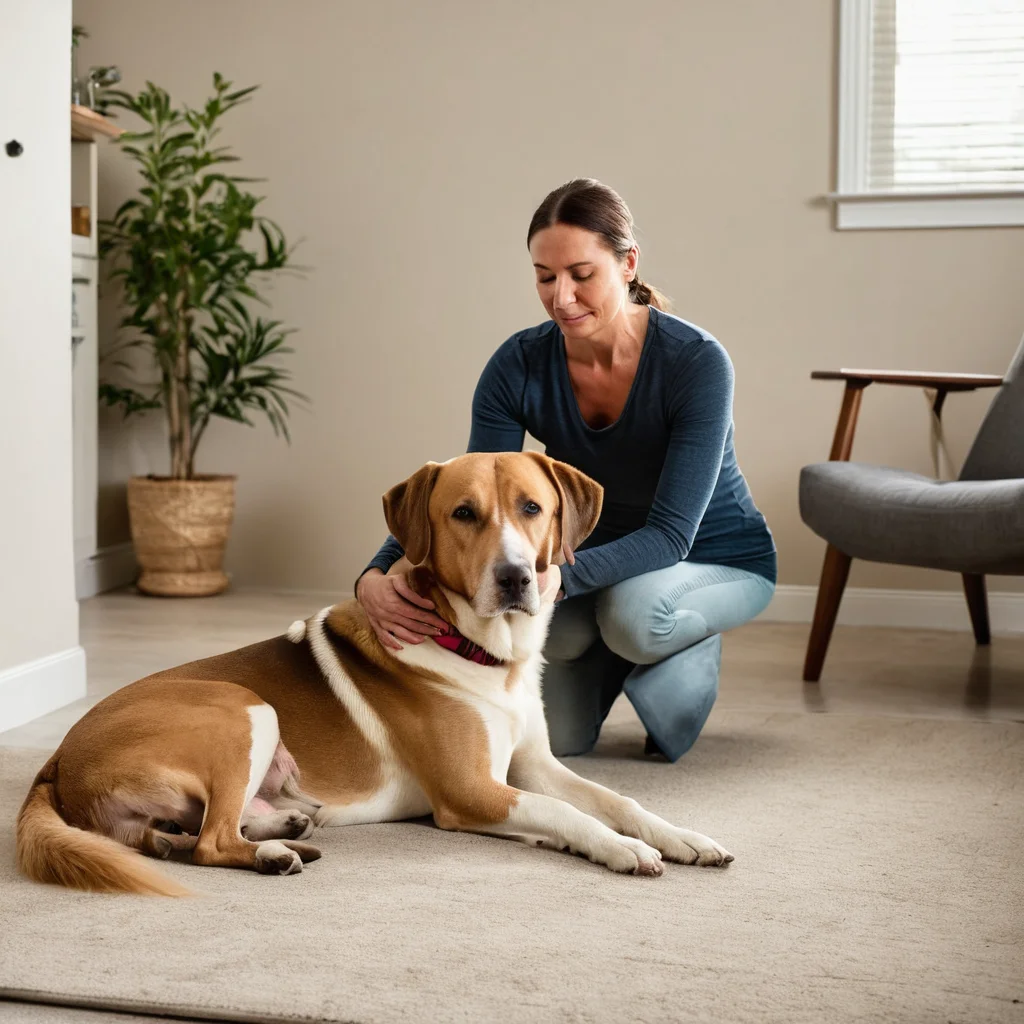

Your dog or cat suddenly starts coughing, can't breathe and is pawing at their mouth. A swallowed toy, a piece of bone or some food may be blocking the airway. In choking cases, time is measured in seconds. This article covers the signs of choking, the Heimlich maneuver adapted for pets and what you can do before you reach the vet. Taking a certified pet first aid course is much safer, but this article gives you the basics.
Warning: This guide is for information only. In an emergency, your first priority is to head to a vet; the steps below are a temporary solution until you are on your way.
1. Choking vs Coughing: What's the Difference?
A dog or cat can cough, hiccup or bring up phlegm, and none of that is choking. The signs of a real blockage are:
- Not breathing or very shallow breathing: almost no chest movement.
- Pawing at the mouth, rubbing it on the floor.
- Heavy drooling, drooly attempts to vomit.
- Blue or gray lips or tongue.
- Panic, swaying, collapse.
- Silence: unable to make a sound.
If you clearly see any of these signs, act immediately.
2. First Step: Check the Mouth
- Get the dog into a safe position. Hold a small dog or cat in your lap; lay a large dog on their side.
- Open the mouth and hold the tongue. Slide your finger in from the side and pull the tongue forward.
- Remove any object you can see with tweezers or your fingers. If you can't see it, don't push blindly with your finger, because you risk pushing it further down.
- If you can't see it, move on to the Heimlich maneuver.
3. The Heimlich Maneuver for Dogs
Small Dog (under 10 kg)
- Hold the dog with their back against you.
- Head down, legs up (an upside-down U position).
- Give 4-5 quick back blows between the shoulder blades (firm, but not hard enough to hurt the animal).
- If the object doesn't come out, lay the dog on their back in your lap and give 4-5 quick presses with 2 fingers just below the chest (sternum).
- Check the mouth and remove the object if you can see it.
Medium to Large Dog (over 10 kg)
- The dog is standing or lying on their side; kneel behind them.
- Wrap your arms around their waist.
- Make a fist and cover it with your other hand, then place it below the diaphragm (above the belly button).
- Press quickly inward and upward 4-5 times.
- Check the mouth and remove the object if you can see it.
Very Large Dog
- Lay the dog on their side.
- Apply pressure over the diaphragm area with your elbow or knee (4-5 times).
- Check the mouth.
4. The Heimlich Maneuver for Cats
- Lay the cat on their back (in your lap or on a soft surface).
- Place two fingers (middle and index) below the sternum (the lower part of the chest).
- Press gently but quickly inward and upward 4-5 times.
- Check the mouth.
Too much force on a cat can break a rib as easily as cracking an eggshell, so be gentle but firm.
5. After the Object Comes Out
Even if the blockage clears, go to the vet right away. Here's why:
- There may be an injury to the trachea or throat.
- Aspiration pneumonia (if swallowed saliva or contents went into the lungs) can start hours later.
- To confirm the stress didn't affect the heart or circulation.
- There may be soft tissue swelling after the Heimlich.
6. If the Object Doesn't Come Out
- Head to the vet and keep trying on the way.
- Repeat the Heimlich every 2-3 minutes on the way.
- If the heart or breathing stops, start CPR (chest compressions and rescue breaths). It is hard if you haven't been trained, but it's worth trying when there is no other option.
- Call the vet and explain the situation so the hospital can get ready.
7. CPR Basics (If Breathing Stops After Choking)
- Lay the animal on their side and pull the tongue forward.
- Chest compressions: Between the shoulder blades, with 2 hands (large dog) or one hand (small). A pace of 100-120 compressions per minute.
- Rescue breaths: Close the mouth and blow into the nose. Watch for the chest to rise. Use a ratio of 30 compressions to 2 breaths.
- After 5 cycles, check for a pulse and breathing; if there is no response, keep going.
These basics are not enough on their own. Certified pet CPR training makes a life-saving difference in a real emergency.
8. Prevention: Steps Against Swallowing
- Small toys: Don't give toys small enough to fit in your dog's throat. They should be solid, with no parts that can break off.
- Bones: Cooked bones are off limits because they splinter. Even raw bones are a risk if they don't suit the dog's size or age.
- Balls: A ball with a diameter that could lodge right in the dog's throat is dangerous; choose a bigger ball.
- Kids' toys: Lego pieces and small figures can mean serious toxicity and choking in a dog's mouth.
- Around the house: Socks, clothespins and tissue wrappers should not be left lying around.
- Dogs that eat fast: Use a slow feeder bowl or a maze bowl.
- Breeds at higher risk of choking: Take extra care with brachycephalic breeds (Bulldog, Pug, Persian, French Bulldog).
9. Frequently Asked Questions
Is a dog or cat cough always choking?
No. Allergies, cold air, kennel cough, heart disease and rabies can also be causes. If you suspect they swallowed something, treat it as an emergency; for a chronic cough, book a regular vet appointment.
Can my dog digest an object they swallowed?
Some, yes (soft, small ones), but you can't know for sure, and a small piece of plastic can tear the digestive tract. If something was swallowed, always see a vet; sometimes monitoring with X-rays is enough, and sometimes emergency endoscopy is needed.
A rib broke during the Heimlich. What should I do?
Pressing hard can break a rib, and in an emergency that risk is accepted. At the vet: X-rays, pain relief and rest. Dogs and cats that survive do recover.
Can I practice these maneuvers beforehand?
Certified pet first aid courses (offered by some vets or associations) are recommended. Don't practice on your pet (risk of broken ribs); practice on a dummy.
Is there extra risk for brachycephalic dogs?
Flat-faced breeds (Bulldog, Pug, French Bulldog) already have narrow airways, so any blockage becomes critical much faster. Owners need to be extra careful and act quickly.
Is it the same as the human Heimlich?
The general principle is the same (pressing below the diaphragm), but dog and cat anatomy is different, so the position and force are adapted. The techniques above are for pets.
How effective can an owner be alone?
Effective. Owners who have taken certified CPR/Heimlich training have been shown to save lives. In an emergency, taking action instead of freezing makes the difference.
Final Word
In choking cases, your strongest tool is acting quickly and correctly. You can stick this article on your fridge; when everyone in the family knows the basic maneuver, it can save a life in an emergency.
Add your vet's phone number, the details of the nearest emergency clinic and your pet's basic health data to DoldurKabı Pet Health Tracking.
This guide is for information only; if you suspect choking, always contact your vet first and consider taking a certified pet first aid course.









