



Dental Care for Pets: A Critical Health Topic That Gets Overlooked
Most pet owners neglect their animals' dental health. Yet research shows that 80% of dogs and 70% of cats over the age of 3 have some form of dental disease. Dental disease affects more than the mouth: it directly affects vital organs such as the heart, kidneys and liver. This guide covers how to protect your pet's dental health, the care you can do at home and the professional treatment options available.
Why Does Dental Health Matter So Much?
Oral health is an inseparable part of your pet's overall health. Here is why dental health is so critical:
Effects on the Whole Body
Bacteria in the mouth enter the bloodstream through inflamed gums and cause a condition called bacteremia. As these bacteria circulate through the body, they can damage these organs:
- Heart: The risk of endocarditis (inflammation of the heart valves) increases
- Kidneys: Bacterial infection can lead to kidney damage
- Liver: Chronic mouth infections disrupt liver function
- Joints: Septic arthritis can develop
Studies have shown that in dogs with severe periodontal disease, the risk of heart, kidney and liver disease rises up to 6 times.
Pain and Quality of Life
Pets usually hide their pain. A cat or dog with tooth pain rarely shows obvious signs like crying or whimpering. Instead, they slowly change how they eat, become less active or get irritable. Owners often put these changes down to "getting old," but they may actually be the result of chronic pain.
Signs of Dental Problems
If you notice one or more of the following signs, your pet may have a dental problem:
Early Signs
- Bad breath (halitosis): Mild breath odor is normal, but a sharp, unpleasant smell is the earliest sign of dental disease
- Red gums: A thin red line along the gumline is the start of gingivitis
- Tartar: Hard yellow-brown deposits on the teeth
- Slight bleeding: Small amounts of blood in the food bowl or on toys after eating
Advanced Signs
- Trouble eating: Chewing on one side, refusing hard food, dropping food while eating
- Excessive drooling: More saliva than usual, especially in cats
- Pawing at the mouth: Constantly touching the mouth area or rubbing the face on objects
- Facial swelling: Noticeable swelling under the eye or along the jaw (a sign of an abscess)
- Loss of appetite and weight loss: Refusing to eat because of pain
- Behavior changes: Restlessness, aggression or withdrawal
- Nasal discharge or sneezing: Infection of upper tooth roots can spread to the nasal sinuses
Common Dental Diseases
Gingivitis (Gum Inflammation)
Gingivitis is the earliest stage of dental disease and the only reversible dental disease. Plaque buildup makes the gums red and swollen, and they bleed when touched. At this stage, full recovery is possible with proper treatment.
Periodontal Disease
If gingivitis is not treated, it progresses to periodontal disease. This disease is classified in four stages:
- Stage 1: Gingivitis only; no bone loss
- Stage 2: Early periodontitis; up to 25% loss of supporting tissue. The tooth can be saved.
- Stage 3: Moderate periodontitis; 25-50% loss of supporting tissue. Advanced treatment is needed.
- Stage 4: Advanced periodontitis; more than 50% loss of supporting tissue. Extraction is usually needed.
Fractured Teeth
Chewing hard objects (bones, antlers, hard toys) can fracture teeth. A fractured tooth exposes the pulp (the inner tissue containing nerves and blood vessels) and causes severe pain and infection. Fractured teeth must be treated with either a root canal or extraction.
Resorptive Lesions in Cats (FORL)
Seen in roughly 30-60% of cats, this is a condition in which the body breaks down its own tooth structure. The exact cause is not known. Affected teeth are very painful and usually need to be extracted. It may be noticed as a reddish swelling along the gumline.
Dental Care at Home
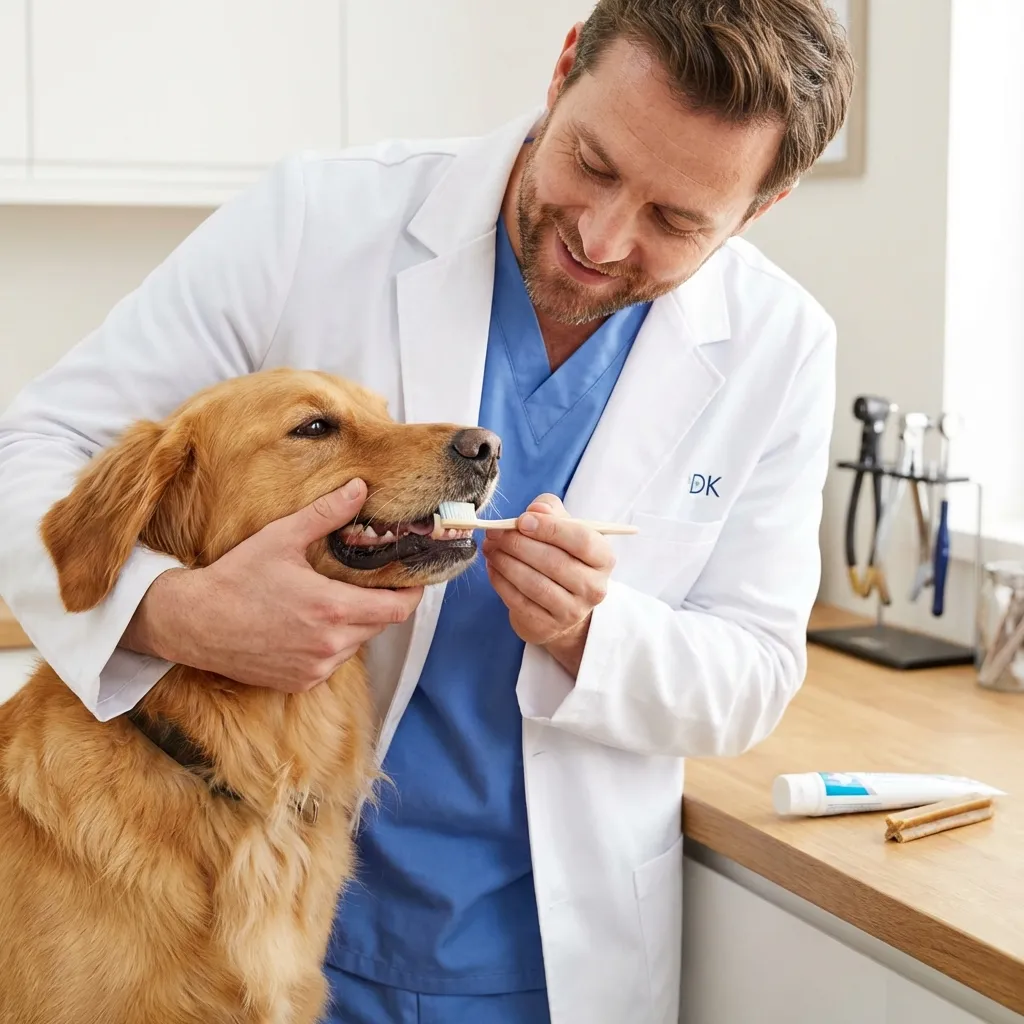
Toothbrushing: The Gold Standard
Regular toothbrushing is the most effective dental care you can do at home. Ideally it should be done every day, and at least 3 times a week.
What you need:
- A pet toothbrush (soft bristles, small head) or a finger brush
- Pet toothpaste (chicken, beef or fish flavored). Never use human toothpaste! The fluoride and xylitol it contains are toxic to pets.
Brushing technique, step by step:
- Getting used to it (1-2 weeks): In the first week, just lift the lips with your finger and touch the teeth. Once your pet is comfortable, put a little toothpaste on your finger and touch it to the teeth.
- Moving to the brush: Put toothpaste on the brush and let your pet lick it. Then gently brush a few teeth.
- Full brushing: Place the brush at a 45-degree angle to the gumline. Brush with gentle circular motions or sweeping strokes from the gum toward the tooth.
- Focus areas: The outer surfaces are the most important. Pay special attention to the upper molars (they collect the most tartar because they sit close to the salivary glands).
- Duration: 30-60 seconds is enough. You do not have to brush every tooth each time; you can focus on different areas every other day.
- Rewards: Always give a treat or play after brushing. Creating a positive experience is the key to keeping it up.
Dental Treats and Chews
Dental chews reduce plaque and tartar buildup by cleaning the teeth mechanically. Products approved by the VOHC (Veterinary Oral Health Council) have scientifically proven effectiveness.
- Dental sticks: A practical option for daily use. Enzyme-coated sticks are especially effective.
- Chew bones: Natural or synthetic bones provide mechanical cleaning. Avoid very hard ones (risk of fractured teeth).
- Dental toys: Rubber toys with textured surfaces clean the teeth mechanically while your pet chews.
Warning: Very hard objects such as real bones, antlers and hooves can fracture teeth. As a general rule, do not give your dog anything so hard that you cannot leave a mark on it with your fingernail.
Water Additives and Oral Sprays
- Dental water additives: Antimicrobial solutions added to drinking water reduce the bacterial load in the mouth. They do not replace brushing, but they add extra protection.
- Oral sprays and gels: Products containing chlorhexidine or zinc ascorbate are applied to the gumline.
- Dental diets: Specially formulated dry foods clean the teeth mechanically during chewing thanks to their large, fibrous kibble.
Professional Dental Cleaning
When Is It Needed?
Your veterinarian checks your pet's dental health at the yearly exam. A professional cleaning is recommended in these cases:
- Visible tartar buildup
- Signs of gum inflammation
- Bad breath
- Loose or fractured teeth
- Difficulty eating
How Is the Procedure Done?
A professional dental cleaning is done under general anesthesia. Anesthesia-free dental cleaning is only a cosmetic procedure and is medically inadequate; it cannot reach the diseased tissue below the gumline.
- Pre-anesthesia assessment: Blood work and a physical exam are used to assess anesthesia safety
- Anesthesia: A safe anesthesia protocol is used, with heart, breathing and oxygen monitoring
- Dental radiography: Dental X-rays are taken to evaluate the tooth roots and jawbone. 60% of problems can only be seen on X-rays.
- Ultrasonic cleaning (scaling): An ultrasonic instrument removes tartar from both the tooth surface and below the gumline
- Polishing: After cleaning, the tooth surfaces are polished so new plaque has a harder time sticking
- Treatment: If needed, extractions, root canals or gum surgery are performed
- Fluoride application: Protective fluoride is applied to strengthen the enamel
Dental Procedure Cost Items in Türkiye (Current)
Dental treatment costs vary with the scope of the procedure, the city where the clinic is located and the severity of the case:
- Dental cleaning under anesthesia (scaling + polishing)
- Dental X-rays
- Simple extraction (single tooth)
- Complicated extraction (surgical)
- Full dental treatment (cleaning + extractions)
The fee depends on the city, whether it is a clinic or a hospital, after-hours timing, imaging or hospitalization, and the animal's weight and age. The provincial Chamber of Veterinarians (Veteriner Hekimleri Odası) publishes a yearly minimum fee schedule; the schedule is a floor, not the final bill. Ask the clinic for a written or verbal estimate.
With regular home care and early intervention, you can avoid most of these costs. Preventive care is always cheaper than treatment.
Dental Care Tips by Age
- Puppy and kitten stage (0-6 months): Getting them used to having their mouth touched and to the toothbrush, watching baby teeth fall out
- Young adult (6 months - 3 years): Building a daily brushing routine, first professional assessment
- Adult (3-7 years): Regular brushing, yearly professional checkup, dental chews
- Senior (over 7 years): Professional checkup every 6 months, soft food options, more frequent checks at home
Your pet's dental health is one of the cornerstones of their overall health and quality of life. Starting today, you can build a regular dental care routine and protect your pet's oral health by working together with your veterinarian. Remember: healthy teeth are the key to a happy life.









