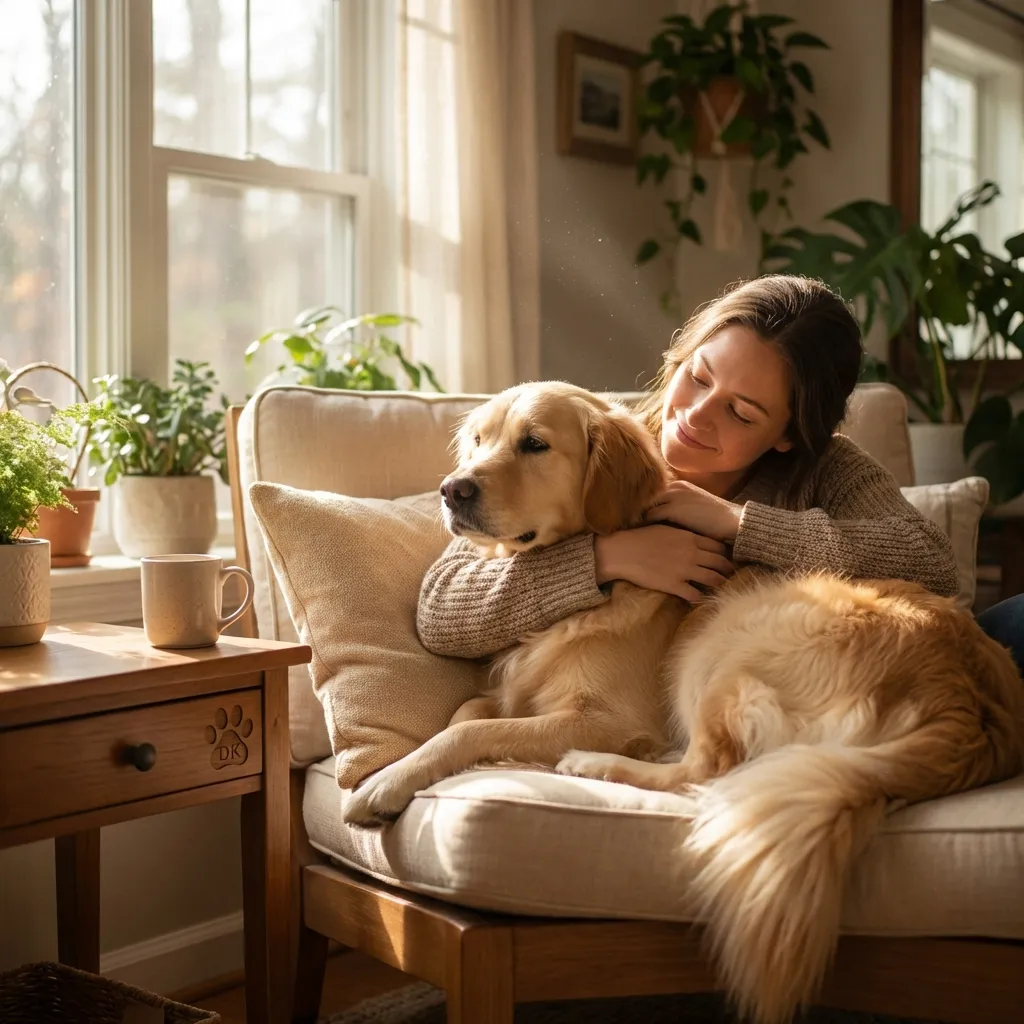

How Pets Affect Our Mental Health: What Does the Science Say?
We have known for centuries that living with pets is good for us. But this is no longer just a gut feeling; it now rests on strong evidence backed by scientific research. Hundreds of studies around the world show that pet ownership brings measurable benefits for mental health problems such as stress, depression, anxiety, loneliness and even post-traumatic stress disorder (PTSD). In this article, we look at how pets affect our mental health in light of the scientific data.
Stress Relief: Cortisol Goes Down, Oxytocin Goes Up
The effect of pets on stress is one of the most researched topics in this field. The findings are quite impressive.
Hormonal Changes
A 2019 study at Washington State University showed that when students interacted with cats or dogs for just 10 minutes, their salivary cortisol (stress hormone) levels dropped significantly. This effect was not seen with indirect contact such as looking at photos of animals or reading about them; direct physical contact is what matters.
When you pet an animal, these changes happen in your body:
- Cortisol levels drop: The stress hormone decreases and the feeling of tension eases
- Oxytocin levels rise: Known as the "bonding hormone," oxytocin is released in both the human and the animal. This two-way hormonal response forms the biological basis of the human-animal bond.
- Serotonin and dopamine increase: These neurotransmitters, known as "happiness hormones," lift your mood
- Blood pressure drops: Interacting with a pet measurably lowers heart rate and blood pressure
Workplace Stress
A Virginia Commonwealth University study found that employees who brought their dogs to work saw their stress levels drop by 11% over the day, while the stress levels of employees without dogs rose by 70%. That is why more and more companies around the world are adopting "pet-friendly office" policies.
Depression and Anxiety: Natural Support for Treatment
The Effect on Depression
A comprehensive meta-analysis published in BMC Psychiatry in 2016 reported that pet ownership has a clinically significant effect in reducing symptoms of depression. Pets help people cope with depression in several ways:
- Building a daily routine: One of the most damaging sides of depression is the loss of motivation and routine. Caring for a pet, with daily responsibilities like feeding, walking and cleaning, gives a person purpose and structure.
- Unconditional love: Pets do not judge, criticize or let you down. This unconditional acceptance helps people with depression feel valuable and worthy of love.
- More physical activity: Owning a dog increases physical activity because of the daily need for walks. Physical exercise is a proven, effective method in treating depression.
- Breaking social isolation: Pets act as a catalyst for social connection with other people. Walking a dog in the park, chatting in the vet's waiting room and online pet communities all increase social interaction.
Anxiety Disorders
Anxiety disorders are among the most common mental health problems in the world and in Türkiye. Pets help manage anxiety through more than one mechanism:
- A secure attachment figure: A pet acts as a safe attachment figure for its owner. Especially in social anxiety, the animal's presence boosts a sense of security.
- Redirecting attention: Anxious thoughts usually focus on the future or the past. Interacting with a pet pulls a person into "the present moment," an effect similar to mindfulness therapy.
- Touch therapy: Petting an animal activates the parasympathetic nervous system and calms the "fight or flight" response.
Loneliness: A Lifeline, Especially for Older Adults
Loneliness is one of the biggest health crises of modern times. The World Health Organization considers the health impact of chronic loneliness equal to smoking 15 cigarettes a day. Pets can be a powerful ally in fighting loneliness.
The Effect on Older Adults
In later life, the risk of social isolation grows because of losing a spouse, retirement and physical limitations. Research has shown that older adults who own pets:
- Experience feelings of loneliness 36% less
- Go to the doctor less often
- Better preserve their cognitive function
- Are more independent in daily activities
- Have higher overall life satisfaction
Small breed dogs and cats in particular are good pet choices for older adults. Their care needs are manageable and they do not require intense physical activity.
People Who Live Alone
For adults living alone, owning a pet provides a reason to come home, a sense of responsibility and emotional support. Studies done during the pandemic in particular showed that pet owners got through isolation much better than people without pets.
Post-Traumatic Stress Disorder (PTSD) and Therapy Animals
The Role of Therapy Animals in PTSD
PTSD is seen in people who have lived through traumatic experiences, such as war veterans, survivors of natural disasters and victims of violence and abuse. Therapy dogs and emotional support animals play an important complementary role in PTSD treatment.
- Fewer nightmares and night terrors: A pet's presence increases the feeling of safety at night
- Less hypervigilance (being constantly on alert): When dogs keep watch over the surroundings, people with PTSD feel less need to stay on guard all the time
- Emotional regulation: Contact with an animal during a crisis helps balance emotions
- Preventing social withdrawal: A pet encourages staying connected with the outside world
In the US, there are programs that provide specially trained PTSD support dogs to veterans, and these programs have produced very successful results. A Purdue University study observed an 82% reduction in symptoms among veterans with PTSD support dogs.
Animal-Assisted Therapy in Autism Spectrum Disorder
For children with autism spectrum disorder (ASD), animal-assisted therapy is an approach that is gaining more and more scientific support.
- More social interaction: Children with ASD often have trouble reading human facial expressions, but they communicate more easily with animals. With an animal present, they also interact more with other people.
- Sensory regulation: Petting an animal has a calming effect during moments of sensory overload.
- Developing responsibility and empathy: Caring for an animal teaches children to understand and meet the needs of another living being.
- Better communication skills: It offers a chance to practice nonverbal communication; children build language skills by "talking" to the animal.
A study in France recorded a 47% improvement in the social skills of children with ASD who received animal-assisted therapy.
The Role of Pets in Children's Emotional Development
Children who grow up with pets gain important advantages in emotional and social development:
- Building empathy: Understanding an animal's feelings and needs strengthens a child's capacity for empathy. Children who grow up with pets show higher empathy scores than their peers.
- A sense of responsibility: Being responsible for an animal's feeding, care and health teaches the concept of responsibility in a concrete way.
- Understanding death and loss: A pet's illness or death helps a child understand the life cycle and develop the ability to cope with loss.
- Higher self-esteem: An animal's unconditional love helps a child feel valued and capable.
- Stress management: A University of Cambridge study showed that children turn to their pets before their parents in stressful situations.
Cardiovascular Health Benefits
Mental health and physical health cannot be separated. The benefits pets bring to the cardiovascular system also support emotional well-being:
- Blood pressure: Pet owners have a resting blood pressure that is on average 2-4 mmHg lower
- Cholesterol and triglycerides: Dog owners have been found to have lower total cholesterol and triglyceride levels
- Survival after a heart attack: The one-year survival rate of pet owners who have had a heart attack is significantly higher than that of people without pets
- Physical activity: Dog owners walk on average 150-200 minutes more per week
Animal-Assisted Therapy Programs in Türkiye
Animal-assisted therapy has been spreading quickly in Türkiye in recent years:
- University programs: Istanbul University, Ankara University and Hacettepe University run research and practice programs in animal-assisted therapy.
- Equine therapy (hippotherapy): Equine therapy centers operate especially for people with physical and intellectual disabilities. There are more than 50 hippotherapy centers across Türkiye.
- Dolphin therapy: In Antalya and Istanbul, there are dolphin-assisted therapy programs for children with ASD and people with PTSD.
- School visit programs: Some municipalities and nonprofits organize school visits by therapy dogs so children can interact with animals.
- Nursing home programs: Some nursing homes in Istanbul, Ankara and Izmir run regular animal visit programs.
Things to Keep in Mind
Even though the mental health benefits of owning a pet are strong, a few points are worth considering:
- A pet does not replace professional treatment: For serious mental health problems, a pet is complementary support, not a treatment on its own.
- Care-related stress: Financial hardship, lack of time or the animal's health problems can become extra sources of stress.
- The pain of loss: Losing a pet can lead to a deep grieving process for its owner, and this pain may not be well understood by others.
- A sense of responsibility: Owning a pet is a 10 to 20 year commitment. Getting an animal only for mental health reasons, without understanding the responsibility, is not the right thing to do.
Pets enrich our lives with the unconditional love, loyalty and companionship they offer. Scientific evidence shows that this bond is not only emotional but also has biological and physiological roots. Every moment you spend with your pet is an investment in both your mental health and theirs.