


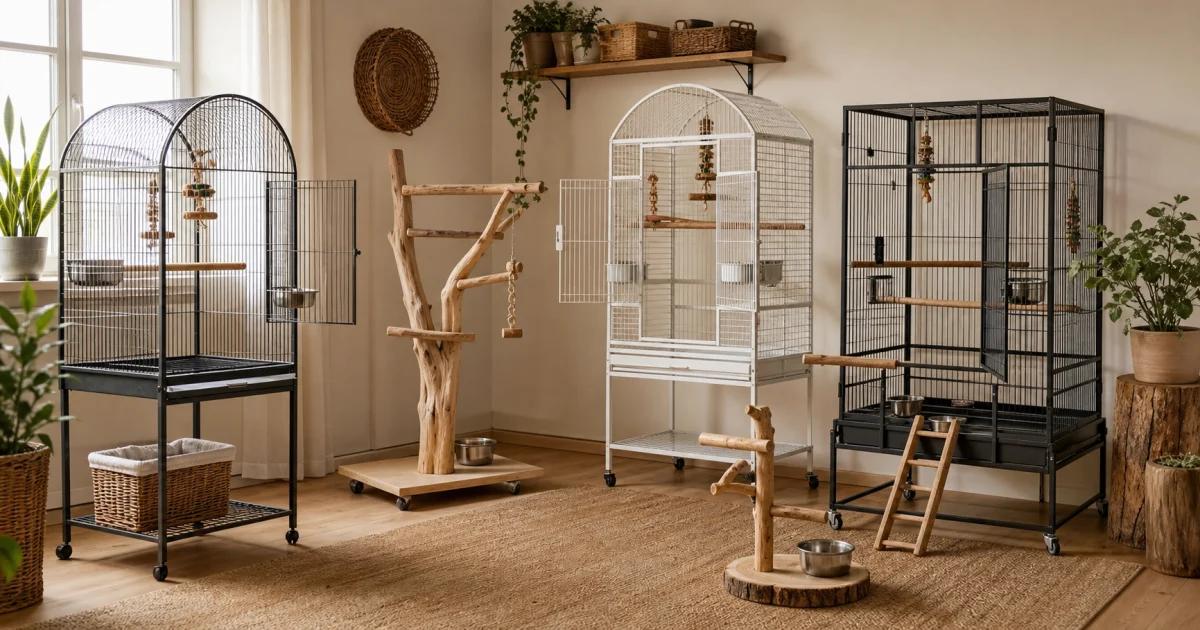

Choosing a parrot should not come down to color, talking ability or size alone. You need to think about noise carrying through walls, cage and flight space, care responsibilities that stretch over many years, daily social attention and access to a vet, all at once. The decision should be weighed realistically with everyone in the household before the bird comes home.
Before you start, take a photo of your current setup and spend a day observing. That way, instead of just following a theoretical list, you see which spaces the animal will actually use and how things change throughout the day. If you need more context on choosing a species or basic needs, looking at pet options that fit your lifestyle is a good place to start.
This guide breaks the setup into small, checkable steps. After each step, watch appetite, movement, rest and how clean the space stays. Changing many things at once makes it hard to tell which detail is helping or causing a problem.
Be honest about how much noise you can handle
It is natural behavior for parrots to make contact calls at certain times of day. Factor in your apartment's insulation, how close your neighbors are and the hours when your home needs to be quiet. Instead of trusting a bird that is claimed to be quiet, prepare for the natural vocal behavior of the species. The approach should be adapted to the animal's age, species, health and living space. If you see discomfort, fear or unusual behavior, stop pushing; check for an environmental cause and get a vet's opinion if there are any health signs.
- It is natural behavior for parrots to make contact calls at certain times of day.
- Factor in your apartment's insulation, how close your neighbors are and the hours when your home needs to be quiet.
- Instead of trusting a bird that is claimed to be quiet, prepare for the natural vocal behavior of the species.
In this part, it is safer to make one adjustment and observe the result rather than making a big change all at once. Keep short notes on the materials you use, the date and the changes you notice while choosing a parrot for your home. That way, if a problem comes up, you know which step to undo, and you make the daily routine the same for everyone in the house.
Space is more than cage size
Along with a suitable cage, plan a safe area for flying, playing and climbing. Remove risks such as windows, mirrors, ceiling fans, open doors and hot surfaces ahead of time. A larger bird needs more space and sturdier equipment, so work that out in your home plan before you think about the budget. The approach should be adapted to the animal's age, species, health and living space. If you see discomfort, fear or unusual behavior, stop pushing; check for an environmental cause and get a vet's opinion if there are any health signs.
- Along with a suitable cage, plan a safe area for flying, playing and climbing.
- Remove risks such as windows, mirrors, ceiling fans, open doors and hot surfaces ahead of time.
- A larger bird needs more space and sturdier equipment, so work that out in your home plan before you think about the budget.
In this part, it is safer to make one adjustment and observe the result rather than making a big change all at once. Keep short notes on the materials you use, the date and the changes you notice while choosing a parrot for your home. That way, if a problem comes up, you know which step to undo, and you make the daily routine the same for everyone in the house.
Lifespan and daily attention
Think about the possibility of a long life alongside moves, job changes and shifts in family life. Set aside time every day for social interaction, cleaning, food preparation and mental enrichment. Accept at the decision stage that a bird left alone for long hours can develop behavior problems. The approach should be adapted to the animal's age, species, health and living space. If you see discomfort, fear or unusual behavior, stop pushing; check for an environmental cause and get a vet's opinion if there are any health signs.
- Think about the possibility of a long life alongside moves, job changes and shifts in family life.
- Set aside time every day for social interaction, cleaning, food preparation and mental enrichment.
- Accept at the decision stage that a bird left alone for long hours can develop behavior problems.
In this part, it is safer to make one adjustment and observe the result rather than making a big change all at once. Keep short notes on the materials you use, the date and the changes you notice while choosing a parrot for your home. That way, if a problem comes up, you know which step to undo, and you make the daily routine the same for everyone in the house.
A checklist before you decide
Talk through allergies, young children, other animals and shared living spaces at home. Find out in advance how you would reach a vet who works with birds. Rather than encouraging the live animal trade, take a neutral look at trustworthy adoption options from people who understand the care responsibility. The approach should be adapted to the animal's age, species, health and living space. If you see discomfort, fear or unusual behavior, stop pushing; check for an environmental cause and get a vet's opinion if there are any health signs.
- Talk through allergies, young children, other animals and shared living spaces at home.
- Find out in advance how you would reach a vet who works with birds.
- Rather than encouraging the live animal trade, take a neutral look at trustworthy adoption options from people who understand the care responsibility.
In this part, it is safer to make one adjustment and observe the result rather than making a big change all at once. Keep short notes on the materials you use, the date and the changes you notice while choosing a parrot for your home. That way, if a problem comes up, you know which step to undo, and you make the daily routine the same for everyone in the house.
Set Up a Practical Check Routine
You can use a three-layer checklist when choosing a parrot for your home. The daily list covers water, food, droppings, movement and visible safety issues. The weekly list includes thorough cleaning, an equipment check and comparing your notes. The monthly list reviews worn-out materials, seasonal changes in the living space and emergency preparedness. You can find similar practical posts in the blog archive.
Doing the check in the same order every time means you miss fewer details. First look at the animal from a distance, then check water and food, then inspect the living space. Do any cleaning or rearranging last. That way you see the animal in its natural state before you step into its space. If more than one person in the house gives care, use a simple chart; knowing who did what prevents mistakes like double feeding or forgotten cleaning.
When the seasons change, room temperature, daylight, humidity and the way the home is used can shift. Reassess new risks with the same setup in mind, such as direct sun and thirst in summer, or closeness to a heater and dry air in winter. Moving, guests, renovations or a new animal arriving can also affect the routine. Observe more often during these periods, but do not try to check on the animal by handling it constantly.
Common Mistakes and a Safer Approach
The first mistake is assuming a small animal will be fine with a small space. Natural behavior determines its needs more than body size does. The second mistake is constantly resetting scent and layout in the name of cleanliness. The third is applying a single tip seen online without considering differences in species, age and health. When choosing materials, safe construction, how easy they are to clean and the animal's behavior matter more than marketing claims.
Another mistake is judging a change only by how it looks. A space that looks tidy may not let the animal hide, move around or eat comfortably. After setting up, watch the paths it actually uses, its resting spots and the areas it avoids. Do not keep an unused piece just because it is decorative; dedicate the space to functional behaviors.
Do not try to solve a health sign with care experiments. If there is marked loss of appetite, a change in breathing, loss of balance, bleeding, signs of pain or a quickly progressing change in behavior, contact your vet instead of waiting. Bring the observations you made at home, photos and any measurements with you; they do not replace an exam, but they help explain the change.
Frequently Asked Questions
Should I completely change the setup or routine in one day?
If there is no urgent safety risk, changes made gradually are easier to track. First take care of safety and basic needs, watch the animal's behavior, then move on to the next adjustment. Remove urgent hazards such as toxic substances, open escape points or burn risks right away.
How do I know if a material is suitable?
Check for sharp edges, loose string, small parts that break off easily, strong odors and surfaces that cannot be cleaned. Also consider the chance that the animal will chew, dig at or climb on the material. If a product seems questionable for the species, ask your vet before using it.
How often should I review the routine?
Along with a basic daily check, detailed weekly care and a monthly safety round is a practical start. Temporarily increase how often you check after illness, a change of season, a move or new equipment. Changes in the animal's behavior matter as much as the calendar.
When should I get professional help?
Contact your vet if there is a marked drop in appetite, trouble breathing, an injury, rapid weight or behavior change, a long-lasting digestive problem or a disruption in normal movement. If training and environment changes are not making progress, ask for support from a specialist who understands the species' behavior and does not use fear or punishment.









