


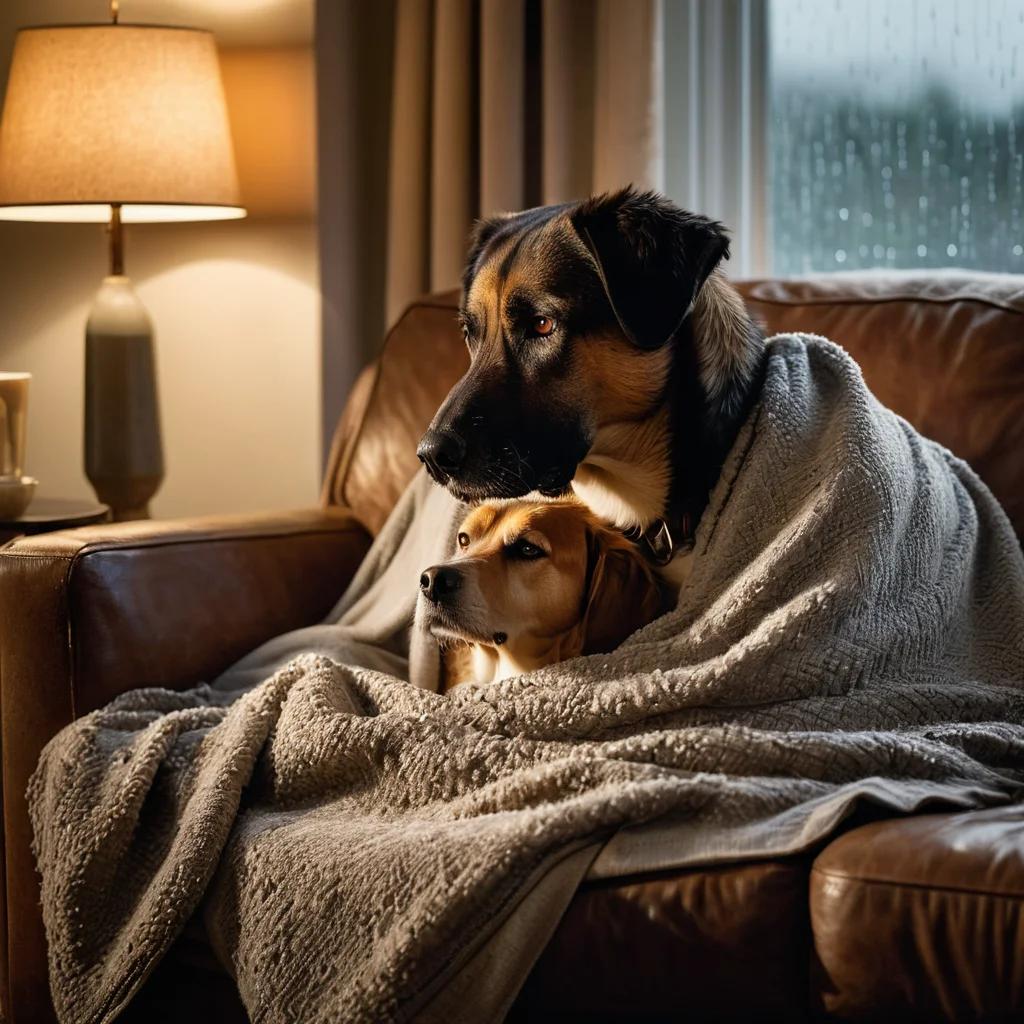

New Year's fireworks, summer storms, military drills or blasting at construction sites: for many dogs and cats, noise phobia is a clinical fear response, not "being spoiled." In pets with a marked panic response to noise, the heart rate speeds up, cortisol spikes, and behaviors that can cause physical harm (chewing through doors, jumping out of windows, getting lost) can appear. The good news: with the right protocol, these phobias can be significantly reduced and can even go away.
This article covers the causes of noise phobia, in-the-moment calming techniques, a long-term protocol, and when medication support from a vet is needed.
1. Why Are Some Pets So Scared?
- Lack of early socialization: No exposure to sounds between 8 and 14 weeks of age.
- A traumatic experience: Being left alone or getting lost during an explosion.
- Genetic predisposition: Noise sensitivity is more common in some breeds (Border Collie, Australian Shepherd, German Shepherd).
- Aging: Phobias increase with cognitive decline in senior dogs and cats.
- Pain: Chronic pain such as arthritis lowers the stress threshold, so a small sound brings a big reaction.
2. In-the-Moment Calming: During Fireworks or a Storm
- Create a safe space. A windowless bathroom, the inside of a closet, a small room. Dark and enclosed.
- Turn on a source of white noise. A fan, a hair dryer, a white noise app, music. The goal is to mask the sound from outside.
- A thick, soundproofing comforter or rug over or under your pet.
- Stay with them, calm and quiet. Instead of overprotective "it's okay, it's okay," just breathe calmly.
- A favorite toy or Kong filled with peanut butter or yogurt to redirect their mind.
- Check windows and doors: Your pet may bolt outside, so keep doors locked.
- Check the collar and microchip: Owner information in case of an escape.
3. Long-Term Protocol: Gradual Exposure
The "lasting" fix for a phobia is desensitization plus counter-conditioning. A consistent program of 4-8 weeks:
Step 1: A Sound Library
- "Dog desensitization sounds" or "firework training" playlists on YouTube.
- Start at low volume, at a level where your pet stays calm.
- Reward your pet each time they hear it (a treat or affection).
Step 2: Turn It Up
- If your pet stays calm, raise the volume by 5%.
- If they react, back off and return to the previous level.
- Over the weeks, work your way up to real-life volume.
Step 3: Positive Association
- Pair the sound with a favorite activity (play, food, a massage).
- Let them learn that the sound is "a sign something good is coming."
This process takes patience. Rushed exposure backfires.
4. Natural Calming Aids
- Adaptil (dogs) / Feliway (cats): Synthetic pheromone diffusers. Start them 1 week ahead.
- L-theanine and L-tryptophan supplements: There is some evidence; use under vet supervision.
- Compression vest (Thundershirt): Gentle pressure works for some dogs.
- CBD products (for dogs): Controversial; limited use under vet supervision.
- Lavender scent: Mildly relaxing and works for some cats (but they must not swallow essential oil spray).
5. Medication Support from Your Vet
For severe noise phobia, especially around New Year's, national holidays and summer storm season, your vet may prescribe:
- Trazodone: For acute anxiety; the effect lasts 1-2 hours.
- Alprazolam, diazepam: Short-term sedatives (by vet prescription only).
- Sileo (dexmedetomidine oral gel): Made for dogs; approved for use during New Year's fireworks.
- Long-term SSRI (fluoxetine): In severe cases, together with a behavior protocol.
Human sedatives (Xanax, Lexotan, Valium) are never given to animals: the dose is different, the metabolism is different, and they can be deadly.
6. Prep Checklist for New Year's and National Holidays
- 2 weeks before: A vet consultation and (if needed) a prescription.
- 1 week before: Start the Feliway/Adaptil diffuser.
- 3 days before: Practice sound exposure at low volume.
- Late afternoon: Take your dog out one last time; don't take them out after dark.
- When the fireworks start: Safe room, white noise and owner nearby.
- When the night is over: A calm reward, then back to the normal routine.
7. Escape Risk and Microchips
New Year's and national holidays are the peak "lost pet" period in Türkiye. Pets commonly panic and escape through a window or from the yard. Precautions:
- Keep the microchip registration up to date (phone and address).
- Collar and name tag (with your phone number).
- Check that windows and balconies are closed.
- Keep the yard gate locked.
- If your pet gets lost: Post a quick listing on DoldurKabı Lost Pet Listings, share it with neighbors and reach out to the neighborhood vet network.
8. Frequently Asked Questions
My dog shakes at every clap of thunder. What should I do?
A 4-8 week gradual exposure protocol, plus Adaptil and a safe space, usually brings a clear improvement. In severe cases, vet-prescribed trazodone is an option.
Should we start medication ahead of New Year's week?
That's your vet's call. Acute medications like trazodone are given 2 hours before the event. Long-term SSRIs are started weeks in advance. Don't decide on your own.
If I keep picking my pet up to "calm them down," am I reinforcing the fear?
There's academic debate; the current understanding is that an overly dramatic, fearful response ("oh no!") reinforces the phobia. A calm, steady "I'm here with you" attitude isn't reinforcement; it builds trust.
My cat hunkers down, my dog panics. Why the difference?
Cats usually prefer to "hide and stay put," while dogs more often "run and bark." Both are fear, just expressed differently.
My pet gets very scared on a boat. Is that a phobia?
Motion sickness and fear of rocking can happen together. Get an individual assessment from your vet.
Once a pet develops a phobia, is it permanent?
With early intervention, it mostly eases or goes away. If it's ignored, it becomes more ingrained over time and the "range of triggers" grows (at first one sound is scary, later every similar sound).
My dog is only scared of the doorbell. Is it the same protocol?
Yes. Gradual exposure plus positive association rests on the same foundation for every noise phobia. Start the doorbell sound at low volume and pair it with rewards until the reaction to the real doorbell fades.
Final Word
Noise phobia can wear down the bond between owner and pet for years, or, with the right protocol, it can ease noticeably in 6-12 weeks. Preparing ahead of New Year's, national holidays and storm season is a heartfelt gift, especially for a sensitive pet.
Log your trigger notes, medication times and behavior changes in DoldurKabı Pet Health Tracking. Regular tracking is the foundation of a successful protocol.
This guide is for information only; in severe cases, always get support from a vet and a certified behavior specialist.









