


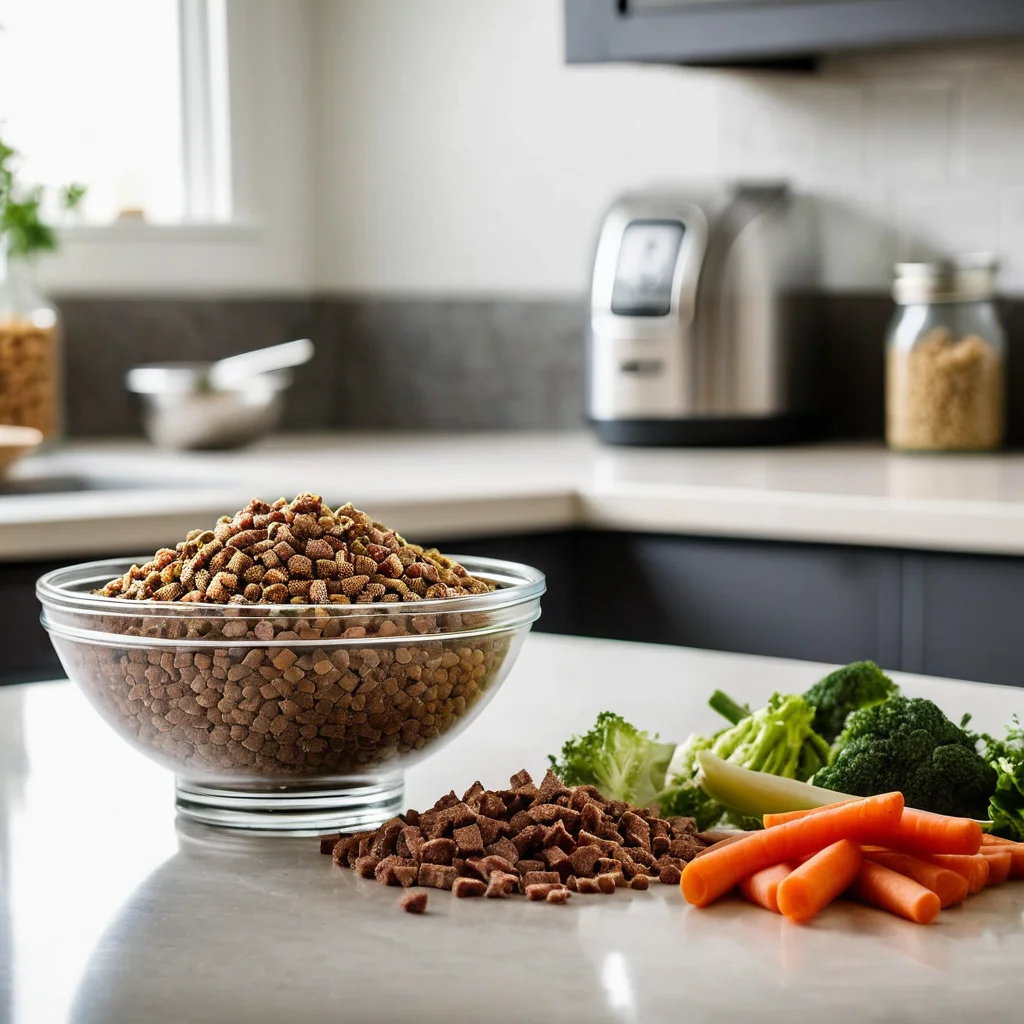

Freeze-dried food is fresh food turned into something with a long shelf life. This category, which has quickly become popular in the pet nutrition world in recent years, is a bridge between BARF (raw food) and dry food. Instead of evaporating the water with heat, the food is frozen at -40°C and the water is removed under vacuum, so +97% of the nutrient content is preserved. In Türkiye, access to brands is limited but growing. In this post we look at freeze-dried food in detail, plus when and how to use it.
1. What Is Freeze-Dried Food?
- A process called "lyophilization": the food is frozen and its water is removed by sublimation.
- Pieces of fresh meat, organs, fruit and vegetables are used.
- 97-99% of the nutrient content is preserved (dry food 60-80%, canned 85-90%).
- When water is added, it returns to its fully fresh state.
- A shelf life of 2-3 years.
2. Freeze-Dried vs. Raw vs. Dry
| Feature | Freeze-Dried | Raw (BARF) | Dry Food |
|---|---|---|---|
| Nutrient content | 97-99% | 100% | 60-80% |
| Bacterial risk | Low | High | Very low |
| Storage | Easy (shelf) | Refrigerator | Very easy |
| Cost | High | Medium | Low |
| Convenience | Medium | Hard | Very easy |
3. Types
- Complete diet: All nutrients balanced, for daily feeding.
- Topper: Added on top of dry food to boost flavor and protein.
- Treat: Training rewards.
- Single ingredient: Only chicken liver, fish and so on.
4. How Much Water to Add
Rehydrating correctly is critical:
- Complete diet: 100 g of food + 200-250 ml of lukewarm water.
- Let it sit for 10-15 minutes.
- A texture similar to mashed potatoes.
- It can also be given dry without water (but water intake goes down).
- Always rehydrate it for senior pets and pets with weak teeth.
5. Benefits
- High nutrient preservation.
- The natural taste of fresh food.
- Low bacterial risk (compared to raw).
- Easy to store.
- Travel-friendly.
- High protein, low carbohydrate.
- Easy to digest for sensitive stomachs.
- Natural water intake (when water is added).
6. Drawbacks
- High cost: 3-5 times the price of dry food.
- Preparation takes time (water + waiting).
- Limited brands in Türkiye (imports).
- The process is energy-intensive → carbon footprint.
- Pathogen risk is low but not zero (there is a difference between raw and cooked freeze-dried).
7. Brand Suggestions
Brands available in Türkiye:
- Stella & Chewy's: USA, premium, complete nutrition.
- Primal: USA, organic options.
- Vital Essentials: USA, single-protein options.
- K9 Natural: New Zealand, natural food.
- Orijen Freeze-Dried Treats: Canada.
- Turkish brands: The local market is developing, with more affordable options.
8. When Is It Used?
- Sensitive stomach / trouble swallowing.
- Senior pets and pets with weak teeth.
- Interest in BARF but worries about hygiene risk.
- A need for hypoallergenic / single-protein food.
- Boosting flavor (for pets that refuse dry food).
- Travel (light and shelf-stable).
- Training rewards (high value).
9. Transition Plan
From dry food to freeze-dried:
- Days 1-3: 25% freeze-dried + 75% dry.
- Days 4-6: 50%/50%.
- Days 7-9: 75% freeze-dried + 25% dry.
- Day 10+: 100% freeze-dried.
- If diarrhea or vomiting happens, go back a step and go slower.
10. Combining with Dry Food (A Smart Strategy)
Balancing cost and benefit:
- 80% quality dry food + 20% freeze-dried topper.
- The cost is +30-50% compared to dry food alone.
- Nutritional benefit, flavor and water intake go up a lot.
- The monthly difference is 500 to 1,500 Turkish lira extra (depending on the dog's size).
Freeze-dried food combines fresh nutrition with easy storage, and when used correctly it can greatly improve your pet's diet. When you factor in cost, the combination strategy (topper) is the most practical. It is especially valuable for sensitive stomachs, senior pets and allergies. In the DoldurKabı app, you can find vet clinics experienced in nutrition on the map.









