


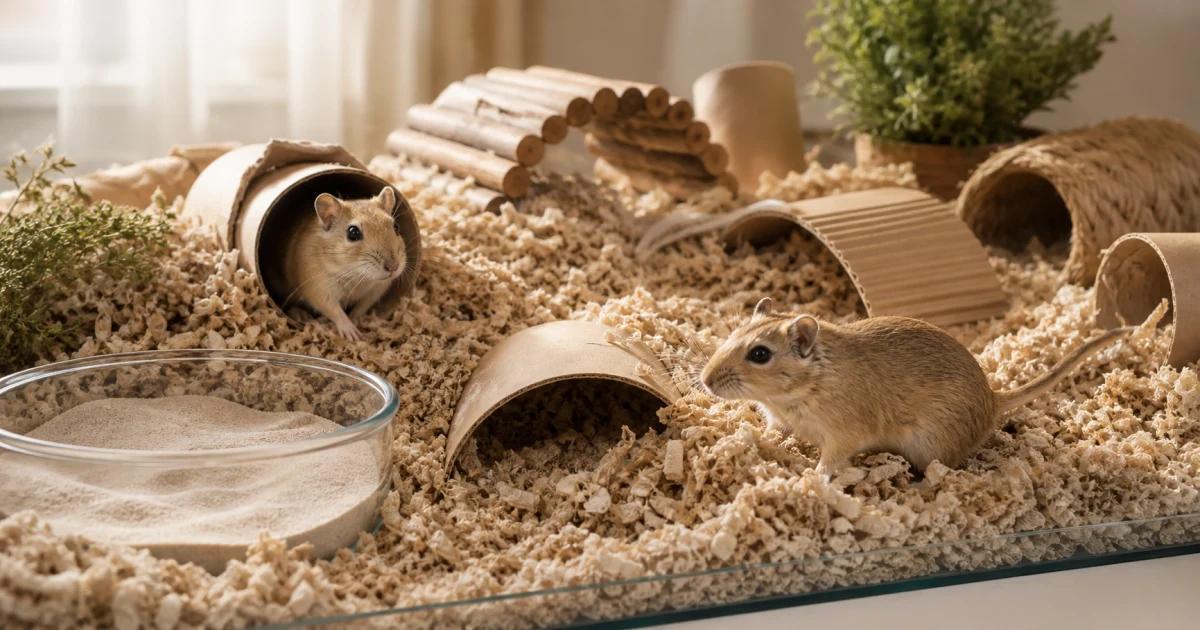

Gerbil care is more than putting wood shavings and a wheel in a small cage. These animals build long tunnel systems, shape their surroundings by gnawing and usually live with strong social bonds. The setup should support digging behavior, and the care routine should keep things clean without disturbing the peace of the group.
Before you start, take a photo of the current setup and spend a day observing. That way, instead of just following a theoretical list, you see the areas your gerbils actually use and how things change over the day. If you need more background on choosing a species or on basic needs, looking into vets who work with small animals is a good place to start.
This guide breaks the setup into small, manageable steps. After each step, watch appetite, movement, rest and how clean the space stays. Changing many things at once makes it hard to tell which detail helped or caused a problem.
Build a diggable base
Mix paper bedding, safe hay and shreddable cardboard to create a texture that holds tunnels. Keep most of the bedding deep, and place heavy items on stable platforms. Instead of plastic decor, choose natural materials that don't break into sharp pieces when chewed. You need to adapt all of this to the animal's age, species, health and living space. If you notice discomfort, fear or unusual behavior, stop pushing; check for an environmental cause, and if there are health signs, get a vet's opinion.
- Mix paper bedding, safe hay and shreddable cardboard to create a texture that holds tunnels.
- Keep most of the bedding deep, and place heavy items on stable platforms.
- Instead of plastic decor, choose natural materials that don't break into sharp pieces when chewed.
In this step, it is safer to make one adjustment and observe the result than to make a big change all at once. Keep short notes on the materials you use for gerbil care, the date and any change you notice. That way, if a problem comes up, you know which step to undo, and you make the daily routine the same for everyone in the house.
Use the sand bath correctly
Use dust-free bathing sand made for small animals, not fine dust. Offer the sand in a heavy glass or ceramic dish, and make sure it can't tip over. Sift out dirty sand regularly, and fully replace any part that is damp or smells bad. You need to adapt all of this to the animal's age, species, health and living space. If you notice discomfort, fear or unusual behavior, stop pushing; check for an environmental cause, and if there are health signs, get a vet's opinion.
- Use dust-free bathing sand made for small animals, not fine dust.
- Offer the sand in a heavy glass or ceramic dish, and make sure it can't tip over.
- Sift out dirty sand regularly, and fully replace any part that is damp or smells bad.
In this step, it is safer to make one adjustment and observe the result than to make a big change all at once. Keep short notes on the materials you use for gerbil care, the date and any change you notice. That way, if a problem comes up, you know which step to undo, and you make the daily routine the same for everyone in the house.
Protect the social structure
Don't separate gerbils that get along without a reason, and don't suddenly add a new gerbil to the group. Watch sleeping together, grooming each other and sharing space every day. If there is persistent chasing, injury or one gerbil hiding all the time, plan a safe separation and get support from a vet. You need to adapt all of this to the animal's age, species, health and living space. If you notice discomfort, fear or unusual behavior, stop pushing; check for an environmental cause, and if there are health signs, get a vet's opinion.
- Don't separate gerbils that get along without a reason, and don't suddenly add a new gerbil to the group.
- Watch sleeping together, grooming each other and sharing space every day.
- If there is persistent chasing, injury or one gerbil hiding all the time, plan a safe separation and get support from a vet.
In this step, it is safer to make one adjustment and observe the result than to make a big change all at once. Keep short notes on the materials you use for gerbil care, the date and any change you notice. That way, if a problem comes up, you know which step to undo, and you make the daily routine the same for everyone in the house.
Don't wipe out the scent completely when cleaning
Instead of replacing all the bedding every time you clean, put back a dry, clean portion. Remove water leaks, spoiled fresh food and wet nesting material right away. Do daily spot cleaning to reduce the stress that a big cleanout causes. You need to adapt all of this to the animal's age, species, health and living space. If you notice discomfort, fear or unusual behavior, stop pushing; check for an environmental cause, and if there are health signs, get a vet's opinion.
- Instead of replacing all the bedding every time you clean, put back a dry, clean portion.
- Remove water leaks, spoiled fresh food and wet nesting material right away.
- Do daily spot cleaning to reduce the stress that a big cleanout causes.
In this step, it is safer to make one adjustment and observe the result than to make a big change all at once. Keep short notes on the materials you use for gerbil care, the date and any change you notice. That way, if a problem comes up, you know which step to undo, and you make the daily routine the same for everyone in the house.
Set Up a Check Routine You Can Stick To
For gerbil care, you can use a three-layer checklist. The daily list covers water, food, droppings, movement and visible safety issues. The weekly list includes a thorough cleaning, an equipment check and comparing your notes. The monthly list reviews worn-out materials, seasonal changes in the living space and emergency preparedness. You can find similar practical posts in the blog archive.
Doing the check in the same order every time helps you miss fewer details. First look at the animal from a distance, then check water and food, then inspect the living space. Do any cleaning or rearranging as the last step. That way you see the animal in its natural state before you step in. If more than one person in the house gives care, use a simple chart; knowing who did what prevents mistakes like double feeding or a forgotten cleaning.
When the seasons change, room temperature, daylight, humidity and the way the house is used can shift. Reassess new risks with the same setup in mind, such as direct sun and dehydration in summer, or being close to a heater and dry air in winter. Moving, guests, renovation or the arrival of a new animal can also affect the routine. Observe more often during these periods, but don't try to check by handling the animal all the time.
Common Mistakes and a Safer Approach
The first mistake is thinking a small animal will be fine in a small space. Natural behavior decides its needs more than body size does. The second mistake is constantly rebuilding the scent and layout in the name of cleanliness. The third mistake is following a single tip seen online without considering differences in species, age and health. When choosing materials, safe construction, how easy they are to clean and the animal's behavior matter more than marketing claims.
Another mistake is judging a change only by how it looks. A space that looks tidy may not let the animal hide, move around or eat comfortably. After the setup, watch the paths that are actually used, the resting spots and the areas the animal avoids. Don't keep an unused piece just because it is decorative; give the space over to functional behaviors.
Don't try to solve a health sign with care experiments. If there is a clear loss of appetite, a change in breathing, loss of balance, bleeding, signs of pain or a fast-progressing change in behavior, contact your vet instead of waiting. Bring your home observations, photos and any measurements with you; they don't replace an exam, but they help explain the change.
Frequently Asked Questions
Should I change the setup or routine completely in one day?
If there is no urgent safety risk, gradual changes are easier to track. Take care of safety and basic needs first, watch the animal's behavior, then move on to the next adjustment. Remove urgent hazards like toxic substances, open escape points or burn risks right away.
How do I know if a material is suitable?
Check for sharp edges, loose string, small parts that break off easily, strong smells and surfaces you can't clean. Also consider whether the animal might chew it, dig in it or climb on it. If you're unsure whether a product is right for the species, ask your vet before using it.
How often should I review the routine?
Alongside a basic daily check, weekly detailed care and a monthly safety round are a practical start. After illness, a change of season, moving or new equipment, temporarily check more often. Changes in the animal's behavior matter as much as the calendar.
When should I get professional help?
Contact your vet if there is a clear drop in appetite, trouble breathing, injury, rapid weight or behavior change, a long-lasting digestive problem or a change in normal movement. If there is no progress with training or the environment setup, ask for support from a specialist who knows the species' behavior and doesn't use fear or punishment.









