


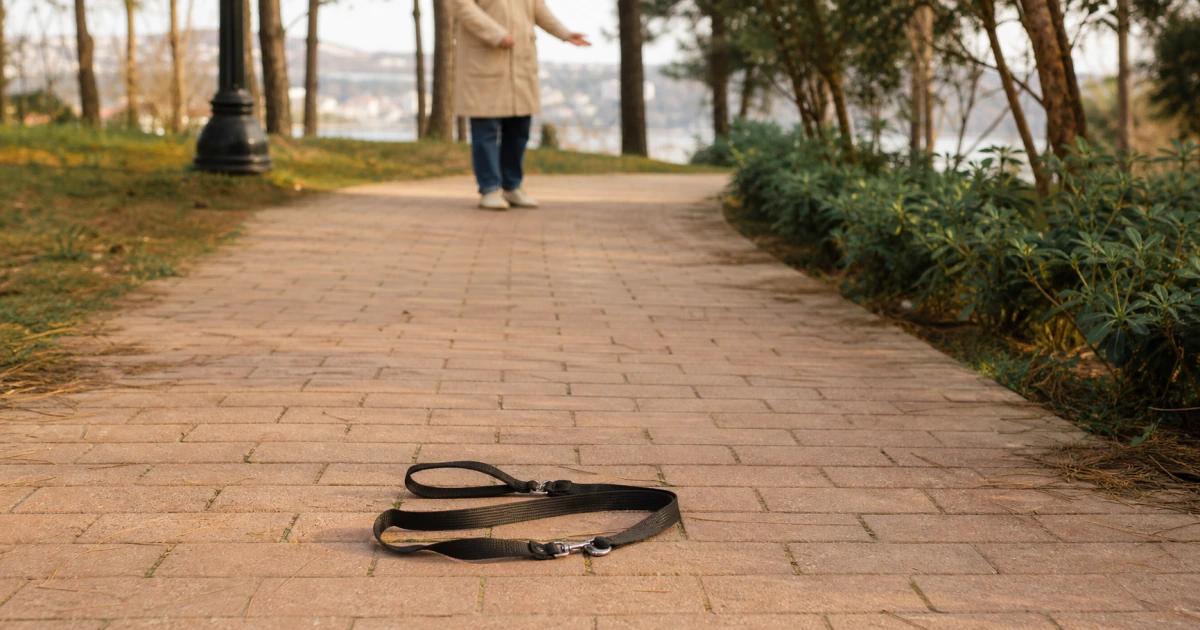

If the leash slipped out of your hand or the gear came undone, the first minutes call for order as much as speed. Chasing the dog wildly can encourage it to play or keep running; people scattering in random directions also lose track of where it went. First, pin down the last place it was seen and the direction it was heading, then use the recall routine the owner knows.
Rather than explaining from scratch how to get started in this line of work, this post focuses only on the question "If a Dog You're Walking Gets Loose, What Should You Do in the First 10 Minutes?" To set up a workable routine, you will first define the scope, then put the record-keeping and communication steps in place. Using the same order of checks with every client cuts down on improvised decisions that vary from person to person.
The first moment: don't escalate
Instead of yelling and chasing straight after the dog, crouch down, turn your body to the side and use a calm, familiar recall word. If the dog is looking at you, don't walk toward it; back away to encourage it to come to you. If it is heading toward traffic, ask people nearby to help slow down vehicles.
When you put this into practice, base your decision on what you can see, not on assumptions. For "The first moment: don't escalate," record the point you discussed in a dated note, confirm that the other person understood, and don't carry on with the old agreement once conditions change. Resolving a small uncertainty before the job starts is safer than making rushed decisions in the middle of care.
Record the location and direction
Mark the last-seen spot on your phone's map, and note the time and the direction the dog went. Think about places that might draw it, such as a nearby open door, a park exit, a trash area or the route back home. Make sure everyone joining the search is working from the same information.
When you put this into practice, base your decision on what you can see, not on assumptions. For "Record the location and direction," record the point you discussed in a dated note, confirm that the other person understood, and don't carry on with the old agreement once conditions change. Resolving a small uncertainty before the job starts is safer than making rushed decisions in the middle of care.
Call the owner right away
Without softening the situation, tell them where, when and how the dog got loose. Ask about the dog's strongest recall word, the things it is afraid of and familiar places it might head to. If the owner is on the way, agree on a meeting point; don't tie up the phone line with an unnecessarily long call.
When you put this into practice, base your decision on what you can see, not on assumptions. For "Call the owner right away," record the point you discussed in a dated note, confirm that the other person understood, and don't carry on with the old agreement once conditions change. Resolving a small uncertainty before the job starts is safer than making rushed decisions in the middle of care.
Organize the search in rings
Have one person stay at the last-seen spot; the others should search nearby exits and familiar routes in a controlled way. Divide up the tasks instead of having everyone run in the same direction. Whoever spots the dog should report the location, and people shouldn't close in on it as a crowd.
When you put this into practice, base your decision on what you can see, not on assumptions. For "Organize the search in rings," record the point you discussed in a dated note, confirm that the other person understood, and don't carry on with the old agreement once conditions change. Resolving a small uncertainty before the job starts is safer than making rushed decisions in the middle of care.
Don't rush once the dog is found
Let it come to you, then safely put on a spare leash or harness. If there is an injury, heavy panting or unusual behavior, end the walk; call the owner and direct them to a vet. If needed, use the emergency vet option.
When you put this into practice, base your decision on what you can see, not on assumptions. For "Don't rush once the dog is found," record the point you discussed in a dated note, confirm that the other person understood, and don't carry on with the old agreement once conditions change. Resolving a small uncertainty before the job starts is safer than making rushed decisions in the middle of care.
An honest record after the incident
Write down where the equipment failed, the weather and surroundings, where the dog was found and what help you received. Hiding blame makes the next risk bigger. For double safety measures and route planning, see the dog walker guide.
When you put this into practice, base your decision on what you can see, not on assumptions. For "An honest record after the incident," record the point you discussed in a dated note, confirm that the other person understood, and don't carry on with the old agreement once conditions change. Resolving a small uncertainty before the job starts is safer than making rushed decisions in the middle of care.
How do you keep a decision record?
Record not just the outcome of a decision you make on this, but also the information it was based on. Keep the client's details, your own observations, the agreed method and any later changes visible separately. Instead of scattering messages across different apps, use a single record thread for the service. That way, when the question "did we talk about this?" comes up during care, you don't have to rely on memory.
The language of your records should be short, neutral and only as detailed as the job requires. Don't add personal comments, diagnoses, accusing language or unnecessary private information. For example, when a problem happens, write only what was seen and when, who was called and what answer you got. If a photo is needed, take it without getting private areas of the home or personal documents in the frame. When the job is done, also review which information you will keep and for how long.
Do a small trial run before the first job
See whether your routine on paper works in real life with a low-risk trial run. With the owner present, check that the key opens the door, the contact numbers are up to date, where the necessary equipment is and how reporting will work. This trial run isn't a sign of distrust; it is a practical check that shows both sides understand the same process.
Don't paper over gaps you notice during the trial run with temporary fixes. If something can be fixed before the job starts, confirm the new arrangement in writing; if it can't be made safe, postpone or decline the service. Don't give in to pressure to hurry, especially when there are health symptoms, an escape risk or a problem with access to the home. A calm postponement is a more responsible decision than promising care under unclear conditions.
A short, practical checklist
- Confirm the scope and critical information in writing before starting the job.
- Postpone or decline anything that goes beyond safety limits or your skills.
- During care, record only observable information, with the date and time.
- When something changes, get the owner's approval; don't proceed on verbal assumptions.
- When the job is done, close out the handover, the report and any payment record in the same file.
This list doesn't solve every scenario on its own; its purpose is to keep critical steps from being forgotten. Simplify it regularly to fit the way you work, but try not to drop the headings on animal safety, clear communication and record-keeping.
Frequently Asked Questions
Is running after the dog never the right thing to do?
In immediate danger such as traffic, a safe intervention may be needed; but in most cases, chasing directly can speed up the escape. Double-check the answer against your own service conditions and current information, and resolve any uncertainty in writing before starting the job.
Should I post a listing on social media right away?
Coordinate with the owner first. Arrange the contact and location details to be shared with the owner's approval, without giving out unnecessary personal data. Double-check the answer against your own service conditions and current information, and resolve any uncertainty in writing before starting the job.
Do you continue the walk once the dog is found?
No. Check the equipment and the dog's condition, then hand the dog back to its owner; if there are symptoms, direct them to a vet. Double-check the answer against your own service conditions and current information, and resolve any uncertainty in writing before starting the job.









