
In short: Animal Protection Law No. 5199 has no provision that generally bans rehoming your pet with another family free of charge. A transfer in exchange for money, however, may bring the rules on selling into play (Article 5, Article 14/c). Under the wording of the law, handing over a sick, disabled or senior animal, or one in pain or suffering it cannot recover from, is prohibited (Article 10, final paragraph); abandoning an animal is also prohibited (Article 14/n).
A move, a new baby, allergies, a long-term job change, or simply a new routine that life brings. Sometimes loving an animal means looking for a home that suits it better. It is a hard decision, but a responsible one. Done right, the animal moves into a safe home; done wrong, the animal can be harmed and you may end up breaking a legal obligation. In this article we draw on the current text of Law No. 5199 to explain the legal limits of a handover and the steps you can take for a safe adoption.
The difference between free rehoming and selling
The law looks favorably on adoption. Its principles article is built on encouraging people who want to adopt ownerless animals with a sense of humane and moral responsibility, without seeking any financial gain or benefit (Article 4/d). Selling, on the other hand, comes with separate rules:
- People who sell pets must attend training programs organized by local governments and obtain a certificate (Article 5).
- Selling pets by people who have not received animal care training is listed among the prohibitions (Article 14/c).
- Selling pets to anyone under the age of sixteen is prohibited (Article 14/d).
- At the time of sale, the animal must be in good health and the place where it is kept must be clean and meet health standards (Article 10).
| Topic | Free rehoming | Transfer for a fee |
|---|---|---|
| Training certificate | The text sets this requirement for the person selling | If it counts as a sale, Article 5 and Article 14/c may apply |
| Age of the recipient | The text sets no separate age limit for a free transfer | Selling to anyone under sixteen is prohibited (Article 14/d) |
| The law's approach | Adopting without seeking gain is encouraged as a principle (Article 4/d) | Subject to the rules on selling (Article 5, Article 10, Article 14) |
The law does not define "sale" separately. Nor does the text say how a fee taken under the name of "vaccine costs" or "food money" would be treated. So a firm ruling is not possible, but a transfer made for money does carry the risk of being seen as a sale. The simple way to protect yourself and the animal from this uncertainty is to make the handover free of charge.
Handing over a sick, disabled or senior animal
On this point the text of the law is broader than most people expect. The final paragraph of Article 10, which regulates the trade in animals, says:
It is prohibited to transfer to someone, sell or buy an animal that is sick, disabled or old, or that has pain or suffering to a degree it cannot recover from, for any purpose other than slaughter in accordance with procedure or painless killing. (Law No. 5199, Article 10)
Let's read the text carefully:
- Who it covers: Animals that are sick, disabled or old, or that have pain or suffering to a degree they cannot recover from.
- What it prohibits: Transferring these animals to someone, selling them and buying them. In other words, the ban is not limited to selling; transferring and acquiring are listed too.
- Exception: The exception the text lists is slaughter in accordance with procedure or the purpose of painless killing. Giving the animal to a family that will take on its care is not listed separately among the exceptions.
- Penalty: An administrative fine per animal is set for anyone who acts against this paragraph (Article 28/f).
The law does not define a measure for "old" or "sick". The provision sits inside the article that regulates the trade in animals, and in its most common reading it aims to keep a suffering animal from being exploited as it changes hands. Shelters and volunteers looking for families to care for senior or disabled animals do not conflict with this aim. Still, because the wording of the text is broad, talk to your veterinarian before such a handover, explain the animal's health clearly to the new family, and if you have doubts, ask the provincial or district directorate of agriculture and forestry for an opinion.
Updating the registration details
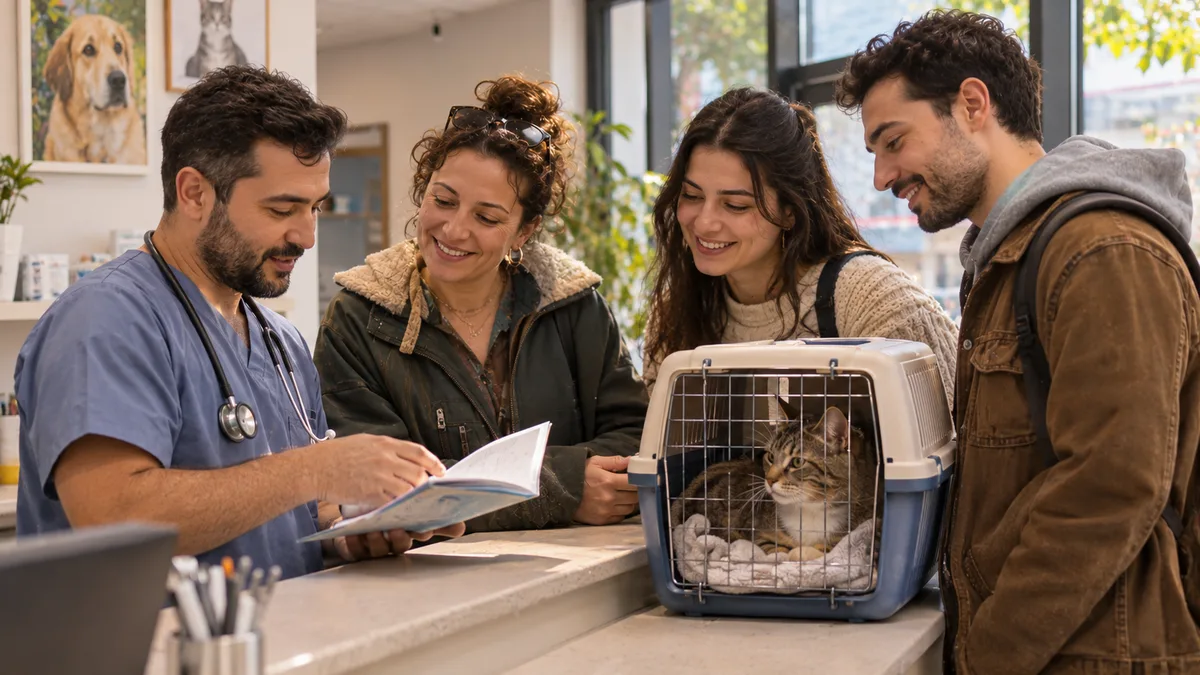
Under the law, an owned animal is a pet that has been adopted, whose care, vaccinations and regular health checks are carried out, and that is recorded in the Ministry database (Article 3/j). Cat and dog owners are required to have their animals registered using digital identification methods (Article 4/k). When the animal moves to a new family, the owner details in the registration should reflect reality as well.
The text of the law does not spell out the steps for updating the registration during a handover; the procedures and principles of digital identification are left to a Ministry regulation (Article 4/k). A practical tip: go to the veterinarian together with the new family on handover day and find out together how to update the registration. You can find clinics near you in the vet directory.
How do you choose a safe family?
- Don't rush. Instead of giving the animal to the first person who comes along, talk to a few candidates.
- Ask questions. Are there other animals at home, how long will the animal be alone during the day, have they cared for an animal before, does their landlord allow it?
- Set up a meeting. See how the animal interacts with the candidate; if possible, visit the new home.
- Hand over all the information. Give the vaccination record, health history, feeding routine and habits in writing.
- Let an adult take responsibility. The law's age limit of sixteen was set for selling (Article 14/d); even so, the care obligations (Article 5) are heavy enough that an adult should carry them.
- Be careful with dangerous breeds. Adopting out animals the Ministry has designated as dangerous is prohibited (Article 14/l). Until the Ministry's regulation takes effect, Provisional Article 3 lists the Pitbull Terrier, Japanese Tosa, Dogo Argentino and Fila Brasileiro breeds and their mixes in this category. The Ministry's circular dated December 7, 2021 (2021/48) added the American Staffordshire Terrier and American Bully breeds to this list.
Should I sign an adoption agreement?
Many people rehoming a pet prefer to make the handover with a written agreement. Such a text can include items like the parties' names and contact details, a description of the animal and its health information, the new family's promise of care and vet checkups, the agreement on spaying/neutering, and the animal coming back to you if the new family cannot care for it.
Let's be clear here: Law No. 5199 does not regulate adoption agreements, and we cannot make any promise about whether such a text is legally binding. Still, a written agreement makes clear what the parties agreed on and helps keep the lines of communication open.
Abandonment is not an option
Finding a new family can take time. Throughout that period, the care obligations for the animal stay with you (Article 5). Leaving the animal in a park, on a street or in front of a building is something the law clearly prohibits: abandoning a pet is prohibited (Article 14/n), and an administrative fine per animal is set for breaking this ban (Article 28/j). The same ban applies just as fully to the new family once they take over the animal.
Why rehome rather than sell?
Looking for a home for an animal in exchange for money turns it into a product and limits the choice to people who can pay. With free rehoming, the measure changes: whoever will care for the animal better is the one chosen. Buying also feeds demand for breeding, while adoption opens a home to a living being that already exists. The "adoption without seeking financial gain or benefit" approach in the law's principles article points the same way (Article 4/d). Talking with the new family about spaying/neutering also helps prevent uncontrolled breeding; the law sets as a principle that cats and dogs kept in shared living spaces are spayed or neutered by their owners (Article 4/k).
Frequently Asked Questions
Can I ask the new family to cover my vaccine and food costs?
The law does not address this situation separately and does not define "sale". Since a transfer for a fee carries the risk of being treated as a sale, a free handover is the simpler route.
Can I leave my pet at a shelter?
The law does not generally regulate handing over an owned animal to a care facility; it explicitly allows this only for the dangerous breeds covered by Provisional Article 3. Ask shelters about their intake conditions in advance.
What happens if the new family cannot care for the animal?
The ban on abandonment also applies to the new owner (Article 14/n). That is why it helps to agree during the handover that, if care cannot continue, you will be notified and the animal will come back to you.
Can I give my senior cat to a close friend?
The wording of the law prohibits transferring an old animal for any purpose other than slaughter or painless killing (Article 10, final paragraph). Since the text does not define "old", consult your veterinarian and the provincial or district directorate of agriculture and forestry about your own situation.
If you are looking for a safe home for your pet, you can post a free adoption listing on DoldurKabı and see other animals waiting for a home in the adoption listings.
This article is for informational purposes; for your specific situation, consult a lawyer or the provincial/district directorate of agriculture and forestry.