


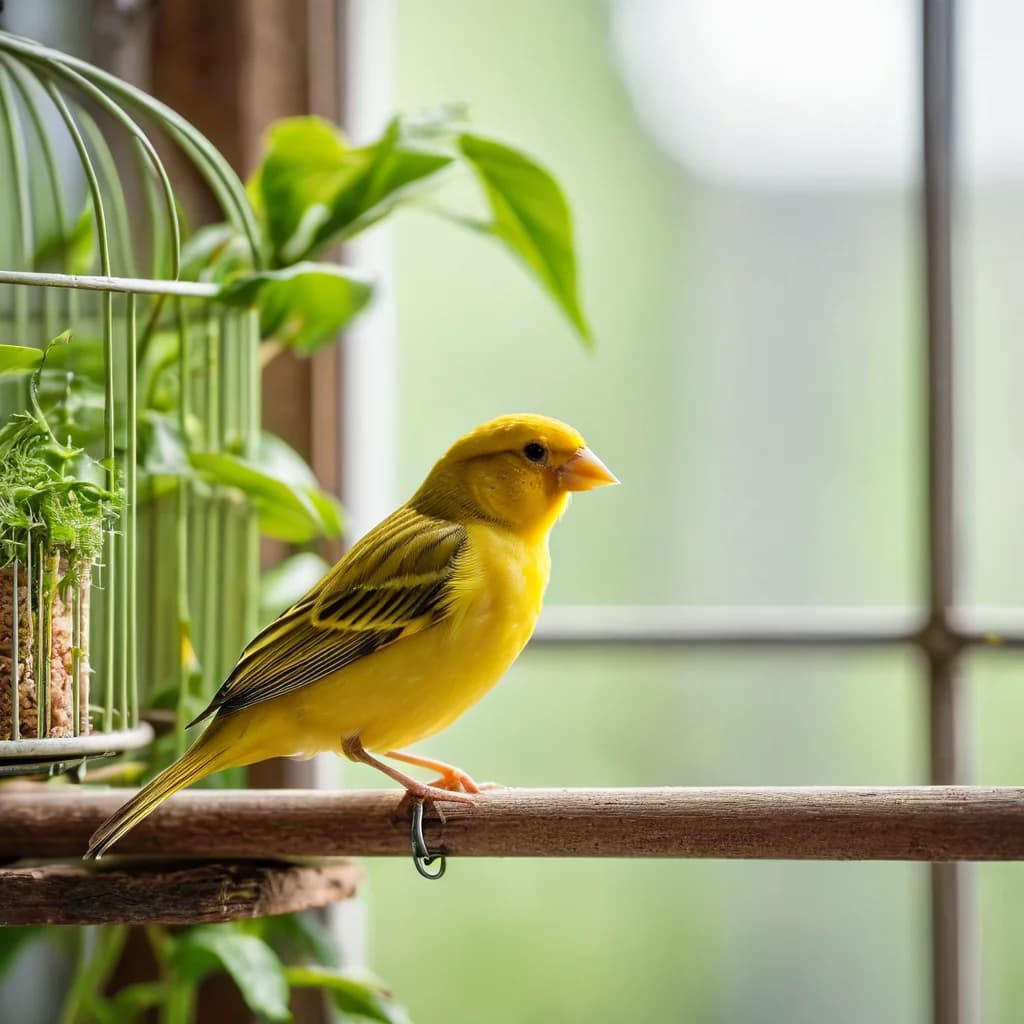

Starting the day with a clear song filling the room... That is exactly what has made the canary a favorite among pet birds for centuries. Bred with care for both its color and its voice since it was brought to Europe from the Canary Islands in the 15th century, this little bird is a calm, cheerful companion that can live for many years with the right care.
However, you need to set your expectations correctly from the start. Unlike a budgie or a cockatiel, a canary is not adopted to play with by hand or to perch on your shoulder; it is a bird for watching and listening. It sings for you and delights the eye with its colors, but it will not be a lap bird. Anyone who adopts one knowing this difference gets great joy from a canary; those expecting parrot-like attention may be disappointed.
In this guide we go step by step through the basics of canary care, from singing to diet and from cage setup to the molting season. For the species' general profile, temperament and breed varieties, you can also take a look at the canary page in our encyclopedia.
How Is a Canary Different from Other Cage Birds?
A canary is not a parrot; it is a songbird from the finch family. This difference affects almost every area of care:
- Socializing: Parrots make physical contact with their owners; a canary prefers to keep its distance. Being forced to be handled is serious stress for it.
- Living alone: A male canary is perfectly happy on its own; in fact, males living alone usually sing more. Putting two males in the same cage, on the other hand, often ends in fighting.
- Voice: Parrots imitate speech; a canary sings melodic songs. If you want a talking bird, a canary is not the right choice.
- How it moves: A canary does not climb like parrots do; it flies. That is why its cage needs to be wide rather than tall.
If you want to compare different cage birds, you can find detailed profiles of dozens of species in our bird encyclopedia.
Singing: Male or Female?
In canaries, the real singer is the male. Females also make short chirps, but that long, flowing, melodic song is largely unique to males, because in nature, song is the means of courting the female and defending territory.
There are a few important points to know about singing:
- A male canary usually reaches its full song at six to eight months of age. In young birds it is hard to tell the sex from appearance, so when you buy a very young bird expecting it to sing, there is no way to be certain.
- Singing is seasonal. It peaks in spring and the winter months and stops almost completely during the molting season. This is entirely normal and not a sign of illness.
- Stress, poor nutrition, irregular lighting and illness reduce singing. If a bird stays quiet for a long time, first look at it from these angles.
- Breeds like the Timbrado, Malinois and Roller have been bred specifically for song; in color canaries such as red or mosaic, appearance comes first, so the song may stay simpler.
Choosing and Placing the Cage
For a canary, the width of the cage matters more than its height, because the bird flies horizontally. Narrow, tall decorative cages may look nice, but they are not suitable for a canary.
- Size: For one bird, the cage should preferably be no less than 50-60 centimeters wide; the bird should be able to flap its wings and fly between two perches.
- Bar spacing: About 1 centimeter is ideal. Wider spacing can lead to the head getting stuck.
- Perches: Natural wooden perches of different thicknesses protect foot health. Avoid plastic and sandpaper perches.
- Bowl layout: Place the food and water bowls in corners where they won't get dirty, not under the perches.
Three rules stand out when placing the cage. First, the cage should sit at eye level with one side against a wall; cages in the middle of a room, open on all sides, keep the bird constantly on edge. Second, drafty hallways, spots in front of windows and the kitchen are definitely not suitable; in particular, fumes from overheated nonstick pan coatings can be fatal for birds. Third, a canary needs 10-12 hours of dark, quiet sleep every night; covering the top of the cage in the evening with a breathable cover makes this easier.
Diet: Seeds Alone Are Not Enough
Canaries fed only a seed mix face the risk of vitamin deficiency and fatty liver over time. A healthy menu looks like this:
- Main food: A quality seed mix made for canaries or a pellet food forms the daily base.
- Greens: Thoroughly washed dark leafy greens other than lettuce, arugula, purslane and parsley can be given in small amounts a few times a week.
- Fruits and vegetables: Options like apple, carrot and pepper can be offered now and then in small pieces.
- Egg food: It is important as a protein boost, especially during molting and breeding seasons.
- Calcium: There should always be a mineral block or a cuttlebone in the cage.
Avocado, chocolate, caffeine, alcohol and salty or fatty human foods are toxic to birds; never give them. The water bowl should be refilled with fresh water every day, and bath water should be offered in a separate bowl a few times a week. Canaries love bathing, and it is also the key to healthy feathers.
The Molting Season: Quiet Weeks
A canary molts once a year, usually at the end of summer, and the process lasts a few weeks. During this time the bird's energy drops, and its singing decreases or stops completely. Most new owners panic, thinking this silence is illness; in fact, molting is a healthy renewal process.
Here is how you can support your bird during these weeks:
- Increase protein and vitamin intake with egg food and fresh greens; growing new feathers takes a lot of energy.
- Offer baths more often; wet feathers make molting easier and help new feathers open.
- Avoid sources of stress such as moving the cage or adding a new bird.
- Pay attention to the light schedule; rooms that stay lit late into the night can disrupt the molting rhythm.
If molting repeats out of season, lasts for months or leaves bare patches exposed, it is not normal molting; consult your vet.
Signs of Illness: What to Watch For
In nature, birds instinctively hide their illnesses so they don't look weak to predators. That is why by the time a symptom is noticed, the condition has usually progressed; catching it early saves lives. Take these signs seriously:
- Constant dozing during the day with feathers fluffed up
- Loss of appetite, standing at the food bowl without eating
- Changes in the color, consistency or frequency of droppings
- A noticeable bobbing of the tail while breathing, wheezing or breathing through the beak
- Discharge or swelling in the nostrils or eyes
- Being unable to stay on the perch and moving down to the cage floor
If even one of these signs is present, move the bird to a warm, quiet spot and see a veterinarian who works with birds without losing time. Trying medication at home with recipes found online can quickly make things worse in a small bird.
Frequently Asked Questions
How long do canaries live?
A well-cared-for canary in a home usually lives 8-10 years; with a balanced diet, a clean cage and a stress-free environment, this period has been seen to get longer. Feeding mistakes and environmental risks like drafts noticeably shorten its life.
Why isn't my canary singing?
The first possibility is that the bird is female; females do not sing long songs. If it is a male, the molting season, getting used to a new environment, stress, age or an illness that is starting can stop the singing. If the silence lasts longer than a few weeks and other signs come with it, it is right to consult your vet.
Should canaries be kept alone or in pairs?
A male canary is happy on its own and usually sings more eagerly. If you want to get a pair, remember that a male-female combination brings serious responsibilities such as breeding, caring for chicks and the need for a separate cage. Keeping two males in the same cage is not recommended because of the risk of fighting.
Where in the house should a canary cage go?
A corner with one side against a wall, at eye level, free of drafts, getting daylight but not exposed to direct sun is ideal. The kitchen is not suitable because of its fumes and sudden temperature changes. Providing a quiet, dark environment at night also helps keep the singing regular.









