


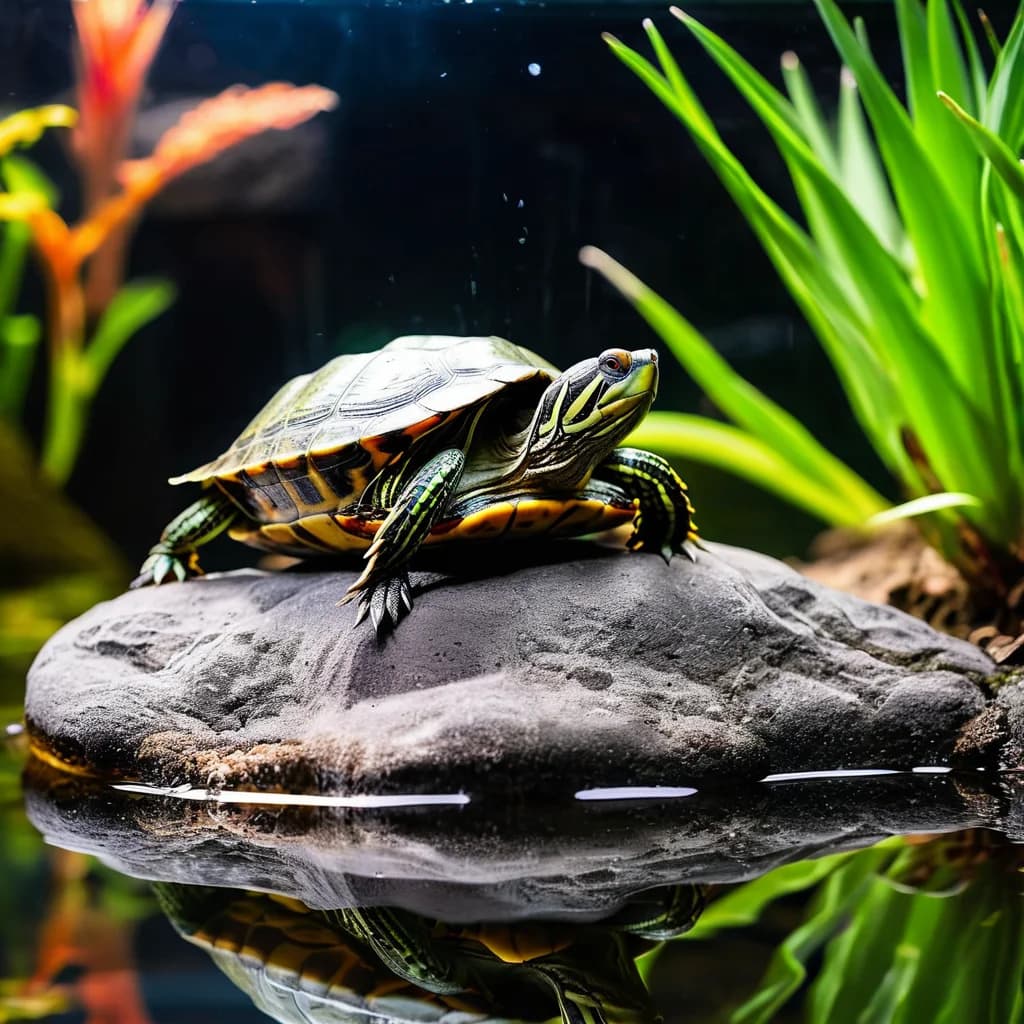

With their calm manner and one-of-a-kind personalities, turtles are the quiet stars of the pet world. An aquatic turtle that swims up to the edge of the tank asking for food, or a tortoise slowly wandering around its terrarium, brings a very different kind of peace to a home. But let's correct a common misconception right from the start: turtle care is not as easy as people think. Without the right equipment, the right temperature and the right diet, these tough-looking animals quietly get sick.
On top of that, the needs of aquatic turtles and land turtles (tortoises) differ a lot. One wants a deep, clean area of water to swim in, while the other lives on dry, warm ground. Their diets differ too: one starts out mostly on protein and shifts toward vegetables over time, while the other eats almost nothing but greens.
In this guide we walk you step by step through what you need to know as a beginner, from setting up an aquaterrarium or terrarium to why heat lamps and UVB are essential, and from diet differences to shell health and hibernation.
Aquatic Turtle or Tortoise?
Your first decision is the species. Aquatic turtles spend most of their lives in water; they swim, feed in the water and climb onto land only to warm up. Tortoises live entirely on land, can't swim and are at risk of drowning in deep water. That's why the habitat, equipment list and daily routine for the two groups need to be planned differently from the start.
Before you decide, you can look through the turtle species in our encyclopedia and check out the profile of the aquatic turtle, which is commonly kept in tanks. The species' adult size, expected lifespan and space needs directly determine how big your setup should be. A hatchling that fits in the palm of your hand can reach the size of a plate within a few years, so always plan the setup around the adult size.
Setting Up an Aquaterrarium: The Aquatic Turtle's Home
The ideal setup for an aquatic turtle is an aquaterrarium with both a swimming area and a completely dry zone. A bowl or plastic tub filled only with water invites health problems before long. The key points to watch when setting it up:
- Tank size: Plan for the adult size; aim for a swimming area several times the length of the shell, where the turtle can easily turn around and swim.
- Filter: Turtles dirty water much faster than fish do. An external filter rated above the tank's volume protects water quality and lightens your maintenance load.
- Water temperature: Keep it warm and steady with an aquarium heater. Sudden drops in temperature weaken the immune system and set the stage for respiratory infections.
- Regular water changes: Even with a filter, make partial water changes part of your routine; dirty water is a main cause of shell and skin problems.
Why Is a Basking Area a Must?
A completely dry platform above the water, warmed by a heat lamp, is non-negotiable. This is where the turtle raises its body temperature, dries its shell and lowers the risk of fungus and shell rot. If a turtle never climbs onto the platform during the day, either the temperature balance is off or the animal doesn't feel safe; review the setup.
Setting Up a Terrarium: For Tortoises
For a tortoise, the priority is floor space, not height; a wide, low-walled terrarium or a safe enclosed area in a room works well. Use a natural substrate it can dig in, such as soil or a sand and soil mix; newspaper or slippery surfaces are bad for joint health. A hide, a shallow water dish that can't tip over and a heat gradient set up so that one end is warm and the other cool complete the basic setup.
Humidity needs vary by species, but the habitat shouldn't be completely barren. If you can, an escape-proof, shaded garden area in the summer months, together with real sunlight, offers a real boost in quality of life.
Heat Lamp and UVB: The Non-Negotiable Pair
Turtles are cold-blooded; they get their body heat from their surroundings. That's why a heat lamp isn't a comfort accessory but a precondition for digestion and immunity. The basking zone should be noticeably warm and the rest of the habitat cooler, so the animal can regulate its own temperature.
UVB light, meanwhile, is needed to make vitamin D3. Without D3, calcium can't be absorbed; the result is a softening shell, weak bones and metabolic bone disease. Because glass filters out most UVB rays, putting the tank in front of a window doesn't meet this need; the light has to reach the animal directly, with no glass in between. A few practical rules:
- UVB lamps lose strength over time; even if the light still looks on, replace them at regular intervals according to the manufacturer's recommendation.
- The light cycle should mimic the day and night rhythm; keeping the lamps on for about ten to twelve hours a day is enough.
- Position the heat and UVB source above the basking platform, so the turtle gets UVB at the same time as it warms up.
Diet: Protein or Greens?
Diet is where aquatic turtles and tortoises differ the most, and the wrong menu is one of the main causes of shell problems.
Feeding Aquatic Turtles
Young aquatic turtles are mostly carnivorous: they eat protein sources such as quality pellets and dried shrimp. As they grow, the plant share of the menu needs to increase; for adults, dark leafy greens, aquatic plants and vegetables should make up a large part of each meal. Young turtles are usually fed every day and adults every other day. Overfeeding dirties the water quickly and leads to obesity; any amount it can't finish in a few minutes is too much.
Feeding Tortoises
Tortoises are largely herbivorous. The main menu is dark leafy greens, grasses and edible plants; a high-fiber diet is the key to digestive health. Fruit should stay a rare treat, and sugary foods should be limited because they upset the digestive balance. Never give cat or dog food, bread or dairy products. Calcium support matters for shell development; decide which supplement and dose are right by talking with your vet.
Shell Health, Hibernation and a Long Life
The shell is a mirror of a turtle's health. Check regularly for these signs:
- Softening: A typical sign of a calcium or UVB deficiency; review the setup and talk to your vet.
- White spots, a bad smell, soft spots: These can point to shell rot. Check the water quality and the basking area, and see a vet without delay.
- Pyramiding: In tortoises, the scutes rise up into little peaks; this is linked to a high-protein diet and the wrong habitat conditions.
As for hibernation: in the wild, many species sleep through the winter, but at home hibernation is a risky process. For an animal that goes into hibernation at the wrong temperature or without enough body reserves, the outcome can be fatal. In a home where the temperature is kept steady, a turtle can live a healthy life without hibernating. If you are still considering hibernation, always have a vet check-up first.
The last and perhaps most important point: turtles are animals that can live for decades. The hatchling you bring home today will still need care many years from now. This isn't a one-season whim but a long-term commitment; before you adopt, honestly ask yourself whether you are ready for that length of time.
Frequently Asked Questions
Can an aquatic turtle live in a tank with fish?
It's generally not recommended. Aquatic turtles see fish as prey; a fish it leaves alone today, it may eat tomorrow. Also, since turtles dirty water quickly, it becomes hard to keep the water quality fish need. Keeping them in separate tanks is healthier for both.
Can you care for a turtle without a UVB lamp?
Indoors, no. Without UVB, calcium absorption breaks down, and over time shell softening and metabolic bone disease develop. The only exception is a safe outdoor setup where the animal regularly gets direct sunlight; light coming through glass doesn't meet this need.
My turtle's shell is flaking. Is that normal?
In aquatic turtles, it's natural for the shell scutes to shed in thin, transparent layers as they grow. But if there is bleeding, a bad smell, softness or a change in color where it's shedding, this isn't the normal cycle but a sign of a problem; talk to your vet.
How long do turtles live?
It depends on the species and the quality of care; aquatic turtles can live for decades with regular care, and tortoises can live for more than half a century. That's why adopting a turtle is a longer-term responsibility than with most pets.









