


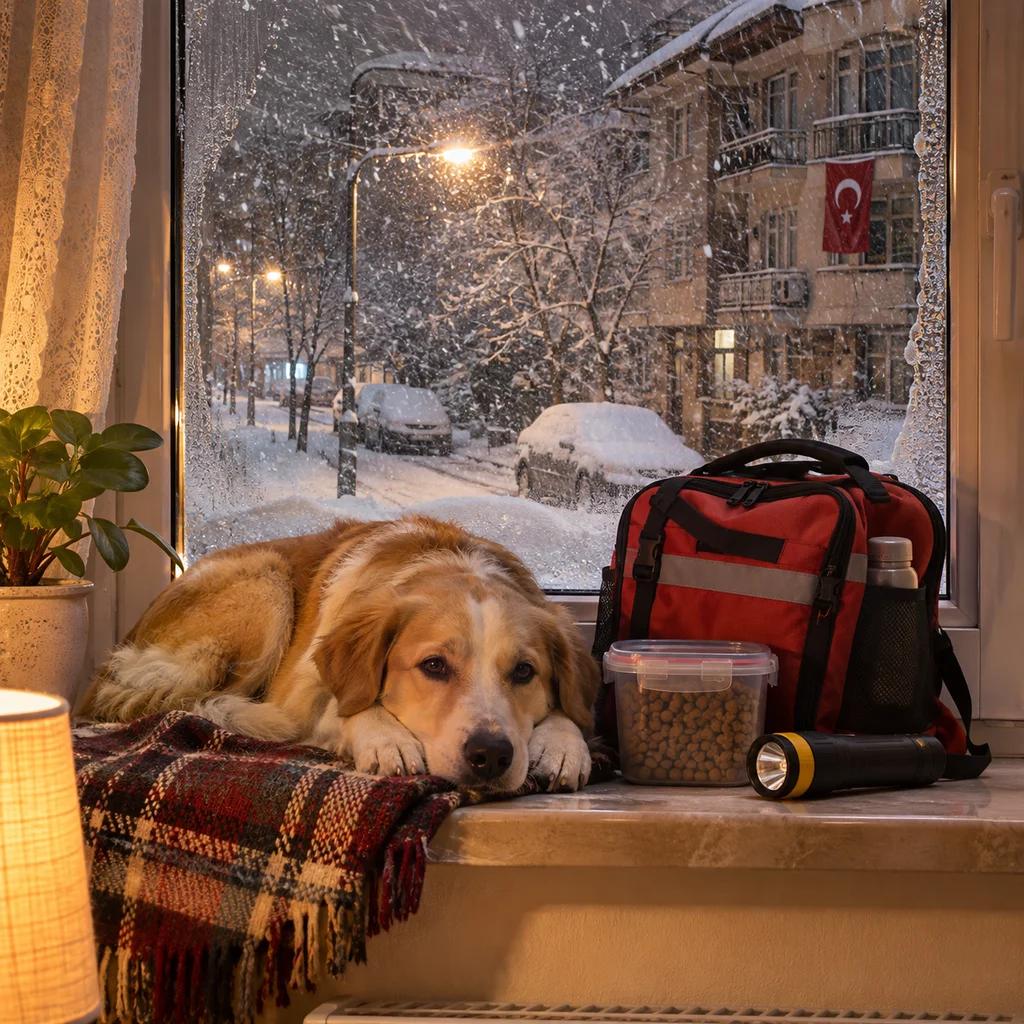

Snow is fun on the first day. Kids head outside, dogs roll around in it, cats watch big flakes fall from the window. But heavy snow sometimes lasts for days. Roads close, public transit stops, power or water can be cut, and finding pet food on store shelves gets harder. In Eastern and Central Anatolia this can happen all winter long, and in big cities snow can shut things down for a few days.
In a situation like that, thinking about your pet's needs at the last minute is stressful. Setting aside a few hours at the start of winter to prepare makes those days much calmer.
Food and water supply
Don't wait until your pet's food is a few days from running out; keep one extra bag on hand. When snow shuts things down, shipping and deliveries can be delayed, and the food you use may not be in the store. A sudden change of food causes digestive problems in some animals, so it matters that the spare bag is the same food.
- Store dry food in a cool, dry place in a closed container.
- If you use wet food, keep a few days' worth in reserve.
- In case the water is cut, set aside sealed bottles of water for both you and your pet.
- Cat litter belongs on this list too. A cat that has run out of litter may start using other parts of the house as a toilet.
Medications and health information
If your pet takes a medication regularly, talk to your veterinarian at the start of winter and plan for a spare supply. With conditions that need regular follow-up, like heart, kidney or thyroid problems or diabetes, missing medication for even a few days can cause trouble.
- Write down the medication's name, dose and the time it is given, and keep the note next to the medication box.
- Keep the vaccination record or health documents in a folder that is easy to find.
- Save your veterinarian's number and the number of a place that is open at night in your phone.
If your pet has a digital pet ID in the DoldurKabı app, their vaccines, medications and health records are on your phone, so you can reach the information even when the paper documents are not in your hands. To see nearby clinics ahead of time, check the vet list, and for nights and holidays, the emergency vet page.
A small first aid kit
When snow makes it hard to get to the vet, it helps to have a few things at hand for small problems. This kit is not for treatment; it is for first aid until you can reach your veterinarian.
- Sterile gauze and bandage rolls.
- Non-stick tape and small scissors.
- Clean towels and a damp cloth.
- A protective paw cream or a product your veterinarian recommends.
- Tweezers suitable for ticks or splinters.
- A flashlight and spare batteries.
If the power goes out
The weight of snow can affect power lines, and outages can last for hours. If the boiler or electric heater stops working, the house gets cold fast.
- Pick one room in the house as the shared warm room. Keeping the door closed holds in the heat.
- Move your pet's bed into this room and lay extra blankets on it.
- For cats, a covered box or bed helps them hold in body heat.
- Do not use a charcoal brazier, gas canister heater or any other open-flame heater in a closed room. Carbon monoxide has no smell and can be deadly for both people and animals.
- If you use candles, do not put them where your pet can knock them over, and blow them out when you leave the room.
Potty breaks and short trips out in the snow
Dogs still have to go outside when it snows. But deep snow is hard for small dogs, and ice, glass or holes can hide under the snow.
- Shovel a small area in front of your house or building and have your dog do their business there.
- Keep trips out short and frequent.
- Because of snow and road salt, wipe their paws with a warm cloth every time you come back in and dry between the toes.
- In long-haired dogs, snowballs build up in the fur on the legs and between the paw pads. Melt them with warm water and clean them off.
- Don't let your dog eat snow. Dirty snow or snow at the side of the road may contain chemicals.
Don't let cats go outside in snowy weather. Even a cat used to going out can lose its way in the snow, may not be able to follow its own scent, and may crawl into car engines looking for shelter from the cold.
Energy and routine on snow days at home
When snow cuts walks short, a dog's energy builds up inside the house. Chewing furniture, barking or restlessness can increase on these days. Cats can also be affected by everyone being home and the routine being thrown off.
- Keep feeding times and sleep schedules as consistent as you can.
- Put part of their food in a snuffle mat, in stuffable toys or in small bowls hidden around the house. Searching for their food tires a dog out mentally.
- Do short training sessions a few times a day. Even repeating commands they already know helps.
- For cats, short play with a feather wand or a ball, spread over a few sessions through the day.
On these days with less activity, also review food portions and treat amounts. A short snow closure doesn't call for big changes, but remember that treats add to the daily food.
Extra prep for senior and sick pets
If you have a senior pet or one with a chronic illness, snow days can be harder on them. Joint pain can get worse in the cold, and the risk of falling on slippery floors goes up. Lay non-slip rugs inside the house, move their bed out of drafts and support them on potty trips. If they eat a special diet, be sure to count a spare supply of that too.
Escape risk after the snow
Snowdrifts sometimes make garden walls and fences lower. A dog can easily get out over snow piled up against a wall it normally can't jump. If you live in a house with a yard, walk along the fence after the snow and move the drifts away from the base of the wall.
Scents also disappear in the snow. A pet that gets out has trouble finding familiar smells and can lose the way home. Make sure the ID tag and microchip information are up to date. If your pet goes missing, post a listing in the lost pets section without delay; the listing reaches users in the area as a notification.
Your pet at home if you get stuck on the road
This is the item on the list people often forget: if snow catches you away from home, who will look after your pet? Roads can close while you are at work or out of town. Leave a spare key with a neighbor or a friend who lives nearby, and tell them where your pet's food and medication are. This small arrangement means your mind won't be stuck at home on the night you are stuck on the road.
Frequently Asked Questions
Is it OK if I don't take my dog out at all while it's snowing?
Short trips out are needed for your dog's potty breaks. In heavy snow and storms, keep walks short and burn off their energy with sniffing games and short training sessions indoors.
How much food should I keep in stock?
Instead of a fixed time period, use this rule: have the next bag at home before the one you're using runs out. If snow closures in your area last a long time, increase that margin a bit.
The power went out and my cat is shivering. What should I do?
Bring the cat into the warm room and settle them in a covered bed or a box covered with a blanket. If the shivering doesn't stop as they warm up, or the cat seems lethargic, talk to your veterinarian.
What should I do if snow keeps me from reaching the vet?
First try reaching them by phone. Many veterinarians can listen to the situation on the phone, tell you whether it is an emergency and explain what to watch for at home. That is why it matters to save the number in your phone at the start of winter. If it is an emergency and the roads are closed, you can ask local authorities or emergency hotlines about getting a road cleared. While you wait, keep your pet warm and calm, and do not give them human medication on your own.









