

Most cats look for a place to hide the moment they see the carrier. Riding in a car, hearing other animals in an unfamiliar salon and waiting their turn make for an exhausting day. A mobile groomer removes most of that burden: the grooming happens in the home your cat knows, or right outside it.
Still, even at home, a stranger, the sound of clippers and being held are new experiences for a cat. The way to make the first session go smoothly is a little preparation that starts a few days before the groomer arrives. In this article we go step by step, from what to discuss with the groomer to how to set up the room and what to check after the session.
First, find out whether the groomer works with cats
Some mobile groomers care for both cats and dogs, while others work only with dogs. So the first step is to check the groomer's profile to see which species they serve. Sharing this information when you send a request helps the groomer come prepared:
- Your cat's age and approximate weight
- Coat type: short, medium-long or long
- Are there mats, and if so, where?
- Has your cat been groomed before, and how did it go?
- Does your cat react to being held by scratching, biting or freezing up?
- Any known health problems or medications?
Some mobile groomers work independently with their own water and power setup, while others need an outlet or water from your home. Asking ahead of time saves you surprises on the day of the session.
What kind of grooming does your cat need?
Long-haired cats
For long-haired cats, the need is usually detangling mats, combing and a hygiene trim around the rear. If the mats are very close to the skin, do not try to cut them at home with scissors; a cat's skin is thin and loose, so the risk of cutting it is high. It is safer to leave this job to the groomer.
Short-haired cats
Short-haired cats usually do not need shaving. Combing out dead hair during seasonal changes, nail trimming and checking around the ears are often enough. Not every cat needs a bath; decide together with the groomer based on whether your cat keeps itself clean.
Senior cats
Aging cats sometimes cannot reach their backs and rear ends, so the fur in those areas tangles quickly. Since their joints may be sensitive, being held in the same position for a long time tires them out. You can ask the groomer to keep the session short or to take breaks along the way.
If you are curious about breed-specific coat care, you can look up each breed's care information in the cat breeds encyclopedia.
The days before the session
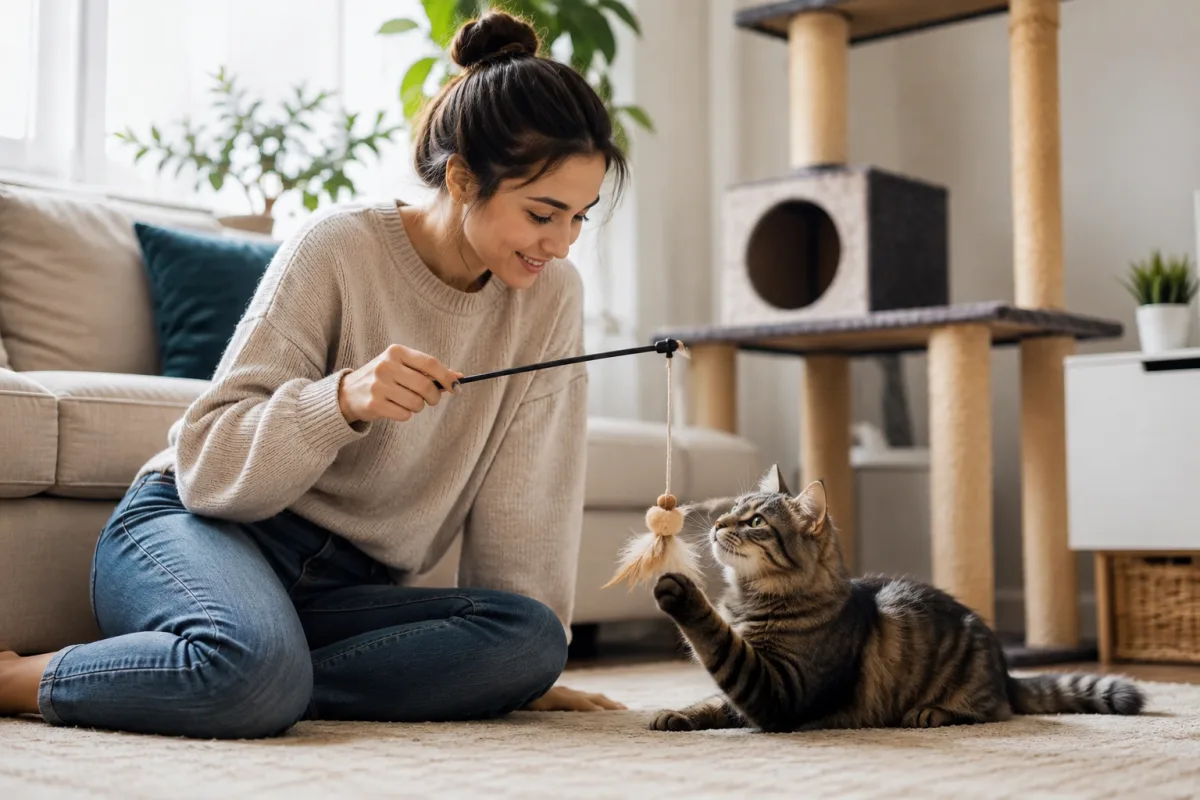
Introducing some of what the groomer will do in small doses ahead of time reduces your cat's surprise on the day.
- Touching the paws: When your cat is calm and content, touch its paws briefly, then give a treat. Within a few days it gets used to the touch.
- Around the ears and neck: During a petting session your cat enjoys, gently touch the edges of the ears and under the chin.
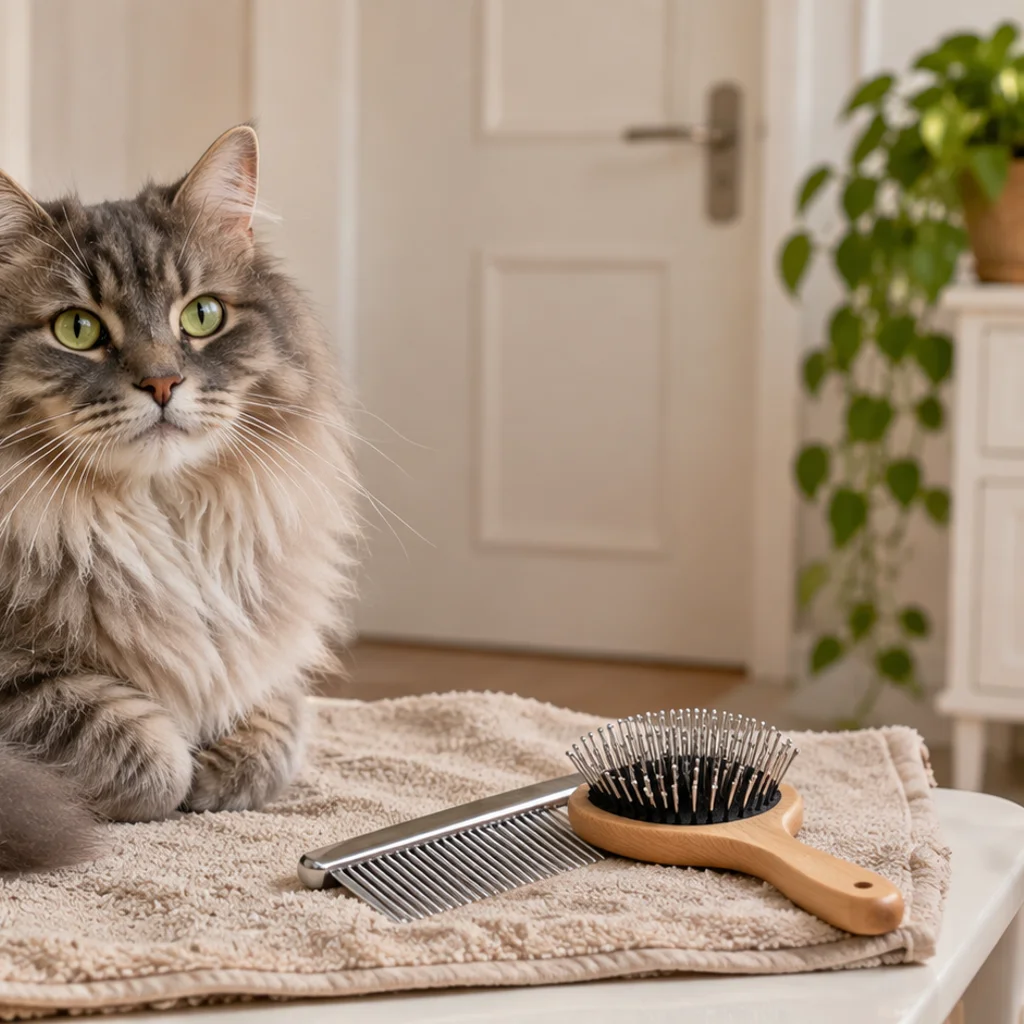
- Brush: Comb for a few minutes a day, starting with the areas your cat likes. If your cat walks away, do not force it; try again the next day.
- Sounds: If you have an electric trimmer or a similar-sounding device at home, run it briefly a few meters away from your cat, then give a treat.
These exercises should stay short and pleasant. The goal is to get your cat used to things, not to scare it. If your cat responds to a touch by flattening its ears, lashing its tail or pushing your hand away, stop there for the day. The next day, start again one step back, with a shorter touch. Telling the groomer which areas your cat does not like having touched lets them plan the session so those areas come last.
Prepare the room on the day of the session
When cats hear an unfamiliar sound, they retreat under the bed, behind a cabinet or into a hard-to-reach corner. Every minute spent searching for your cat after the groomer arrives stresses both your cat and you. So before the session starts:
- Choose the room where the grooming will happen, ideally one with a door that closes.
- Block escape spots like under the bed and behind cabinets.
- Bring your cat into this room before the groomer arrives and close the door.
- Keep any other pets in a different room.
- Turn off the TV and other loud devices.
- Prepare a non-slip surface; a slippery table makes a cat even more nervous.
During the session
Being there for the first session reassures most cats. Talk in a calm voice, but do not keep petting your cat and interrupting the groomer's work. If your cat is very stressed, breathing fast, constantly trying to escape or drooling heavily, do not hesitate to suggest a break. For some cats, splitting the grooming into two or three short sessions can work much better than finishing it all at once.
With very stressed or heavily matted cats, sedation sometimes comes up. That is the vet's decision, not the groomer's, and it is made based on your cat's overall health. If there is a chance of this, the right order is to talk with a vet before the session.
Checking after the session
After the session your cat may hide for a while or groom itself at length; this is usually normal. Still, for the first two days, look for the following:
- Is there redness, a small cut or a scratch on the skin?
- Is your cat constantly licking or biting the shaved area?
- After nail trimming, is there limping or reluctance to put weight on a paw?
- Is your cat still eating and using the litter box?
If redness does not fade within a few days, if your cat licks an area until it becomes a sore, or if it stops eating, check with your vet.
Quick care at home between sessions
A small routine you set up at home makes the mobile groomer's job much easier. Mats do not form overnight; fur that goes uncombed for a few days turns first into small knots, then into mats stuck to the skin. A few minutes of combing a day for a long-haired cat, or a few times a week for a short-haired cat, slows this process.
Time combing for a moment when your cat is in a good mood, for example after a meal or when it wakes up and stretches. Start with the areas it likes, and move to sensitive spots like the belly and inner hind legs only if your cat is relaxed. If you find a small knot, try to work it loose slowly with your fingers instead of pulling; if it will not come apart, make a note to show the groomer next time. This routine lets the groomer focus on your cat's overall care instead of spending every session on mats, and it keeps sessions shorter.
Finding a mobile groomer on DoldurKabı
On DoldurKabı's mobile pet groomer page, you can choose your city, browse the profiles of groomers near you and check whether they work with cats. You can send your request right from the page without downloading the app, and describe your cat's situation in the request note. The scope of the service, the fee and payment are agreed on between you and the groomer.
Frequently Asked Questions
Should I bathe my cat before the mobile groomer comes?
No. The groomer wants to see the condition of the coat and skin for themselves. If a long-haired cat is bathed beforehand, its mats can get even tighter once wet.
Should the groomer trim my cat's nails, or should I?
If your cat is used to nail trimming, you can do it at home. If you are not sure, or if your cat resists a lot, it is safer to leave it to the groomer or your vet; cutting into the blood vessel inside the nail causes bleeding.
How often should grooming be done?
It depends on coat type, age and how well your cat keeps itself clean. Long-haired cats may need more frequent grooming; the groomer can suggest an interval after the first session.
What should I do if my cat hides and won't come out?
Bringing your cat into a closed room before the session largely prevents this problem. Still, if your cat is extremely scared, postponing the session is better than pulling it out by force.