


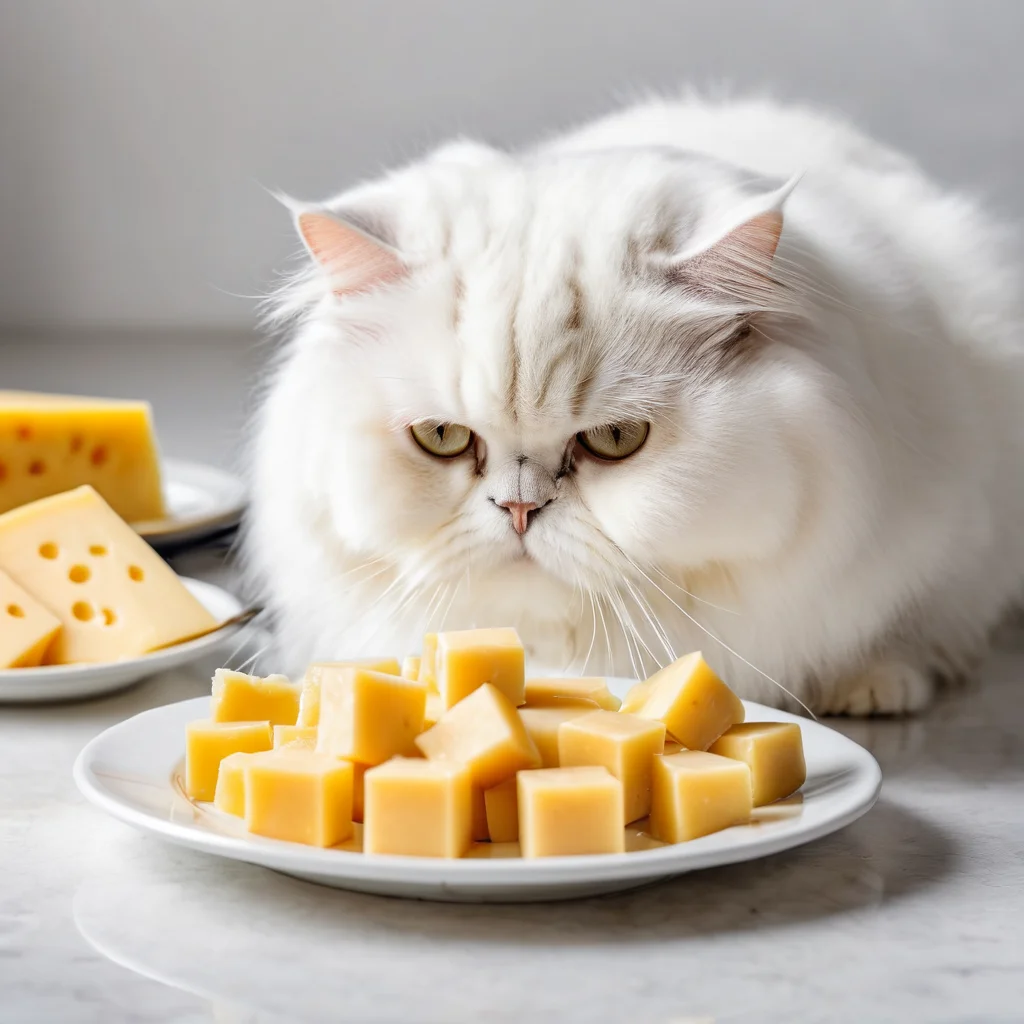

Short answer: LIMITED / GENERALLY NO. Cheese isn't dangerous for cats, but it isn't recommended: lactose intolerance, high fat, sodium, and a nutritional value that doesn't suit cats. A very small amount (to hide a pill) is OK.
Why Is It a Problem?
- Lactose: Adult cats can't digest lactose (they can't really drink milk either)
- Fat: High, which can cause pancreatitis and weight gain
- Salt: Sodium and thirst
- Added ingredients: Flavored or spiced cheeses are dangerous
Which Cheeses (in Limited Amounts)?
- Mozzarella (low fat and lactose)
- Cottage cheese (low lactose)
- A small cube of cheddar (to hide a pill)
Dangerous Cheeses
- Blue cheese (Roquefort, Stilton), due to toxins
- Cream cheese with onion or garlic
- Processed cheese slices (E-number additives and salt)
- Mold-ripened cheeses
The Right Amount
A pea-sized piece, 1-2 times a week. If you're using it to give medication, switch to other techniques (mixing it into food, a pill pocket).
Symptoms (Too Much)
- Diarrhea, vomiting
- Gas
- Loss of appetite
- Excessive thirst
FAQ
Why do cats love the smell of cheese? The smell of fat and protein appeals to a cat's predator instincts.
Can kittens have cheese? NEVER. A kitten's digestive system is more sensitive.
Can diabetic cats have cheese? Vet approval is a must, and it's generally not recommended.
For planning your cat's diet, see the DoldurKabı pet health guides.









