


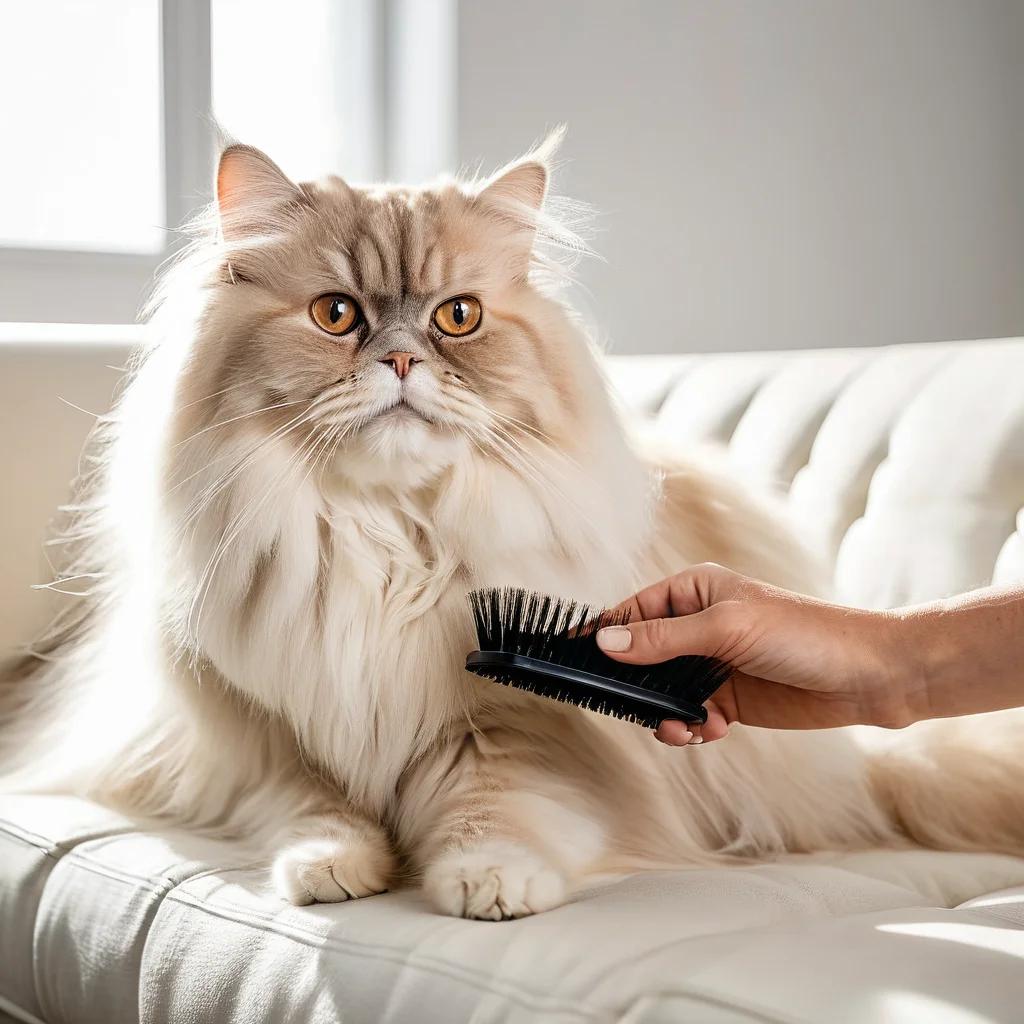

You wake up in the morning and find a strange, cylinder-shaped wad of fur next to the bed, or a "curled-up clump of hair" on the rug: your cat has brought up a hairball (trichobezoar). Most cat owners deal with this routinely; it is actually a natural digestive byproduct. But hairballs that keep coming back often, or that the cat can't bring up, can cause a digestive blockage, and at that point it is a medical emergency. This post covers what's normal for hairballs, how to prevent them, treatment and when you should go to the vet.
1. Why Do Hairballs Happen?
Cats spend 2-3 hours a day grooming themselves by licking, which makes up most of their daily grooming behavior. During this, the backward-facing barbs on the tongue (filiform papillae) catch loose hair and the cat swallows it. Most of the swallowed hair normally passes out in the stool, but some builds up in the stomach and forms a clump → the cat vomits it up.
Bringing up a hairball 1-2 times a month is considered normal in a healthy cat. More often than that calls for action.
2. Which Cats Are at Higher Risk?
- Long-haired breeds: Persian, Maine Coon, Norwegian Forest Cat, Himalayan, Ragdoll.
- Cats that overgroom: Stress-driven compulsive licking.
- Senior cats: Their digestive system has slowed down.
- Cats prone to constipation: The hair can't pass out in the stool.
- Bored cats that lick a lot.
3. Normal vs. Worrying Hairballs
Normal
- Vomiting a hairball 1-2 times a month.
- Afterward, the cat acts normal and has an appetite.
- A cylinder-shaped, dark clump comes up.
- No change in behavior.
Worrying
- 1+ hairballs a week.
- Dry heaving (retching with nothing coming up).
- Loss of appetite.
- Constipation + straining to pass stool.
- Hardness or pain in the belly.
- Lethargy.
- Vomiting blood.
If you see worrying signs, go to the vet: an intestinal obstruction is a life-threatening emergency.
4. Prevention: 6 Methods
1. Regular Brushing
- For short-haired cats, 1-2 times a week.
- For long-haired cats, 5-10 minutes a day.
- Brush more often during shedding season (spring and fall).
- A soft comb or a "Furminator" type undercoat tool works very well.
2. Hairball Control Food
Special high-fiber foods (Hill's Hairball, Royal Canin Hairball Care) support digestive movement. With regular use, the benefit is noticeable.
3. Hairball Control Paste (Malt Paste)
Its oily texture lubricates the hair buildup in the stomach and helps it pass. You can give your cat 1 cm on your finger 2-3 times a week. Some cats accept it, some refuse.
4. Plenty of Water + Wet Food
- Put out more than one water bowl around the house.
- A fountain-style water dispenser.
- Wet food making up 50%+ of the diet supports the digestive system.
5. Stress Management
In a cat that overgrooms, the root cause is stress. Feliway, play sessions, environmental enrichment.
6. Regular Exercise
In a sedentary cat, bowel movement slows down. Play for 10 minutes twice a day.
5. When a Hairball Comes Up: Home Care
- Clean up around the cat, and don't touch the cat (let it calm down first).
- Check that it has access to water.
- It should return to normal behavior within 1 hour.
- If there are 3+ attempts to vomit within 24 hours, go to the vet.
6. Common Owner Mistakes
- Giving milk to help a hairball pass. Because of lactose intolerance, milk only adds diarrhea.
- Shaving the coat. For long-haired cats, professional brushing if needed; shaving causes skin problems.
- Giving oil (olive oil, butter). Risk of pancreatitis; use only paste prescribed by a vet.
- Skipping brushing. Brushing alone is the most effective preventive step.
- Switching to hairball food permanently without checking first. The calorie + fiber balance can change; do it under vet supervision.
- Using "hair dissolving" tablets made for people. The dose is different, and it can be fatal.
7. When to See the Vet?
- More than one hairball a week.
- Dry heaving (retching + nothing coming up).
- Loss of appetite + lethargy.
- No bowel movement for 3+ days.
- Hard belly, pain.
- Vomiting blood.
- Hairballs out of control in a long-haired cat.
At the vet: an exam + X-ray/ultrasound + (if needed) fluids + an enema + surgery in advanced cases.
8. Frequently Asked Questions
If my cat doesn't bring up hairballs, is it healthy?
Usually yes. Some cats pass all the hair in their stool and never vomit it up. That is ideal, not a concern.
Will every cat eat hairball paste?
Some cats happily eat malt paste, others refuse it. If yours refuses: dab it on a paw (the cat eats it while cleaning), or mix it into food.
Is shaving a solution?
In most cases, no: for a long-haired cat, professional brushing is enough. In extreme cases, a one-time "lion cut" in the summer months can be considered, but not as a regular thing.
Is it harmful to feed hairball control food all the time?
These high-fiber foods are designed for long-term use. Continue under vet supervision, based on your individual cat's other needs.
How can I tell stress grooming apart?
If there is clingy behavior toward you, thinning hair in a certain area, the same spot being licked constantly + a stress trigger (a new animal, moving), it is stress grooming. Solve it with a vet + a behaviorist.
Is it helpful to take my cat to a pet groomer?
For long-haired cats, professional brushing + bathing every 3-4 months is recommended. A session before shedding season helps a lot.
Do kittens get hairballs?
Very rarely; kittens' grooming isn't mature yet + their digestive system is different. If you see a hairball in a kitten, get a vet check; there could be another cause.
Final Word
Hairballs are an accepted part of life with a cat, but when they become more frequent than normal, that is a warning sign. With regular brushing + plenty of water + hairball control food, most cases are easy to manage.
Log your grooming routine, the products you use and your vet checkup dates in DoldurKabı Pet Health Tracking.
This guide is for information only; if hairballs keep happening, see your vet.









