


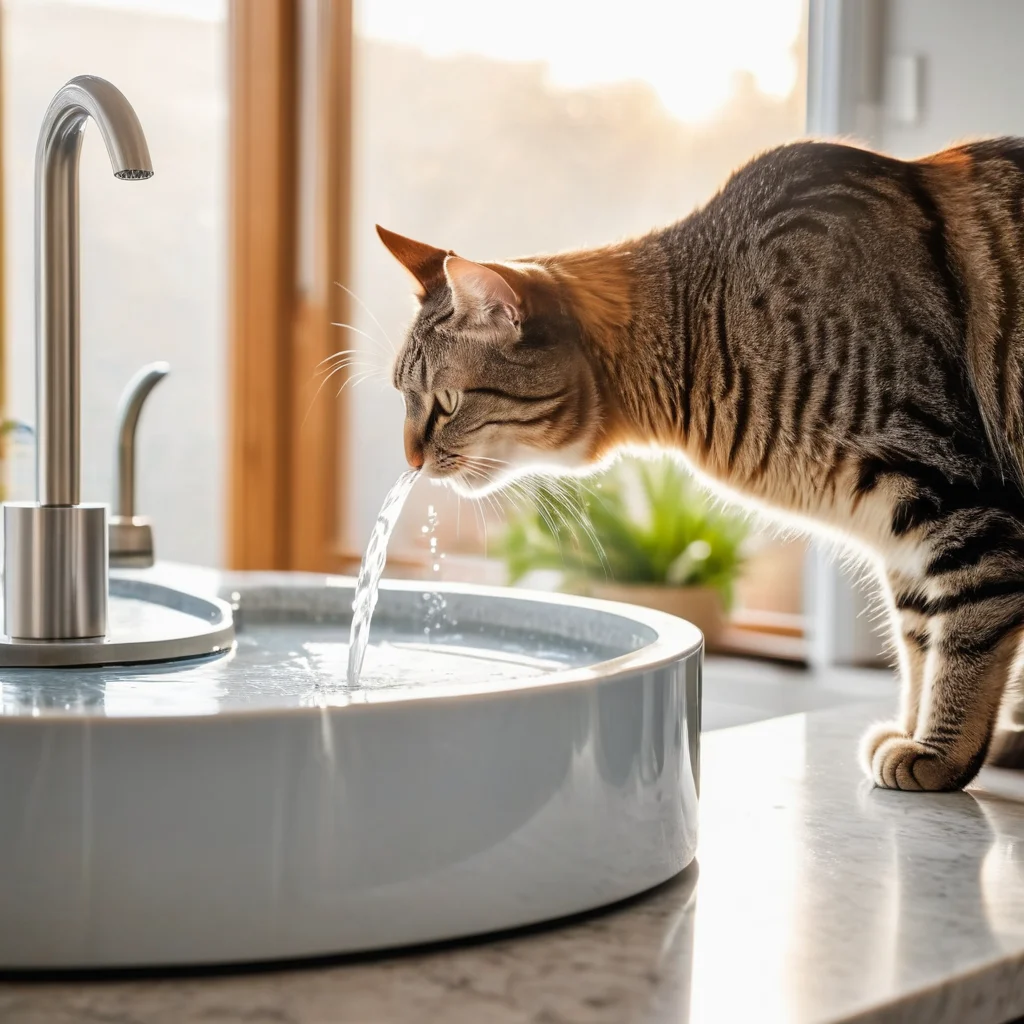

Cats naturally drink little water. Because they inherited it from desert-dwelling ancestors, they're wired to get their body water from food. In the modern home, constant dry food feeding disrupts that system, and the cat slips into ongoing low-level dehydration. The result: kidney failure becomes unavoidable in old age, and the risk of urinary tract infections and stones is high. In this article we look at why your cat isn't drinking, the signs of dehydration, strategies to increase water intake and the ratio of wet food to dry food.
1. A Cat's Water Needs: The Numbers
A healthy cat should take in 50-60 ml of water per kilo a day. A 4 kg cat = 200-240 ml of water a day.
Of that water:
- On a wet food diet: 70% comes from food, 30% from drinking water.
- On a dry food diet: Only 10% comes from food; the remaining 90% is expected to come from drinking water.
So a cat that eats dry food has to drink 180-216 ml of water a day, but naturally it never drinks that much. The result: low-level chronic dehydration.
2. How Cats Drink
A cat drinks differently from a dog:
- Not quickly, but in small sips.
- It doesn't bring its nose close to the bowl; it lowers its neck and moves its tongue rapidly.
- Most of the time it doesn't notice it's thirsty; its thirst mechanism is weak.
- It prefers running water to still (standing) water (an instinct from its ancestors, since running water is cleaner).
- If the water bowl and food bowl sit side by side, it won't drink; it doesn't like food and water together.
3. Signs of Dehydration
These signs in your cat point to dehydration:
- Skin turgor test: Lift the skin at the shoulder and neck area, then let go. If it doesn't return to place within 1-2 seconds, that's dehydration.
- Dry, sticky gums: Healthy gums are moist and slippery.
- Sunken eyes: Drawn back into the eye sockets.
- Lethargy: Lying down all the time, lack of interest.
- Little urine: Fewer than 1 wet clump in the litter box in 24 hours.
- Dark yellow / smelly urine: High concentration.
- Sticky, thick saliva: Inside the mouth.
- Loss of appetite: Gets worse as dehydration progresses.
4. Increasing Water Intake: 8 Practical Strategies
- Running water (fountain): A cat water fountain (Catit, PetSafe, PetKit). Water that circulates constantly with a pump. Water intake goes up by 25-50%.
- Multiple water bowls: 3-5 water bowls in different rooms of the home. Cats come across them while exploring and drink.
- Water bowl material: Ceramic or glass instead of plastic. Plastic gives off a taste, and cats sometimes refuse it.
- Bowl depth: Shallow and wide. The whiskers shouldn't touch the sides of the bowl (it causes whisker stress).
- Water bowl away from the food bowl: At least 1-2 meters. It can be in a different room.
- Wet food plus dry food: 1 meal of wet food a day. Wet food is 75-80% water.
- Water in food: Add 2-3 tablespoons of lukewarm water to dry food (wait 10 minutes).
- Chicken broth (unsalted): On top of dry food 2-3 times a week.
5. Wet Food vs Dry Food: The Right Ratio
An ideal feeding plan:
- Dry food only: Convenient but carries a dehydration risk. The rate of kidney disease is high as cats age.
- Wet food only: Ideal in terms of water. But it's costly, and the risk of dental tartar is high.
- Mixed (most often recommended): 1 wet and 1 dry portion a day. Water intake and dental care stay balanced.
Daily for a 4 kg adult cat: 1 can (85 g) of wet food plus 30-40 g of dry food.
6. Dehydration Risk in Senior Cats
In cats 10 years and older:
- Kidney function declines → the ability to concentrate urine drops → more urine → greater dehydration risk.
- The sense of thirst gets even weaker.
- Chronic kidney disease (CKD) develops in 30-40% of senior cats.
In a senior cat, all dehydration strategies are twice as important. Vet checkups twice a year plus blood tests (especially BUN, creatinine, SDMA) allow early diagnosis.
7. The Link to Urinary Tract Problems (FLUTD)
A cat that drinks little water:
- Concentrated urine → mineral crystallization → urinary tract stones.
- Urination becomes less frequent → bacteria grow → cystitis.
- In male cats, urinary blockage is a life-threatening emergency (urethral obstruction).
To lower the risk of FLUTD (Feline Lower Urinary Tract Disease), water intake is a medical precaution, not just "healthy living."
8. Acute Dehydration: When Is It a Vet Emergency?
Go to the vet immediately in these situations:
- The cat's gums are sticky and pale.
- Skin turgor takes longer than 2 seconds.
- It hasn't urinated at all in 24 hours.
- It keeps going to the litter box but can't urinate (an urgent blockage in a male cat).
- Constant lying down, loss of appetite, vomiting.
- A fever above 39.5°C or a body temperature below 37°C.
The vet gives fluid therapy (subcutaneous or intravenous) and looks for the underlying cause.
9. Fluid Therapy at Home, as Recommended by Your Vet
For chronic kidney disease and some other illnesses, "sub-Q" (subcutaneous, under the skin) fluid therapy recommended by the vet can be given at home:
- Lactated Ringer's or similar, 100-150 ml, 2-3 times a week.
- Using the technique your vet shows you (a needle under the skin at the back of the neck).
- This seriously improves a senior cat's quality of life.
Never do it without a vet. The wrong fluid or dosage can cause heart failure.
10. Building a Drinking Habit: A 30-Day Plan
- Week 1: Add a fountain or a running-water bowl. Leave the existing water bowl too.
- Week 2: Move the water bowl away from the food bowl and add a 2nd bowl in a different room.
- Week 3: Introduce wet food (first 1 small portion a day, then a normal wet food portion).
- Week 4: Try chicken broth and soaked food. Watch which method your cat likes.
This plan is well tolerated by cats and brings a lasting increase in water intake. An unexpected purchase from the pet shop: a good fountain. The payoff for a cat that gains even one more year of life is big.
Getting enough water is one of the key factors that shapes a cat's lifelong health. Kidney, urinary tract and overall hydration health depend directly on daily water intake. Instead of waiting passively, it's possible to raise your cat's water intake 2-3 times with active strategies (fountain, wet food, multiple bowls, distance). This small investment supports a long, healthy life for your cat for years to come.









