


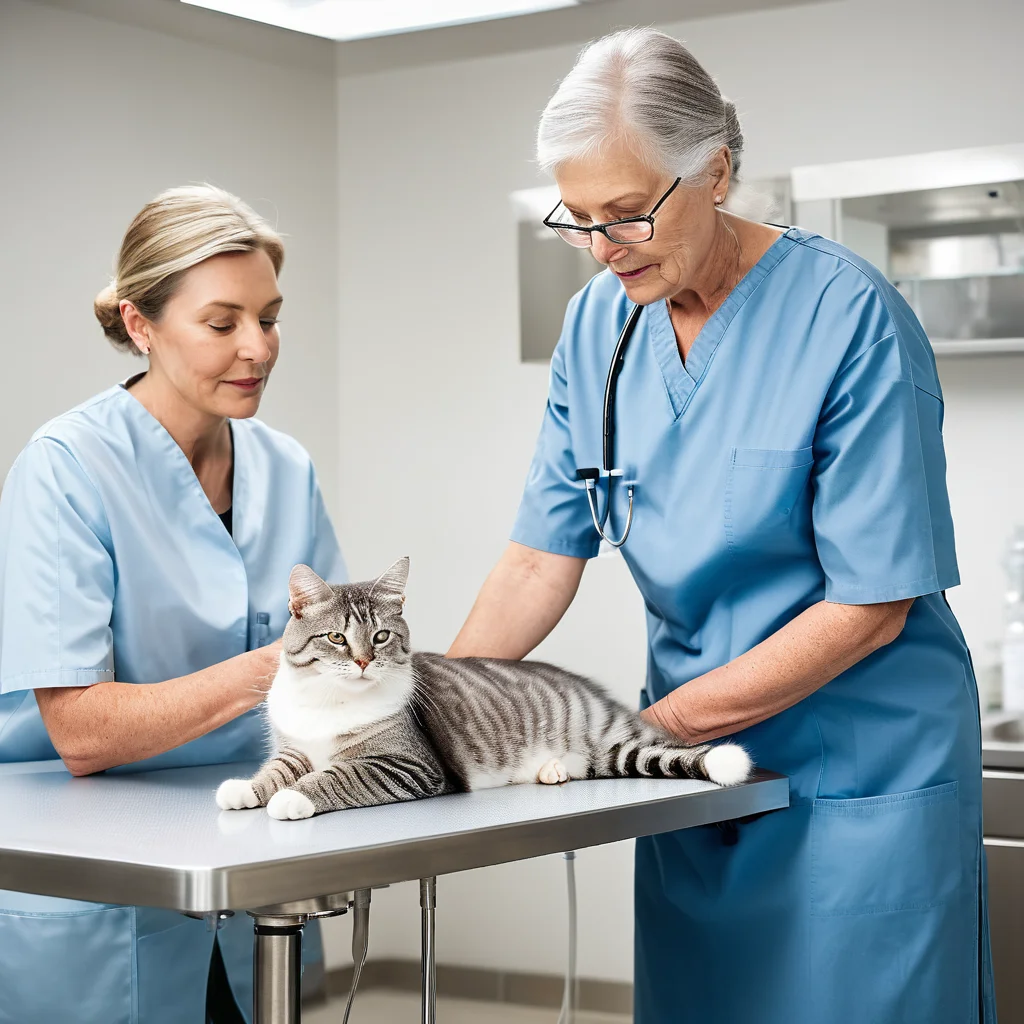

Kidney failure in cats, especially chronic kidney disease (CKD), affects roughly one in three cats over the age of 10. The good news: in cats diagnosed early, survival is measured in years. With the right diet, fluid support and regular follow-up, your cat's comfortable years can be noticeably extended. The bad news: CKD progresses quietly and usually shows no signs until about 75% of kidney tissue is damaged.
This guide covers the early signs of CKD, its stages, a feeding plan, fluid support at home and long-term monitoring. Diagnosis and treatment are always the responsibility of a vet; this article is for awareness and daily life.
1. Acute vs Chronic Kidney Failure
Acute kidney injury (AKI): It develops suddenly, after antifreeze, lilies (highly toxic to cats), certain antibiotics or a urinary tract blockage. It needs emergency vet care; if caught early, kidney function can largely recover.
Chronic kidney disease (CKD): It progresses silently over years and is usually seen in cats over 7. Treatment is not about curing but about slowing progression; with good management, most cats live 2-5 years or more with a good quality of life.
This article focuses mostly on CKD. With AKI the principles are the same, but the pace is set by emergency vet care.
2. 8 Early Signs: Don't Write Them Off as "Just Aging"
- Drinking more water: your cat's daily water intake is 50% higher than usual.
- Peeing more: you find yourself changing the litter box more often.
- Weight loss, muscle wasting: especially along the back, where the spine starts to show.
- Loss of appetite or an up-and-down appetite: good some days, refusing food on others.
- Poorer coat quality: dull, unkempt, greasy-looking.
- Bad breath (uremic odor): an ammonia-like smell.
- Vomiting: especially on an empty stomach, toward morning.
- Going quiet, hiding: a once-social cat now seeks isolation.
If you see two or more of these, don't put off an appointment for blood and urine tests.
3. Diagnosis and Staging (IRIS)
The internationally accepted staging system for CKD is IRIS (International Renal Interest Society). Your vet looks at blood creatinine, SDMA, urine specific gravity (USG) and the urine protein-to-creatinine ratio (UPC) to place your cat in one of 4 stages:
- Stage 1: Early. Creatinine is normal but SDMA is high, and urine concentration has started to drop. Treatment: diet and monitoring.
- Stage 2: Mild kidney failure. Signs are mild; this is where intensive management begins.
- Stage 3: Moderate kidney failure. Clear signs, clearly elevated blood values; multimodal treatment.
- Stage 4: Severe. The final stage, where quality-of-life decisions are considered.
CKD caught at an early stage can be managed for years; a late diagnosis seriously shortens that time. A full yearly checkup is a must for cats over 7.
4. Diet: The Most Effective Intervention in CKD
Diet is the most important pillar of medical treatment. Vet-approved renal diets have these features:
- Moderate amounts of high-quality protein: "low protein" used to be the advice, but current research emphasizes quality protein.
- Low phosphorus: phosphorus buildup speeds up CKD progression.
- Rich in omega-3 fatty acids: a kidney-protective effect.
- High moisture (wet food preferred): increases water intake.
- Low sodium: helps manage blood pressure.
Prescription renal foods (Hill's k/d, Royal Canin Renal, Specific F-KD) fit this profile. Switch slowly over 7-14 days; to keep your cat from refusing the new food, gradually increase its share in a mix of the two.
Human food is not recommended, since it throws off phosphorus and sodium control. A home-cooked recipe approved by a veterinary nutritionist is the exception.
5. Fluid Support: Subcutaneous Fluids at Home
In advanced CKD, a cat can't drink enough water or loses too much of what it drinks through urine, so subcutaneous (under the skin) fluid support becomes standard. The vet gives the owner one training session:
- Warmed lactated Ringer's or a similar solution goes under the loose skin at the back of the neck.
- Every other day or daily (as your vet decides).
- The amount depends on the cat (usually 100-200 ml).
- The fluid set and needle are single-use, and clean technique is a must.
It looks scary at first, but after 3-4 sessions owners become skilled at it, and the process takes 10-15 minutes. Cats tend to feel better as it goes on, as dehydration clearly eases.
6. Medication: Common Prescriptions
- Phosphate binder (e.g. aluminum hydroxide): Given with food, it reduces phosphorus absorption in the gut.
- Telmisartan or benazepril (ACE inhibitor): For proteinuria or high blood pressure.
- Stomach protectant (omeprazole): For uremic gastritis.
- Erythropoietin: Treats anemia in advanced CKD (expensive, late stage).
- B vitamins, omega-3 supplements: As support.
All medications are given by vet prescription, with doses tailored to your cat. Never start any on your own.
7. Daily Monitoring at Home: 5 Practical Habits
- Water intake: Track it daily with the same measuring bowl. A sudden rise can signal a new flare.
- Body weight: Weigh weekly. Expected: stable or a slight loss; report any sudden drop.
- Urine output: Weighing the litter box shows increases or decreases.
- Appetite: Make a note each day. If your cat refuses 2 meals in a row, let your vet know.
- Behavior: Hiding, socializing, changes in where it sleeps.
Instead of keeping these notes in your head, log them as daily observations in DoldurKabı Pet Health Tracking, and at the vet visit you'll show real data instead of guesses.
8. Assessing Quality of Life
The hardest moment with a cat with CKD is when the question "how much longer?" comes up. For these times there are standard scales like the HHHHHMM scale (Hurt-Hunger-Hydration-Hygiene-Happiness-Mobility-More good days than bad) to work through together with your vet. Making a decision isn't selfish; it's responsibility. Don't carry this decision alone; share it with your vet.
9. Frequently Asked Questions
My cat's values are at stage 2. How long will it live?
It varies from cat to cat: some live 4-5 years, others 1-2. Hygienic care, proper diet and regular checkups shape the timeline. Any number is a guess; the real picture becomes clearer as you follow up with your vet.
Can I cook meat at home instead of renal food?
No. Controlling phosphorus and sodium is hard at home. A formula specially prescribed by a veterinary nutritionist is acceptable; casually feeding "meat dishes" speeds up CKD.
My cat gets very stressed during subcutaneous fluids. Should I keep going?
The first 2-3 sessions are the hardest; most cats get used to it and form a positive association with rewards. For very stressed cats, the amount or frequency of fluids can be adjusted. Keep in touch with your vet.
Is my second cat at risk too?
CKD is not contagious. But yearly tests apply to your second cat as well (especially if it's over 7). Catching it early makes the difference.
My cat won't drink, and I'm worried about dehydration.
Place several water bowls around the house. Cats love "running water," so a fountain-style water dispenser helps. Wet food raises moisture intake. If your cat strongly refuses water, subcutaneous fluids are the answer.
Can CKD be prevented?
It can't be fully prevented, but the risk can be reduced: plenty of clean water, quality food, watching for urinary tract infections and keeping nephrotoxic substances like antifreeze and lilies out of reach. A full yearly checkup after age 7 is key to catching it early.
Can diabetes and CKD occur together?
Yes, both are common in older cats and affect each other. When there are two diseases, the feeding plan needs more careful management and must be tailored under your vet's supervision.
Final Word
A CKD diagnosis is frightening, but cats managed with good follow-up and love usually gain good-quality years. Small daily routines like fluid sessions, mealtimes and medication times add up to a big difference.
If you keep your notes, medication times and vet checkup dates in DoldurKabı Pet Health Tracking, you'll arrive at each checkup with real data instead of relying on guesses.
This guide is for information only; diagnosis and treatment are always within your vet's authority.









