


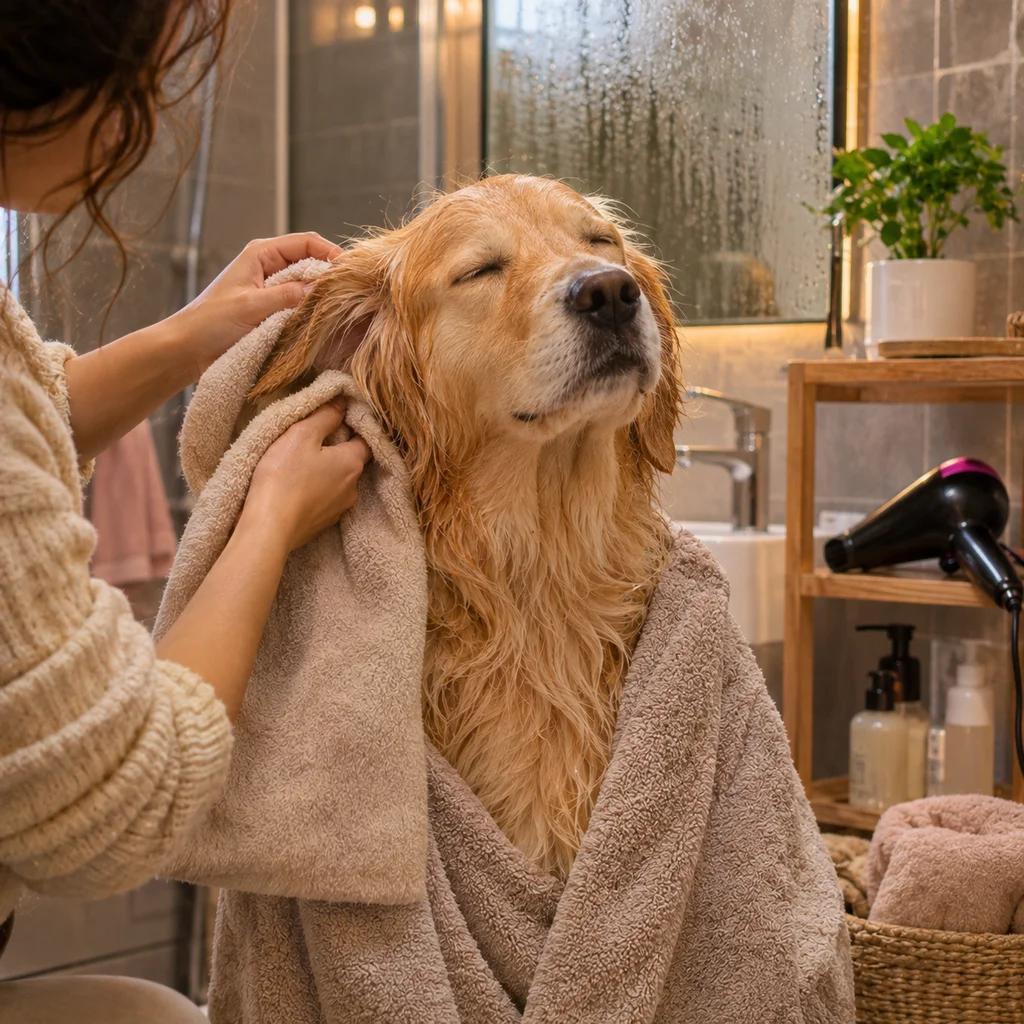

When winter comes, some dog owners give up baths entirely, while others start washing their dog often after muddy walks. Either way, the balance can tip. A dog that goes unwashed for a long time can end up with a matted, smelly coat; a dog that is washed too often gets drier skin faster, especially with the dry air from the radiators.
The secret is less about the washing and more about the drying. In winter, the problem usually isn't the water itself but a coat that isn't fully dry meeting the cold.
How often should you bathe your dog in winter?
There is no single right frequency. Your dog's coat type, how much time they spend outdoors, the condition of their skin and any medicated shampoo treatment your veterinarian has recommended all change the answer. As a general approach, bathing less often in winter and doing spot cleaning in between works for most dogs.
- If the paws, legs and belly are muddy, wash only those areas with lukewarm water and dry them.
- If your dog has rolled in something or has a noticeable smell, it's time for a full bath.
- If there is redness, flaking or intense itching on the skin, don't bathe more often on your own; talk to your veterinarian first.
What difference does coat type make?
In dogs with a double coat, meaning breeds with a dense undercoat and a coarser outer coat on top, water has a hard time getting into the undercoat and a hard time getting out. In dogs like the Siberian Husky or the Kangal Shepherd Dog, the outer coat can look dry while the undercoat stays damp for hours. These dogs take longer to dry, so plan their baths accordingly. Short-haired dogs dry faster but also get cold faster.
Getting ready before the bath
Half of a winter bath is preparation. Before you put your dog in the water, set up the following:
- Warm up the bathroom and the room where your dog will dry. Close the windows so there is no draft.
- Have two or three towels ready. Microfiber towels soak up water faster.
- Brush your dog before the bath. Matted fur gets even tighter when wet and is harder to dry.
- Put a rubber mat on slippery floors; it lowers the risk of falls, especially for senior dogs.
- Bathe during the day, after the evening walk rather than before it. That way your dog doesn't have to go outside with a wet coat.
Water temperature and shampoo
In winter, people tend to run the water at the temperature they are used to, but that can be too hot for a dog. Make sure the water is lukewarm; a temperature that feels comfortable on the inside of your wrist is a good guide. Very hot water dries the skin out more, while cold water chills your dog quickly.
Choose a shampoo made for dogs. Human shampoos don't suit the structure of a dog's skin. Rinse the shampoo out thoroughly; leftover residue in the coat can cause itching and flaking. For dogs that get dry skin in winter, you may want to use a moisturizing product, but if you are using a medicated shampoo, stick to the frequency your veterinarian recommended.
Be careful not to get water in the ears. You can clean the head last by wiping it with a damp cloth. If your dog keeps shaking their head or scratching an ear after water gets in, talk to your veterinarian.
Drying: this is where the real work is
As soon as your dog is out of the bath, wrap them in a towel and pat the coat dry by pressing, not rubbing. Rubbing causes tangles in long coats. When the first towel is soaked, switch to the second.
If you use a blow dryer
- Use the dryer on a warm or low heat setting; the hot setting can burn the skin.
- Hold the dryer about a hand's width away and don't leave it on one spot; keep it moving.
- Blow against the direction of the coat so the undercoat dries, and open the coat with a brush at the same time.
- Don't blow directly into the face or ears.
- Don't force a dog that is scared of the noise. First show them the dryer while it's off, then get them used to it from a distance on a low speed.
Once you are done drying, slide your hand into the coat and check all the way down near the skin. If the outer coat is dry but the undercoat is damp, you're not finished. Keep your dog in a warm room until they are completely dry, and don't take them outside for at least a few hours.
Common winter bath mistakes
- Washing late in the evening and sending them straight to bed. A dog that sleeps with a damp coat gets cold all night, and the bed gets damp too.
- Hosing them down on the balcony or in the yard. Washing outdoors with cold water in winter chills a dog quickly.
- Drying with a towel only. This may be enough for short-haired dogs, but in dogs with thick coats the undercoat stays damp.
- Drying right next to the radiator. A wet dog pressed against the radiator gets too hot on one side and stays cold on the other, and the skin dries out.
- Getting mats wet. Matted fur tightens when wet and pulls on the skin. Mats need to be worked out or trimmed before the bath.
It's normal for a dog to run around for a while after a bath and rub themselves on the carpet. Keep the door of the warm room closed during this time so they don't run into a cold hallway or out onto the balcony with a wet coat.
Staying clean between baths
The way to bathe less often in winter is to keep your dog clean between baths.
- Regular brushing removes dead hair and dust, airs out the coat and cuts down on odor.
- After every walk, wipe the paws and legs with a cloth dampened with lukewarm water and dry between the toes. This step matters even more if they walked on salted sidewalks.
- Dry shampoo or cleansing foam made for dogs can be a short-term solution. Make sure your dog won't lick off any product residue.
- Wash their bed and blanket regularly; some of the smell in the coat comes from there.
If you have a long-haired dog or one that needs frequent grooming, you may want to leave bathing and drying to a professional in the winter months. You can see the pet groomers working near you, tell them about your dog's coat type and ask how they handle drying.
Quick cleanup after a walk
You don't need to bathe your dog after every winter walk. A bucket of lukewarm water, a towel and a mat by the front door are usually enough. Dip the paws in the water one by one and dry them, then wipe the mud off the legs with a damp cloth. This routine of a few minutes keeps your dog from licking off salt and chemicals and also reduces the need for full baths.
Extra care for senior dogs and puppies
Senior dogs and puppies have a harder time keeping their body temperature up. A senior dog's joints are also affected by the cold and by standing for a long time. For these dogs, keep the bath short, warm the room extra and dry them completely. If your puppy hasn't finished the vaccination schedule yet, or you adopted them recently, talk to your veterinarian about when to give the first bath.
Frequently Asked Questions
Is it okay if I don't bathe my dog at all in winter?
Many dogs can go a long time with regular brushing and spot cleaning. But if the coat is matting, a smell is building up or skin problems are starting, putting off a bath is not a good idea. What matters is drying them completely whenever you do give a bath.
How many hours after a bath should I keep my dog inside?
Instead of a fixed time, use this test: if you feel dampness when you slide your hand down to the base of the coat, it's not time to go out yet. For dogs with a double coat, this takes longer.
Is a dog dryer different from a human hair dryer?
Dryers made for dogs usually work with stronger airflow and lower heat. If you use a human hair dryer, using it on a warm or cool setting and from a distance is enough.
Is it risky to bathe my senior dog in winter?
Senior dogs can have a harder time keeping their body temperature up and standing for long periods. So keep the bath short, use a non-slip surface, warm the room beforehand and dry them completely. For a dog with joint problems, a heart condition or a skin disease, it's a good idea to talk to your veterinarian about bath frequency and shampoo choice. For some senior dogs, short spot cleanings are less tiring than a full bath.









