


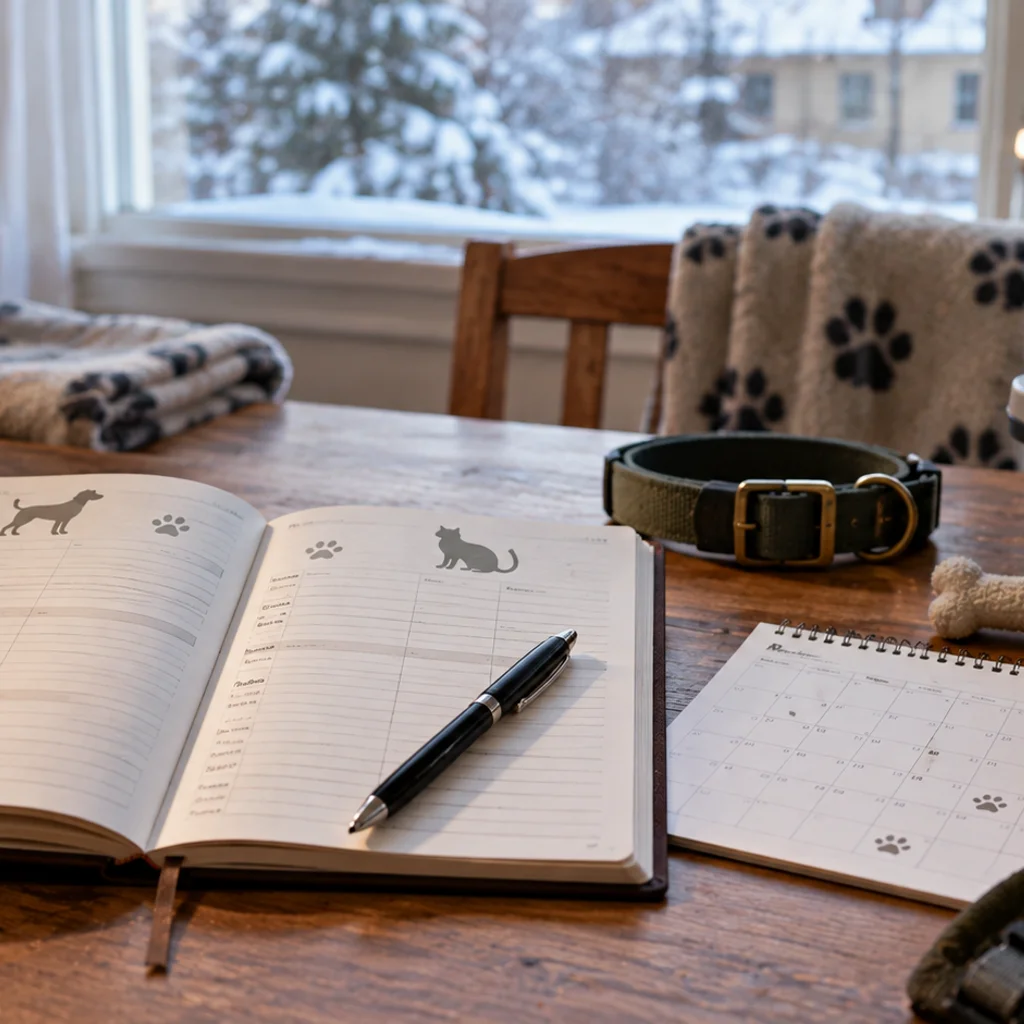

In most homes, a health checkup comes up only when a symptom appears. Yet winter is a good time to put checkups on a calendar: the season changes are predictable, more time is spent indoors and changes are easier to notice. A plan spread across the months lets you do the same work without an emergency rush.
The calendar below is a template. Your pet's age, species, history and region change the plan; the final word belongs to the veterinarian doing the exam. The goal here is for you to know the topics to discuss and their order in advance.
Going only when a symptom shows up raises the chance that the problem has progressed. The real benefit of regular checkups is the chance to compare: weight, dental condition, coat and skin, joint movement and any lab values can be compared with the previous measurement. A single measurement says little, while two measurements in a row show a direction.
The second benefit of a calendar is practical. Topics like vaccine boosters, parasite protection and dental checks are very easy to forget. Putting them in fixed months is easier than trying to remember them from scratch each time. Keeping records in one place helps too: a paper card, a phone note or the health record in the app, whichever sticks for you.
October and November: the start-of-winter checkup
A checkup done before the cold sets in helps your pet go into winter prepared. This visit usually covers:
- A general exam, weight check and comparison with the previous measurement.
- A review of vaccination status, and planning a booster if one is needed.
- How parasite protection will continue over winter; this can vary by region.
- Coat and skin condition; complaints of dryness and itching can increase in winter.
- In senior pets, joint condition and difficulty moving in the cold.
- A seasonal review of nutrition; if time spent outdoors changes, energy needs change too.
Going to this visit prepared helps you use the time well. Write down the changes you have noticed in recent months and bring the list: appetite, water intake, sleep, potty habits, coughing, limping. You can reach vets near you through the vet list and book an appointment.
December and January: monitoring in the cold months
In midwinter, a routine exam isn't needed for most healthy pets; the job in this period is tracking at home. Things you can check weekly: weight change, appetite, water intake, willingness to move, coat and skin, paws and nails, and ear cleanliness.
There are also situations in this period that call for a visit without waiting. Chief among them are labored breathing, a persistent cough, loss of appetite lasting several days, marked lethargy, repeated vomiting or diarrhea, straining to urinate, shivering and worsening signs of a known illness. In a case like that, waiting for the calendar is not the right move.
If you have more than one pet, track each one separately. With pets eating from a shared bowl, it is harder to see who eats how much, and weight loss gets noticed late.
A bathroom scale can be enough for tracking weight: weigh yourself first, then weigh yourself again holding your pet and write down the difference. For small pets, a kitchen scale gives a more accurate result. Weighing at the same time of day and on the same scale every time makes the comparison meaningful.
In this period, also review the living space and environment. Dry indoor air, windows kept shut and sleeping near a heater can increase skin and breathing complaints. Mentioning these at the checkup helps the vet read the picture correctly.
February and March: coming out of winter
As the weather softens, time spent outdoors grows, parasite activity increases and the coat cycle changes. Topics to discuss at this checkup:
- Updating external and internal parasite protection for spring.
- Evaluating weight changes over the winter.
- Reviewing the grooming routine if more shedding is expected.
- Planning a vaccine booster if one is due.
- A dental check; you can ask about tartar and gum condition at this visit.
Spring is also when activity picks up. Suddenly taking a pet that moved little all winter on long walks can strain its joints and muscles; increasing activity gradually is safer.
How often by age
The general approach can be summed up like this, but the vet sets the exact interval:
- Puppies and kittens: frequent checkups are needed in the first months for vaccines and growth tracking; the vet draws up the plan.
- Healthy adult pets: a yearly general checkup is a common routine; it can vary with regional risks.
- Senior pets: checkups usually become more frequent and lab work comes into the picture. In cats and dogs, the senior years start at different ages depending on breed and size.
Breed and size differences matter here. Large-breed dogs reach their senior years earlier, and in some cat breeds certain health topics are monitored more often. For breed-specific notes, you can look through the pages in the Pet Encyclopedia and talk about these topics with your vet.
Planning for pets with chronic illness
With chronic conditions such as kidney, heart, liver, thyroid and joint disease or diabetes, the winter plan is stricter. For these pets, the vet sets the checkup interval based on the illness and its stage; spacing out the calendar on your own creates risk.
Your job at home is to keep a record of the follow-up. A routine that works:
- Fix medication times and mark each dose as given; if there is more than one person in the house, this record prevents overlaps.
- Keep lab results with their dates, and bring the old results along too.
- Weigh your pet at regular intervals and write it down.
- Note changes in water intake and urine amount; for many chronic conditions, the first sign shows up here.
- When a new symptom appears, record it with the date; this timeline is useful at the exam.
Don't change a medication dose or how long it is used on your own. Medications made for people can seriously harm many animals. When you see a side effect or a change, the right step is to let the vet know.
Preparing for the checkup
How much you get out of an exam depends largely on preparation. Bring: the vaccination record and past records, the name and daily amount of the food you use, a list of medications, recent lab results and your observation notes. If there is limping, coughing or something that looks like a seizure, a short video helps at the exam.
Don't forget about transport. For cats, getting them used to the carrier reduces travel stress; in winter, putting a cover over the carrier makes it easier to protect them from the cold. For dogs, make sure the collar and harness are secure, because an anxious animal can bolt at the door.
If you are still at the adoption stage, it is a good idea to factor this calendar in from the start; regular health follow-up is an ongoing part of adoption. The age and health information in adoption listings gives you an idea of how to plan the first year.
Frequently Asked Questions
Is it necessary to take a pet that looks healthy for a checkup?
Yes, regular checkups make comparison possible. Many problems are noticed through changes in measurements before they cause symptoms.
Is it a bad idea to vaccinate in winter?
The season alone isn't a barrier; what matters is the pet's health at that moment. The veterinarian decides whether it is suitable after an exam.
Are lab tests needed at every checkup?
No. Whether they are needed depends on age, history and findings. They come up more often for senior pets and those with chronic illness.
Does it matter if I go to the same vet?
Working with a vet who knows the history makes follow-up easier. When you change vets, bringing old records and lab results along keeps the same continuity.









