



Going to the vet when your pet is sick is an easy decision. There is a problem, and you know what to ask. A checkup is different. Your cat looks perfectly fine, your dog is as energetic as ever. Once you are in the exam room, you are not sure what to ask, and after the vaccine you just leave.
Yet a checkup is a very relaxed time to learn about your pet when nothing is wrong. Your vet can also look at the overall picture without rushing. In this post, we have grouped questions by topic to help you get more out of that appointment. You do not have to ask them all; pick the ones that fit your pet, write them on a piece of paper and bring it with you.
Weight and body condition
Weight changes happen slowly, so they are hard to notice at home. With a pet you see every day, you often cannot tell the weight gained or lost over two or three months without a scale.
- Is their current weight right for their breed and age?
- How do you assess body condition? How can I check it myself at home?
- If they need to lose or gain weight, over what period should that happen?
- Has anything changed since the last checkup?
Ask your vet to show you how to feel the ribs, waistline and belly line by hand. Once you learn this, you can keep track at home between visits.
Mouth and teeth
Dental problems progress quietly in pets. A cat or dog may not show pain for a long time, and often even their appetite does not change.
- Do you see tartar or gum inflammation on their teeth?
- What can I do for dental care at home?
- If a dental cleaning is needed, when should we consider it?
- When is bad breath a sign of a problem?
Vaccine and parasite plan
Vaccines and parasite treatments are part of most checkups. The goal here is not a memorized schedule but a plan that fits your pet's lifestyle.
- When is the next vaccine? Which vaccines are repeated regularly?
- Does the plan change if my pet never leaves the house, or if they go outside often?
- How often are flea and tick treatment and deworming needed?
- Do I need any extra preparation if I am traveling?
Be honest here about how your pet lives. The recommended plan can be different for a cat that goes out on the balcony, a dog that goes to the dog park or a rabbit that lives with other animals at home. Your vet makes these decisions based on what you tell them.
Nutrition
Food is usually either not discussed at all or brushed off with "keep doing what you are doing." But nutritional needs change as your pet ages and their lifestyle changes.
- Is their current food right for their age and condition?
- Is the daily portion correct? Should I follow the amount on the package?
- Should treats and the bits of home food I give count toward their daily needs?
- Is my cat drinking enough water? What can I do to help them drink more?
- If I need to switch foods, how should I make the transition?
Mention everything you give: the slice of cheese in the morning, the bites the kids drop from the table, the chews between meals. If your vet knows the real picture, they can give more useful advice.
Risks by breed and age
Some breeds are known to be prone to certain health problems. Breathing in flat-faced breeds, joints in large breeds, and heart or kidney issues in some cat breeds can stand out. You can look up general information about your pet's breed in the Pet Encyclopedia, but the assessment specific to your pet is up to your vet.
- Is there anything I should watch for because of their breed or type?
- Would you recommend a routine blood or urine test at this age?
- Which signs mean I should call right away without waiting?
Extra questions by age group
For puppies and kittens: When is the vaccine series completed? When should we talk about the right time for spaying/neutering? When can they start socializing outside?
For adults: Are they getting enough exercise? Does their dental care need to change? Besides the yearly checkup, when else should I come in?
For seniors: Do you see stiffness in their joints? Should we shorten the time between checkups? What can I change at home for them, such as the height of the litter box edge or where their bed is?
Medications, supplements and products at home
A checkup is also a good time to review everything you give your pet. A supplement added over time, a product you started after reading about it online or a parasite drop you have used for years can carry on without anyone questioning it.
- Do they still need the supplement I am using?
- Is the parasite product still right for their age and weight?
- Could the cleaning products, air fresheners or plants I use at home be a problem for them?
- What should I do if they accidentally take another pet's medication?
Bringing the boxes or photos of the products you use makes this conversation shorter. When your vet sees the product name, they know right away what it is.
Exercise and movement
Activity needs change with age, weight and breed. For a dog that has taken the same walk for years, that pace may now be too much, or the other way around, a cat that spends a lot of time indoors may need more play.
- Is the length and pace of the daily walk right for them?
- How much play a day is enough for my cat?
- Is there anything I should avoid with stairs, jumping or running?
Behavior and daily life
Behavior changes are sometimes the first sign of a health problem. A checkup is also a good time to talk about them.
- Lately they sleep more and get restless at night. Is that normal?
- They have started going outside the litter box. Should we check the health side first?
- There is a new spot where they do not like to be touched. What could that mean?
It is easy to think these observations are not important and leave them out. But for your vet, "they did not use to do this, now they do" is valuable information.
How to ask your questions
Preparing a list of questions is half the job. The other half is feeling comfortable asking them during the exam.
- Start with the question that worries you most. If the exam is shorter than expected, your main concern will not be left unanswered.
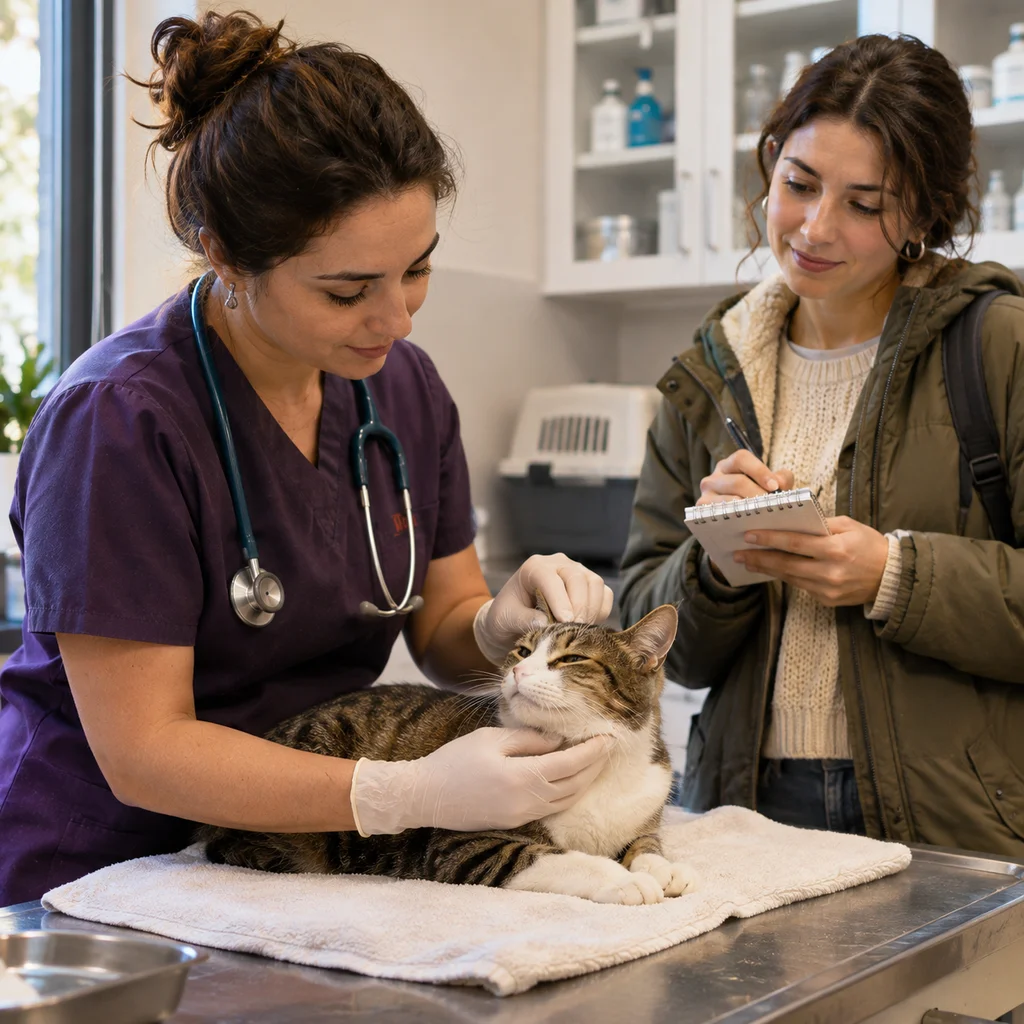
- Take notes. Or ask the person with you to take notes. Once you are home, most details get forgotten.
- Ask again if you did not understand. There is nothing wrong with asking your vet to explain a medical term.
- Make decisions together. When a test or procedure is recommended, ask why it is needed and what waiting would mean.
After the exam, add what was discussed to your pet's record. Being able to say at the next checkup, "last time their weight was this, and you said that about their gums," moves the exam one step forward. If you do not have a clinic you visit regularly, you can search by area in the vet list.
Frequently Asked Questions
Is a checkup necessary if my pet is healthy?
Yes. The whole point of a checkup is to catch changes before a problem shows up. Your vet will tell you how often to go based on your pet's age and condition.
Won't asking so many questions take up the vet's time?
Coming prepared actually saves time. You do not have to ask them all; pick the ones that apply to your pet, prioritize them and keep them short.
How often should senior pets have checkups?
For senior pets, the time between checkups usually gets shorter. Work out the right interval with your vet based on your pet's overall condition and any chronic illness.
If a test is recommended during the exam, should I agree right away?
First ask why it is recommended and what it will show. Once you understand the reason, the decision is yours to make.









