


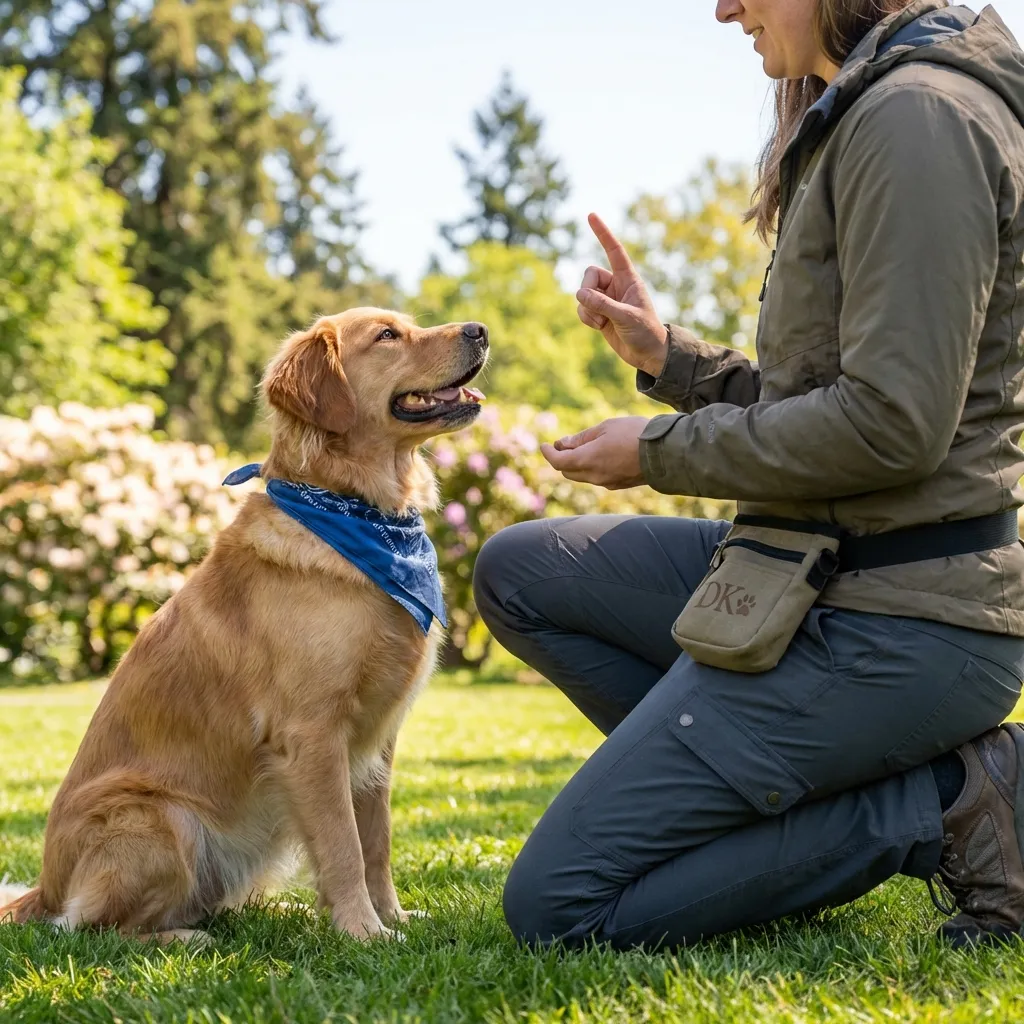

Dog Training: Basic Commands and Effective Training Techniques
Dog training is the foundation of a healthy, happy relationship between people and dogs. Basic commands keep your dog safe, help it fit in socially and strengthen the communication between you. The good news is that dogs of any age can be trained, and with the right methods they can learn the basic commands in a short time.
Core Principles of Training
Positive Reinforcement
The cornerstone of modern dog training is positive reinforcement. When your dog shows the behavior you want, you give a reward (food, play, verbal praise) so the behavior is repeated. Research shows that positive reinforcement gives far more effective and lasting results than punishment-based methods.
Timing
The timing of the reward is critical. When your dog does the right thing, reward it within 2 seconds at most. That is why you should keep treats within reach during training. Using a clicker helps you mark the exact right moment.
Short Sessions
Dogs have limited attention spans. Keep each training session to 5-10 minutes and do 3-5 short sessions a day. Long, boring sessions will make your dog lose interest in training.
Basic Commands
1. Sit
This is the most basic command and the easiest to teach. Steps:
- Hold a treat in your hand and bring it close to your dog's nose.
- Slowly move the treat back over its head. As it follows with its head, it will naturally sit.
- The moment it sits, say "Sit" and reward it right away.
- After a few repetitions, say the command first, then make the hand motion.
- Gradually reduce the hand motion until it sits on the verbal command alone.
2. Down
Move on to this once your dog has learned "Sit":
- Bring your dog into a sitting position.
- With a treat in your hand, slowly lower it from its nose down toward the floor.
- Pull the treat along the floor and slightly forward. As your dog follows the treat, it will lie down.
- The moment it lies down, say "Down" and reward it.
3. Come (Recall)
This is the most critical command for safety. It lets you call your dog to your side in a dangerous situation:
- Start from a short distance. When your dog sees you, say "Come" and call it in an excited tone of voice.
- When it comes, give a big reward and enthusiastic praise. Make sure the "Come" command always ends with a positive experience.
- Gradually increase the distance.
- Practice in different settings and in places with distractions.
Critical rule: Never punish your dog or do something it dislikes (a bath, nail trimming, etc.) after saying "Come." Otherwise it will associate the command with something negative and stop coming.
4. Stay
This command takes patience and gradual progress:
- Put your dog in the "Sit" or "Down" position.
- Hold your open palm toward it and say "Stay."
- Wait 1-2 seconds, then reward it.
- Add 2-3 seconds to the duration each session.
- As the duration grows, gradually increase the distance too.
- As a final step, add turning your back or leaving the room.
5. Leave It / Drop It
This is an important command for getting your dog to let go of dangerous objects, food or other animals:
- Hold a treat in each hand. Put one on the floor and cover it.
- When your dog goes for the treat on the floor, say "Leave it."
- The moment it gives up on the one on the floor, give it the treat from your other hand.
- Gradually increase the difficulty.
Common Training Mistakes
- Inconsistency: Allowing something sometimes and forbidding it at other times confuses your dog. Everyone in the family should follow the same rules.
- Repeating the command: Saying "Sit sit sit!" teaches your dog it doesn't need to listen the first time. Say the command once and wait.
- Rewarding late: A reward given after more than 2 seconds can get linked to the wrong behavior.
- Using punishment: Physical punishment damages trust, and fear-based learning does not last.
- Moving too fast: Moving to the next command before each one is solid means none of them gets fully learned.
When Should You Get Professional Help?
Most dog owners can successfully teach the basic commands. However, support from a professional dog trainer is recommended in these cases:
- Aggression problems (toward people or other animals)
- Severe separation anxiety
- Fear-based behavior problems
- No progress despite training
Dog training is a marathon, not a sprint. With a patient, consistent and positive approach, your dog can learn the basic commands within a few weeks. Most important of all, training should be an enjoyable activity for both you and your dog.









