



Handing your dog over to a stranger and closing the door is not easy for anyone the first time. If you are at work all day, or your knees or back have not been cooperating for a while, the idea of a walker makes sense, but the same question keeps running through your head: Will this person really walk my dog the way I do?
No one can give you a definite answer to that in advance. But if you ask the right questions and plan the first walk, you rule out most surprises from the start. The questions below help both in the meet-and-greet and while messaging.
Ask yourself before the meeting
Before you ask the walker anything, you need to be clear on what your dog needs. Otherwise every answer sounds reasonable and you are left with nothing to compare against.
- How much walking is needed? A young, energetic dog and an older dog with sensitive joints do not have the same needs. Set the length based on your dog, not the walker's standard package.
- Walking alone or with a group? Some dogs relax when walking with other dogs, others get tense. Think honestly about which one yours is.
- What are the sensitive spots? Barking at bikes, grabbing things off the ground, pulling when a cat appears, being scared of motorcycle noise... Write these down on a piece of paper. You will use the same list in the meeting.
Questions to ask the walker
Experience and approach
- What size and what kind of temperament have the dogs you walked before had?
- How do you walk a dog that pulls on the leash?
- What do you do if the dog gets scared of something and freezes or backs away?
- Do you use treats on walks? Will you keep using the treats I give you?
What you are looking for here is not a long résumé but calm, concrete answers. Someone who describes a method, like "first I stop, create some distance, then change direction," instead of just saying "I'll handle it," has thought about the job ahead of time. It is better not to continue with someone who sees jerking the leash or correcting by yelling as normal.
Safety
- Do you ever take the leash off? Under what conditions?
- For dogs prone to pulling or bolting, do you use a collar and a harness together?
- How many dogs do you walk at the same time? Will my dog be part of a group?
- If the dog runs away or gets hurt, what do you do first? When do you call me?
- Do you know an open vet near the walking route?
You need to be clear about off-leash time. The leash should not come off in any situation you have not allowed. Say this openly in the meeting, then write it in a message too so there is a record.
Communication and routine
- How do you let me know when the walk is over? Do you send a photo or a short note?
- If the weather is very hot, very cold or rainy, will you shorten the walk?
- How will the key handoff work? Who checks the door on the way out?
- If there is a cancellation or delay, how far in advance will you let me know?
This last section may look small, but most disagreements come from here. If who lets whom know and when is discussed from the start, nobody feels bad at the first hiccup.
What to look for when reviewing a profile
In the Pet Services section of DoldurKabı, you can list walkers in your area and review their profiles one by one. You make the choice: you send your request to the person you like, then work out the details by messaging. When reading a profile, pay attention to:
- Which area they serve and how far it is from your neighborhood
- How they describe themselves, and whether they say anything concrete about dogs
- Whether they state how many dogs they can walk together
- Reviews from previous pet owners, if there are any
If you want to see how the service works in general, there is a short overview on the dog walking page.
Information to leave the walker in writing
What is said in a meeting gets forgotten within a few days. So gather the basic information about your dog in a short note and send it to the walker by message. It does not need to be long; half a page is enough.
- Your dog's name, age and a recent photo. In case the dog ever goes missing, this photo really helps.
- Where the collar, harness and ID tag are kept at home
- Things your dog should not eat on walks, and what to do if it grabs something off the street
- Its water needs and your rule about mealtime after the walk
- Your phone number and the number of a second person to call if you cannot be reached
- The name and number of the vet clinic you regularly go to
If your dog has a health issue, for example if it should not take long walks because of a heart or joint condition, write it at the very top of the note. A walker may make the walk longer with good intentions; they are the one who needs to know the limit.
Warning signs to watch for
Even if everything looks good in the meeting, some small details can cause big problems later. If you come across one of these, take your time and think it over once more:
- Talking only about time and price without paying any attention to your dog
- Giving general answers to your questions like "they're all the same, a dog is a dog"
- Showing that they find your rules unnecessary, for example your request not to let the dog off leash
- Not saying anything clear about how many dogs they walk together
- Objecting to you joining the first walk
None of these shows bad intent on its own. But communication with the person you will trust your dog to for a few hours every day should feel easy from the start. If it does not sit right with you, not continuing is also an option.
Do the first walk together
Everything has been discussed and you feel good about the person. Even so, do not spend the first walk handing over your dog and waiting at home. Go out together.
Meeting at the door
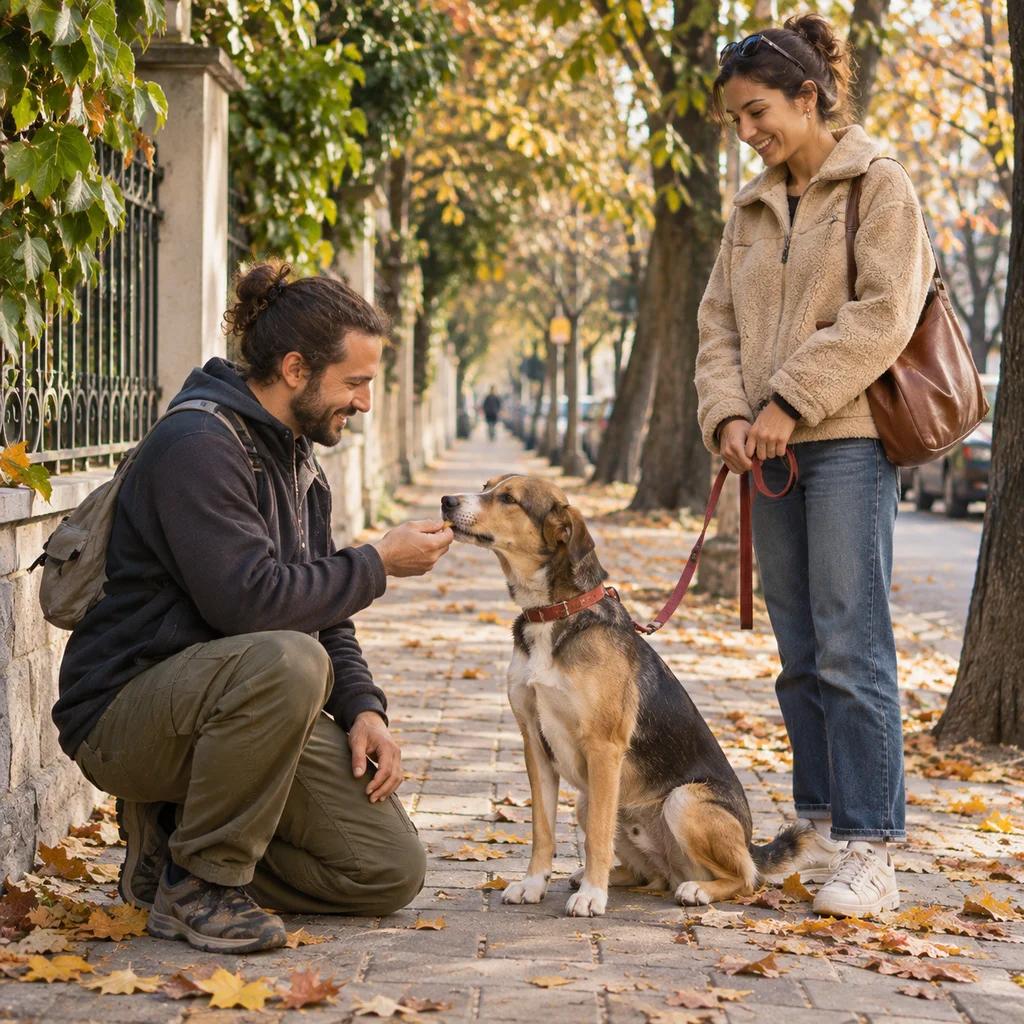
The walker should not lean down and hug the dog the moment they walk in. Let the dog come over and sniff, and have the walker crouch down and turn slightly to the side. Having a few treats in hand breaks the ice quickly. The leash should not go on until the dog calms down; a dog that bursts out the door in excitement starts the walk with the same energy.
The first half of the walk
Hold the leash yourself at first. Let the walker see with their own eyes which corner your dog stops at, where it pulls, and what it sniffs for a long time. Halfway through, hand them the leash and walk a step behind. If your dog turns back to look at you, that is fine and very normal. It gets used to it within a few walks.
Talk on the way back
When you get home, ask the walker what they noticed. A careful walker can catch something you have not noticed, even on that one walk. If something caught your eye too, such as holding the leash too short or checking their phone often, mention it politely right then. It gets harder to say later.
Follow-up in the first few weeks
Until the routine settles in, watch for small signs. If your dog greets the walker happily at the door, that is a good sign. If it gets restless and hides before walk time, or comes back overly tired with irritated paws every time, it is time to talk.
- Check the paw pads after walks in the first weeks.
- Look for rubbing marks from the collar and harness.
- Note whether your dog's nighttime sleep, appetite or water intake has changed.
If problems with pulling, barking or fear make every walk harder, it would be unfair to expect the walker to solve them alone. In such cases, working with a dog trainer for a few sessions makes the job easier for both you and the walker.
Frequently Asked Questions
How long should the first meeting with a walker be?
Twenty to thirty minutes is usually enough. What matters is not the length but that your dog spends some time with the walker, even briefly, and that you get to ask the questions on your mind.
What should I do if my dog does not like the walker?
It is normal for your dog to keep its distance at the first meeting. If it is still tense after a few short, calm meetups, do not force it. Trying another walker is not unfair to anyone.
Should I let the walker take my dog off leash?
It is your call, but the default answer should be no. If your dog does not come back every time it is called, in every situation, the leash should not come off anywhere. Share your decision in writing.
Is regular walking or a one-time walk better?
If your workload is steady, set days of the week give your dog a routine. If you only need it now and then, one-time requests work too; still, think of the first time as a trial walk.









