


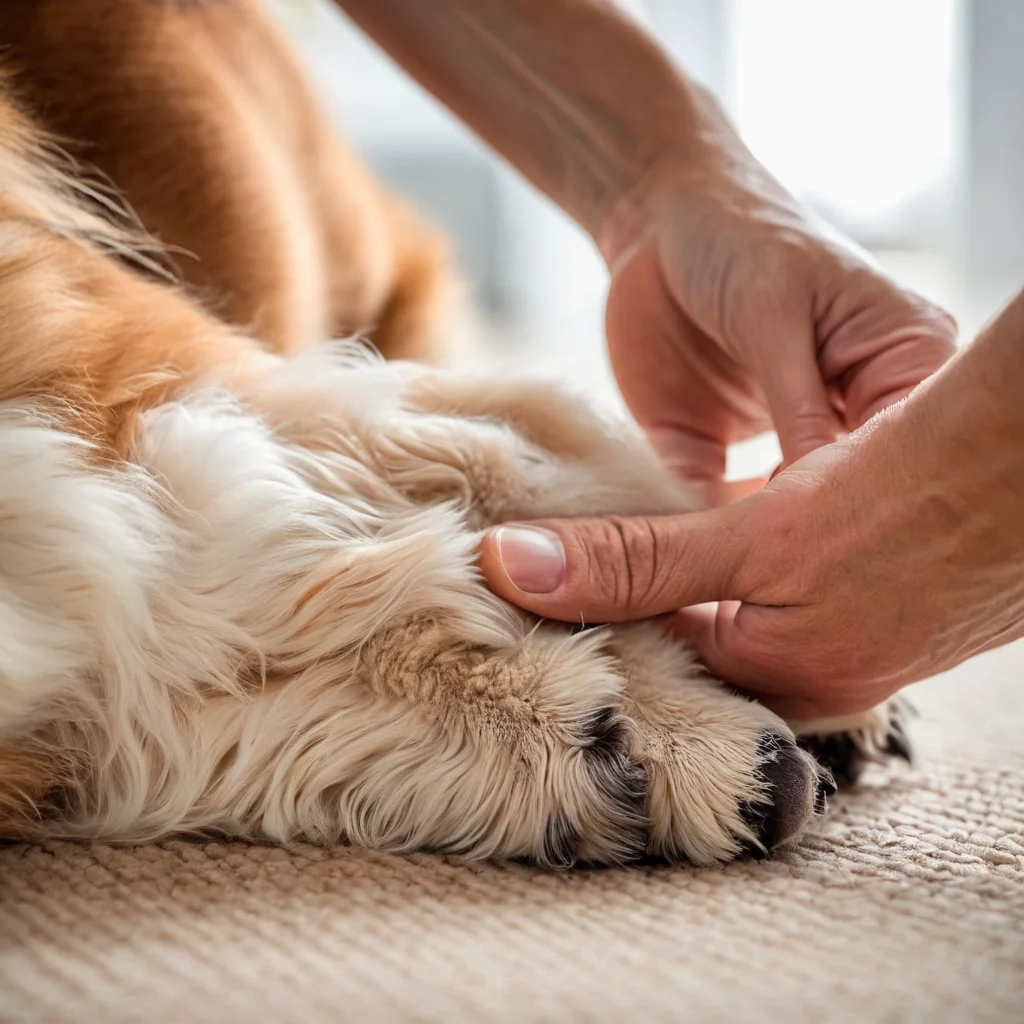

Your dog keeps licking and chewing one paw or one spot. At first it looks like a harmless habit. Then a red, oozing, pus-filled sore appears. This is the classic picture of a "hot spot" (acute moist dermatitis). Within 1-2 hours the dog breaks down the tissue itself, infection sets in and things snowball. Paw licking doesn't always need serious treatment; sometimes it's just boredom and passing the time. But constant, recurring licking points to an underlying physical or behavioral cause. In this post we look at the causes of licking, how hot spots form and are treated, the logic of the e-collar, and diet and behavior support.
1. Why Do Dogs Lick Their Paws?
A map of the causes:
- Allergies: Environmental (pollen, grass, mites) or food allergies. The most common cause.
- Fleas/ticks/mites: Parasites cause irritation, so the dog scratches and licks.
- Fungal/bacterial infection: The warm, damp area between the toes lets fungus grow.
- Foreign object: A thorn, pebble or foxtail seed between the toes.
- Joint/muscle pain: Pain that shows up in the paw; the dog soothes the source by licking.
- Anxiety and boredom: Stress licking (a psychological trigger, with no physical cause).
- Dry skin: In winter months, or with low omega-3 intake.
- Hormonal: Hypothyroidism causes dry skin and itching.
2. What Is a Hot Spot? How Does It Form?
A hot spot (acute moist dermatitis) is a sore that develops fast:
- The dog starts licking a specific spot.
- Saliva, heat and moisture break down the skin surface.
- Within 1-2 hours: redness and swelling.
- 4-12 hours: pus forms.
- 24 hours: an oozing, bad-smelling lesion with hair loss and peeling skin.
They usually show up behind the ears, on the neck, hips, base of the tail and between the toes. Hot weather with high humidity (summer months) is the most common time.
3. Constant Paw Licking: Immediate Steps
If your dog has been licking one paw for hours:
- Wash the paw with clean water and dry it.
- Look closely: is there a foreign object, a thorn, a nail injury or inflammation between the toes?
- If there's a foreign object, go to the vet (don't remove it yourself, it may be deep).
- If there are signs of a hot spot, put on an e-collar right away.
- Get a vet check within 24 hours.
4. Hot Spot Treatment: The Vet Protocol
Clinical treatment after a vet exam:
- Clipping: The hair around the lesion is shaved for cleaning and air flow.
- Washing: Antiseptic solution (chlorhexidine 2-4% or povidone-iodine).
- Topical ointment: An antibiotic and cortisone combination (similar to Genta Otic, Surolan).
- Systemic antibiotic: Broad spectrum (amoxicillin-clavulanate, cephalosporin).
- Corticosteroid: Short-term for itching and inflammation (Prednisone).
- E-collar: For 2-3 weeks.
Healing time: 7-10 days for a mild case, 3-4 weeks for a severe case.
5. The E-Collar: Why Is It a Must?
Healing a hot spot without an e-collar is impossible:
- The dog keeps licking the lesion → the medication gets wiped off and stops working.
- Saliva reopens the wound.
- Bacteria get in again and again.
Getting a dog used to an e-collar is tough but necessary. The collar stays on 24 hours a day and can only be taken off under the owner's supervision for a limited time.
6. Fungal Infection Between the Toes
Constant licking between the toes, damp skin between the toes and a sour smell = a suspected fungal infection. Treatment:
- A vet exam and a skin scraping test (microscopic diagnosis).
- Antifungal shampoo (ketoconazole, chlorhexidine with miconazole).
- Topical antifungal cream.
- In severe cases, a systemic antifungal (oral ketoconazole for 3-4 weeks).
- Keeping the paws dry: towel them well after a bath, then dry with paper towels.
7. Managing Allergies: The Root Cause
If the licking keeps coming back, an underlying allergy is suspected:
- Environmental allergy testing: Pollen, grass, mites, mold; a vet allergy panel.
- Elimination diet: For 8-12 weeks, other protein sources are removed using a hypoallergenic food (hydrolyzed protein).
- Antihistamines: Cetirizine, loratadine; effective in some dogs.
- Apoquel (oclacitinib): A modern, effective anti-itch drug. Requires a vet prescription.
- Cytopoint (lokivetmab): An anti-IL-31 monoclonal antibody injection, effective for 4-8 weeks.
- Immunotherapy: Allergen-specific shots, 1-2 years of treatment.
An allergy isn't something that gets "cured" but something that is "kept under control": lifelong management.
8. Anxiety and Boredom Licking: Behavior Support
If you haven't found a physical cause and your dog keeps licking the same paw or the same area, it's psychological:
- Increase exercise: Two 45-minute walks a day plus 15 minutes of play.
- Mental stimulation: Sniffing games, puzzle feeders, training sessions.
- Chew toys: Redirect licking into chewing.
- Anxiety products: Adaptil collar/spray (dog pheromone), CBD oil (under vet supervision), L-theanine.
- Veterinary behaviorist: Professional help and medication in severe cases.
9. Nutritional Support
Things that support skin health:
- Omega-3 (EPA + DHA): Fish oil, anti-inflammatory. 30-50 mg per kilo of body weight.
- Zinc: In some breeds, zinc deficiency causes skin problems.
- Vitamin E: Supports skin renewal.
- Probiotics: The link between gut flora and skin health (gut-skin axis).
- Hypoallergenic food (if an allergy is suspected): On your vet's recommendation.
10. Prevention: An Ongoing Care Routine
- A weekly coat and paw check catches foreign objects and irritation early.
- Regular nail trimming: long nails trigger paw chewing.
- Keep the area between the toes dry by drying well after a bath.
- Yearly flea and tick protection (all summer long).
- For active dogs that go out a lot, check the paws after every outing.
- Keep seasonal allergy records: which season, which time of year? This shapes your vet's approach.
Paw licking is natural behavior for dogs, but constant, localized licking that keeps causing sores = there's an underlying cause. The combination of early action, finding the cause, an e-collar and treatment prevents hot spots from forming and heals an existing sore in 1-2 weeks. Skipping the cause leads to hot spots coming back again and again. For a complex case that has already flared up once, a referral to a veterinary dermatologist should be considered.









