


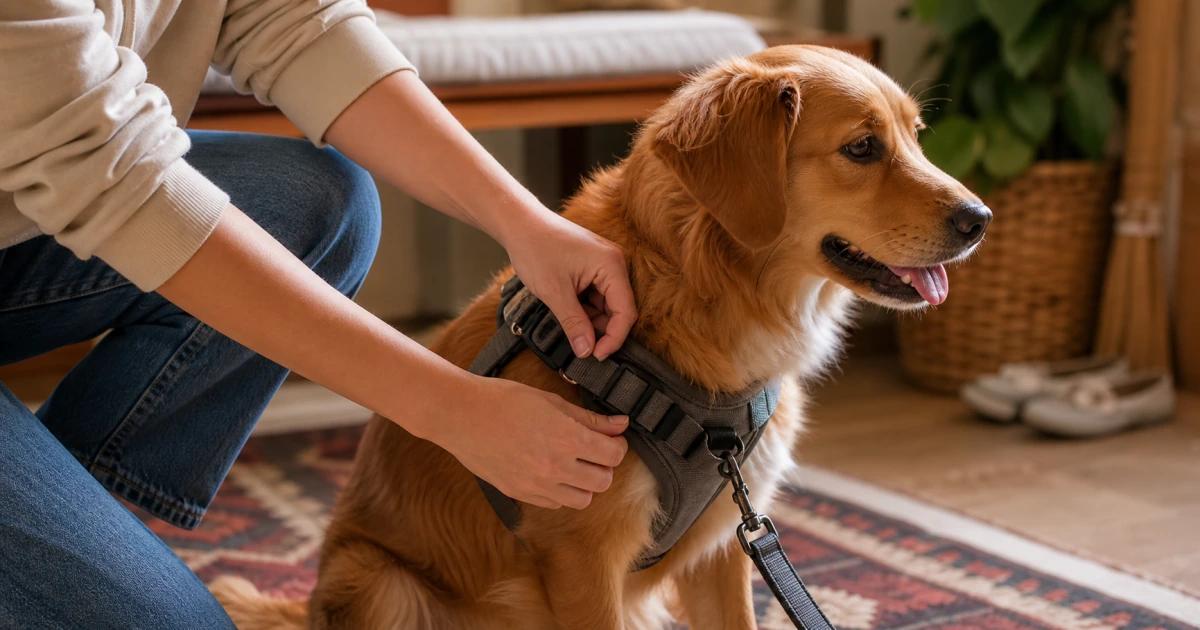

Safe walking depends not on equipment being expensive or flashy but on it suiting the dog and being fitted correctly. As a sitter, instead of using the client's equipment without question, you should check wear, fit and connections before every outing. Do not walk out the door with equipment you have doubts about.
Rather than explaining how to get started in the profession from scratch, this article focuses only on the topic of “Choosing a Dog Collar and Harness: Safe Fitting in Practice”. To build a routine you can actually follow, you will first define the scope and then add the record-keeping and communication steps. Using the same order of checks with every client reduces improvised decisions that change from person to person.
The role of a neck collar vs a harness
A neck collar can be used to carry ID information and to provide control with some calm dogs; a harness spreads the pulling force across the body. But design alone is not enough to make a walk safe. The dog's body shape, escape behavior and the routine the owner is used to are all considered together.
When you apply this section, base your decision on visible information, not assumptions. Record what was discussed about the role of a neck collar vs a harness in a dated note, confirm that the other side understood, and do not carry on with an old agreement once conditions change. Resolving a small uncertainty before the job starts is safer than making a rushed decision during care.
Check the fit while the dog is moving
The straps should not pinch the skin, but they should not be so loose that the dog can slip out over its shoulders when backing up. Watch a few steps, turns and backward movements inside the home. If there is redness under the fur or signs of pain, stop using it and call the owner.
When you apply this section, base your decision on visible information, not assumptions. Record what was discussed about checking the fit while the dog is moving in a dated note, confirm that the other side understood, and do not carry on with an old agreement once conditions change. Resolving a small uncertainty before the job starts is safer than making a rushed decision during care.
Inspect buckles and stitching by hand
Look for cracks in plastic, bends in metal, thinning in straps and loose stitching. Hearing the buckle click shut is not enough; test the lock by pulling on it gently. If the mechanism of a retractable leash sticks, do not go for a walk without a backup.
When you apply this section, base your decision on visible information, not assumptions. Record what was discussed about inspecting buckles and stitching by hand in a dated note, confirm that the other side understood, and do not carry on with an old agreement once conditions change. Resolving a small uncertainty before the job starts is safer than making a rushed decision during care.
Finish connecting before the door opens
Clip the leash carabiner to the correct ring, and if there is a second safety connection, use it the way the owner showed you. All the equipment should be on before the building door or the car is opened. Changing equipment in an open area creates an unnecessary chance to escape.
When you apply this section, base your decision on visible information, not assumptions. Record what was discussed about finishing the connection before the door opens in a dated note, confirm that the other side understood, and do not carry on with an old agreement once conditions change. Resolving a small uncertainty before the job starts is safer than making a rushed decision during care.
When to consider double security
If there is a history of escaping, a new environment, or you suspect the equipment does not fit the body, a backup connection between the neck collar and the harness can be planned. Do not use improvised knots or long, tangling lines. Set up the right system in advance with the owner and, if needed, with an experienced trainer.
When you apply this section, base your decision on visible information, not assumptions. Record what was discussed about when to consider double security in a dated note, confirm that the other side understood, and do not carry on with an old agreement once conditions change. Resolving a small uncertainty before the job starts is safer than making a rushed decision during care.
Standardize your sitter checklist
On every outing, check ID, buckle, straps, connection, backup equipment and route in the same order. If the equipment is not suitable, postpone the service safely. For the scope of dog walking work, see the dog walker guide, and for professional services, see the services page.
When you apply this section, base your decision on visible information, not assumptions. Record what was discussed about standardizing your sitter checklist in a dated note, confirm that the other side understood, and do not carry on with an old agreement once conditions change. Resolving a small uncertainty before the job starts is safer than making a rushed decision during care.
How do you keep a decision record?
Record not only the outcome of the decision you make on this topic but also the information it was based on. The detail the client told you, your own observation, the method you agreed on and any later change should each be visible separately. Instead of scattering messages across different apps, use a single record thread for the service. That way, when the question “did we talk about this?” comes up during care, you will not have to rely on memory.
The language of the record should be short, neutral and limited to what the job requires. Do not add personal comments, diagnoses, accusatory wording or unnecessary private information. For example, when a problem occurs, write only what was seen and when, who was called and what answer was received. If a photo is needed, take it without getting private areas of the home or personal documents in the frame. When the care is over, also review which information you will keep and for how long.
Do a small trial run before the first job
See whether the routine on paper works in real life with a low-risk trial run. With the owner present, check that the key opens the door, that the contact numbers are current, where the necessary equipment is and how reporting will work. This trial is not a sign of distrust; it is a practical check that shows both sides understand the same process.
Do not cover up a gap you notice during the trial with temporary fixes. If it can be fixed before the job starts, confirm the new arrangement in writing; if it cannot be made safe, postpone or decline the service. Especially if there are health symptoms, an escape risk or a problem accessing the home, do not give in to time pressure. A calm postponement is a more responsible decision than a promise of care made under uncertain conditions.
A short, practical checklist
- Confirm the scope and critical information in writing before starting the job.
- Postpone or decline anything that goes beyond safety limits or your competence.
- During care, record only observable information, with the date and time.
- When something changes, get the owner's approval; do not proceed on a verbal assumption.
- When the job is done, close out the handover, the report and any payment record in the same file.
This list alone will not solve every scenario; its purpose is to keep critical steps from being forgotten. Simplify it regularly to fit the way you work, but try not to remove the headings on animal safety, clear communication and record-keeping.
Frequently Asked Questions
Is a harness safer for every dog?
No. Fit, design and the dog's movement are what count; a dog can back out of a poorly fitted harness and escape. Double-check the answer against your own service conditions and current information, and settle any uncertainty in writing before the job starts.
Should retractable leashes be used?
The mechanism and the risks of the setting need to be assessed. In crowds and traffic, control with a fixed-length leash is usually more predictable. Double-check the answer against your own service conditions and current information, and settle any uncertainty in writing before the job starts.
What should I do if the equipment is damaged?
Do not go for the walk; let the owner know with a photo and ask for safe backup equipment. Double-check the answer against your own service conditions and current information, and settle any uncertainty in writing before the job starts.









