



After a visit to the groomer, or a mobile groomer who comes to your home, your dog usually smells lovely and their coat feels soft. Most of the time, all you need to do is cuddle them and take a photo. But a grooming session is an intense experience for your dog. Clippers, scissors, a bath, drying, nail trimming and ear cleaning all come one after another within an hour.
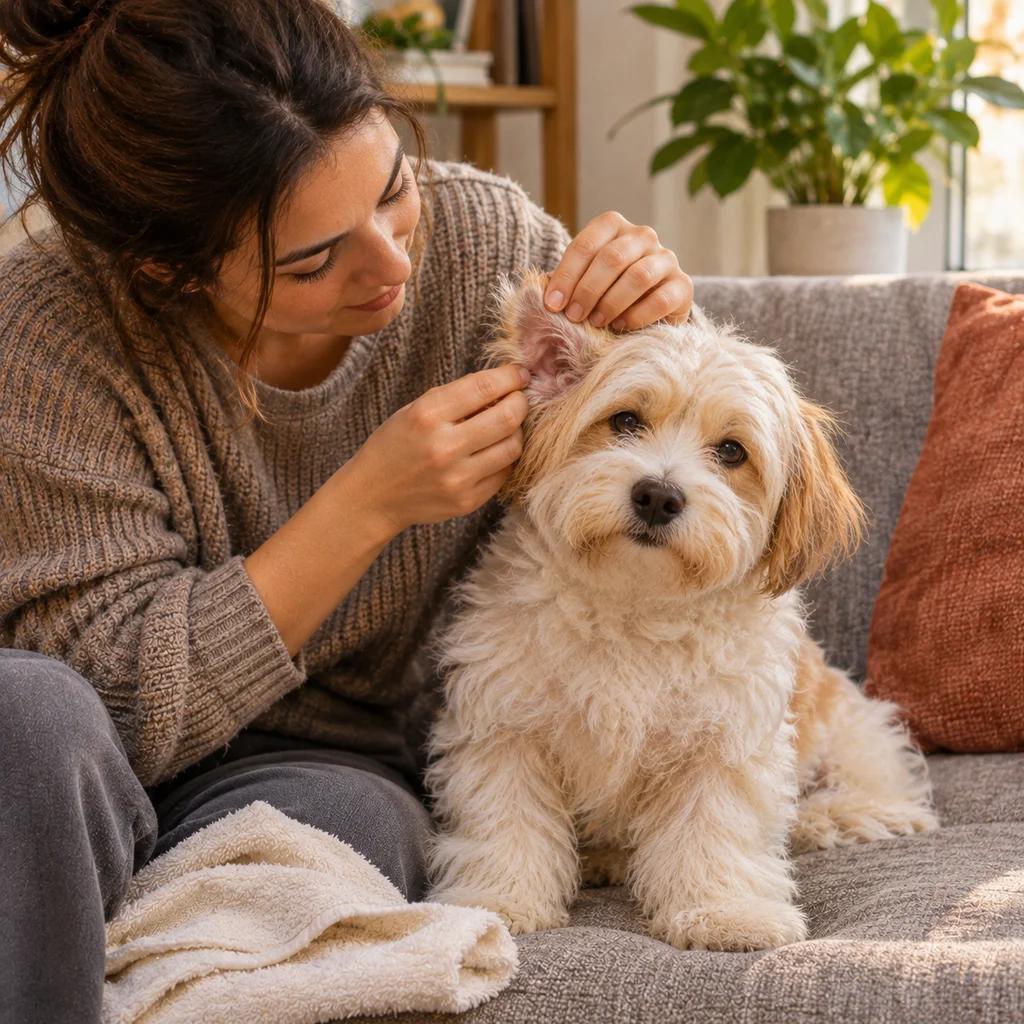
That's why it's a good habit to take a few minutes after you get home to check your dog from head to tail. The goal isn't to question the groomer; it's to spot a small irritation before it gets worse and to make notes for the next session.
Watch their behavior in the first hour
Some dogs fall asleep right after grooming, while others run around the house to burn off energy. Both are normal. Here is what to look out for instead:
- Are they constantly licking or scratching one spot?
- Are they shaking their head often or tilting it to one side?
- Are they avoiding using one leg, or limping?
- Are they scooting their bottom on the floor?
- Do they flinch when you touch a certain spot?
If you notice any of these, pay special attention to that area in the checks below. A little restlessness can pass within a few hours. If it lasts into the next day or gets worse, it's time to act.
Skin and coat
Clipper irritation
With short cuts, especially when the coat is badly matted and the clippers have to work close to the skin, the skin can get red. The belly, armpits, inner legs and the base of the tail are common spots for this irritation. Check these areas by gently parting the fur.
Mild pinkness can fade in a few hours. If your dog keeps licking the area, the licking can make the irritation worse. If the redness turns into a sore, scabs over, oozes or swells, talk to your vet.
Itching after shampoo
Some dogs' skin can react to a new shampoo. If itching starts after grooming, ask the groomer which product they used and write it down. Similar itching can also happen if the shampoo wasn't rinsed out well enough. If your dog has sensitive skin, you can offer to bring your own shampoo to the next session.
Small nicks
In dogs with heavily matted coats, the mats sit tight against the skin, so small nicks can happen while they're being cut out with scissors. The groomer should let you know about this. If you notice one yourself, keep the area clean and don't let your dog lick it. If the cut is deep or bleeding, take your dog to the vet.
Ears
Ear cleaning and plucking the hair inside the ears can cause brief discomfort in some dogs. Shaking their head a few times in the first hours is an understandable reaction.
- Look inside the ear: is there redness, swelling or discharge?
- Smell the ear: is there a strong, bad odor?
- Is the head shaking and ear scratching still going on the next day?
Water getting into the ear during the bath can also cause problems afterward. If the head shaking lasts more than a day, or the ear turns red or smells bad, don't start using drops on your own. Your vet needs to take a look.
Eyes and face
When the fur around the face is trimmed, or shampoo gets in the face, the eyes can become red or watery. Mild watering can clear up quickly. If your dog is squinting, keeps pawing at their face or you notice cloudiness in the eye, talk to a vet without waiting. Eye problems can progress fast.
Nails and paws
Nail length
After the nails are trimmed, watch how your dog walks. A nail cut too short can become sensitive, and your dog may not want to put weight on that foot. If there is blood or a scab at the base of a nail, the quick may have been nicked. A small bleed usually stops on its own; if it doesn't, or the limping continues, have a vet take a look.
Between the toes
Trimming the fur between the paw pads can irritate the skin. Spread the toes apart and check for redness or cuts. Keep an eye on it if your dog starts licking this area.
Under the tail
Some groomers also express the anal glands during grooming. After this, your dog may scoot their bottom on the floor for a short while. If the scooting lasts more than a day or two, or there is swelling or redness in the area, talk to your vet. You can also discuss with your vet whether this procedure is needed and who should do it.
Weather after a short cut
When a long-haired dog gets a short cut, the protection their coat provides is reduced for a while. On cool days, keep walks short and watch whether your dog is getting cold. On sunny days, dogs with light-colored, thin coats can have skin that is more sensitive to the sun. Deciding on the cut length together with your groomer based on the season solves most of these problems from the start.
What you can do before the next session
Some post-grooming problems can be reduced with a few steps before the session. Anything that makes the groomer's job easier also means a shorter, calmer session for your dog.
- Brush regularly. Matted fur forces the clippers to work close to the skin and raises the risk of irritation. A quick brushing a few times a week prevents this to a large extent.
- Share their health status. If your dog has sensitive skin, joint problems, a heart condition or recent surgery, the groomer needs to know. For a senior dog that finds it hard to stand for long, the session can be planned around that.
- Go for a walk beforehand. A dog that has burned off energy and done their business stays calmer on the table.
- Be clear about what you want. Instead of saying "keep it short," say how many fingers' width of coat you want, or show a photo you like.
Give feedback to the groomer
Telling the groomer both what went well and what didn't makes the next session easier. Do it like you're sharing notes, not in a blaming tone.
- Save the cut length and style you liked with a photo.
- Report any irritation you saw, saying which area it was in.
- Remind them before the next session about the spots where your dog is sensitive, for example if they don't like their paws being touched.
- Ask for the names of the products used and write them down.
If you'd like grooming at home, you can see how the service works on the mobile pet groomer page. In the Pet Services section of DoldurKabı, you can browse the profiles of groomers in your area and send a request to the one you choose. For businesses that groom in a salon, take a look at the pet groomer page.
When should you go to the vet?
Most post-grooming problems are minor and short-lived. But if you notice any of the following, talk to a vet without waiting:
- A cut that won't stop bleeding
- Cloudiness or swelling in the eye, or your dog being unable to open an eye
- Limping that lasts more than a day
- Discharge and a bad smell from the ear
- Skin irritation that turns into an oozing sore
- Lethargy, vomiting or not eating
Frequently Asked Questions
Is it normal for my dog to sleep a lot after grooming?
Yes, a grooming session is tiring for dogs. Sleeping a lot in the first few hours is normal. If they are still sluggish the next day and have no appetite, talk to your vet.
What can I put on clipper irritation at home?
Don't apply creams and lotions made for people on your own; some aren't suitable for dogs and can cause problems if licked. If the irritation doesn't go away, ask your vet for a recommendation.
What should I do if my dog is scared of going to the groomer?
Starting with short, calm sessions and getting your dog used to the brush and nail clippers at home makes things easier. A groomer who works in your home can also feel more comfortable for some dogs, thanks to the familiar setting.









