


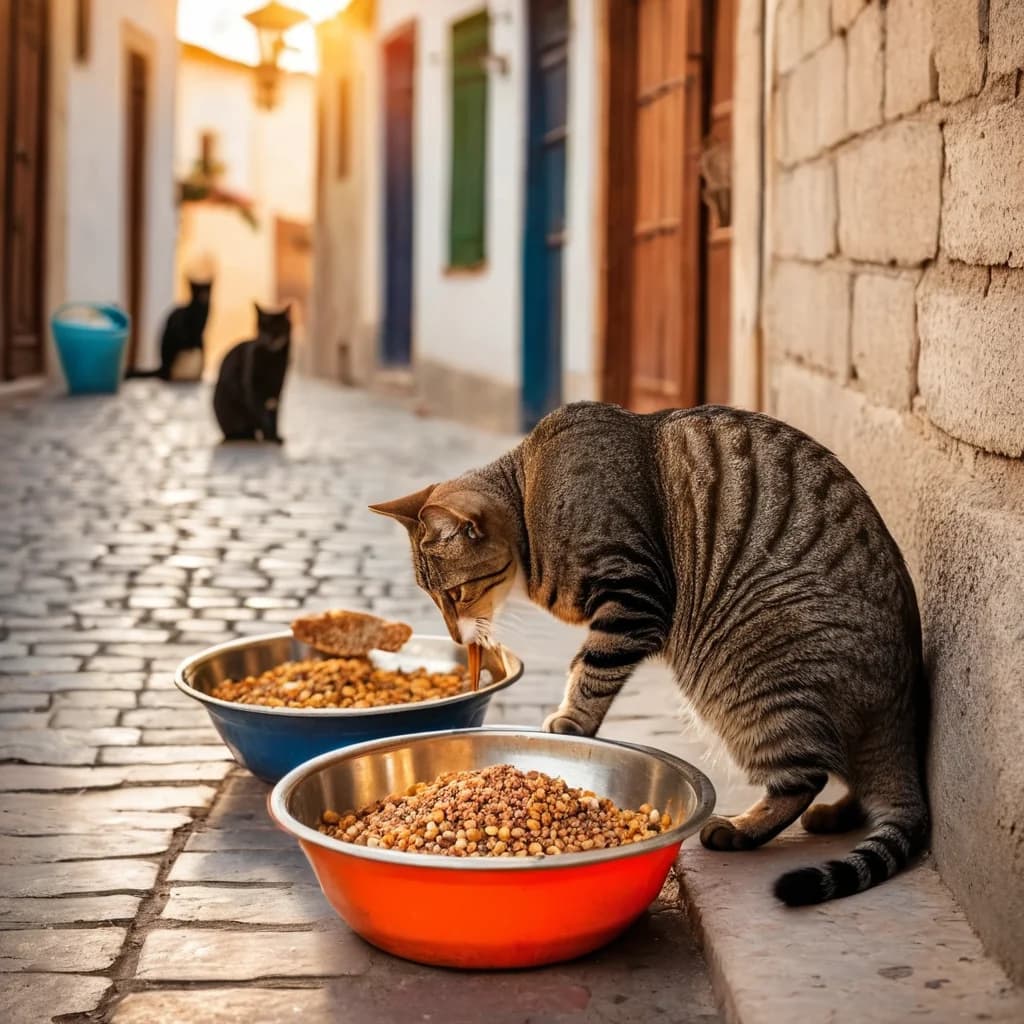

Feeding neighborhood cats and dogs: ethical rules, hygiene, getting along with the neighborhood and waste management. Municipal registration, a permanent water and feeding station, winter care and handling conflicts with neighbors. It's a widespread tradition in Türkiye, and it comes with responsibility. In this post, we take a detailed look at the etiquette of neighborhood feeding.
1. What Neighborhood Feeding Means
- Regularly feeding cats and dogs that live on the street.
- Neighborhood residents who volunteer.
- One person or a group working together.
- A tradition in Türkiye for centuries.
- Common in every neighborhood in the city.
- Animal protection in Islamic culture.
- Modern legal rules and responsibility.
2. Feeding Etiquette
- Regular times (so the cats and dogs get used to it).
- A set place (shared by the neighborhood).
- Clean bowls (wash them regularly).
- Clean up waste (keep the street clean).
- Decent-quality pet food (not human food).
- Not too much (it attracts rats and droppings).
- Keep the water bowl clean at all times.
- Get along with and respect your neighbors.
3. Which Food
- Dry food works well (easy to carry and store).
- Separate cat food and dog food.
- Adult food (separate food for young animals).
- Human food and bread are BANNED (digestive problems).
- Stale food is not hygienic.
- Wet food gives more energy in the winter months.
- Separate milk and wet food for kittens and puppies.
- Check with a vet about the type of food.
4. Water Awareness
- Water is as important as food.
- Several water bowls in summer heat.
- Prevent water from freezing in winter.
- Clean and changed daily.
- An automatic water fountain (a neighborhood investment).
- Enough water for the animals on your street.
- A lifesaver for stray animals on hot days.
5. Feeding Station
- A permanent structure (a box, a cabin).
- Protect it from rain.
- Out of the neighbors' sight (a tucked-away spot).
- Several bowls.
- Food storage (to prevent rats and waste).
- Permission from the municipality and nonprofits (if needed).
- An agreement within the neighborhood.
- Regular cleaning.
6. Winter Care
- Wet food gives energy (warm food in winter).
- Shelters made of cardboard and blankets.
- Increase the amount of food (higher energy needs in winter).
- Keep water from freezing (check it constantly).
- Notice sick cats or dogs and take them to the vet.
- Kittens and puppies are very sensitive to the cold.
- Taking them indoors as guests (if needed).
- A heavy responsibility in the winter months.
7. Summer Care
- Plenty of water (fresh every day).
- A shady feeding spot.
- Wet food spoils quickly, so give small portions.
- Signs of heatstroke mean a trip to the vet.
- Flea and parasite control.
- Watch out for municipal spraying.
- Hot asphalt downtown, so shade comes first.
8. Conflicts with Neighbors
- Some neighbors are bothered (noise, waste, smell).
- Dialogue and respect.
- Clean up waste right away.
- Choose a suitable feeding spot (entrances and lobbies are OFF LIMITS).
- Official permission from the municipality for the street.
- If there's a complaint, you have the right to a lawyer.
- The law doesn't ban feeding.
- Educating the community matters.
9. Municipal Registration
- Neighborhood feeders can register.
- Municipal support (food, vet care).
- Microchips and registration for colony cats.
- Organizing spay/neuter drives.
- Vet support.
- Legal protection in case of complaints.
- Coordination with nonprofits.
- The system is improving.
10. Low-Budget Solutions
- Contributions from family and friends.
- Help from neighbors in your building.
- Sharing unused pet food in the neighborhood.
- Pet shop sales.
- Nonprofit donation drives.
- Requesting support from the municipality.
- Online crowdfunding.
- Awareness on social media.
Neighborhood feeding: the formula is ethical feeding + hygiene + getting along with neighbors + a feeding station + winter and summer care + municipal registration. A balance between Türkiye's tradition and modern responsibility. Protecting animals on the street takes cooperation between citizens, the municipality and nonprofits. In the DoldurKabı app, you can find neighborhood feeding and nonprofit support information on a map.









