


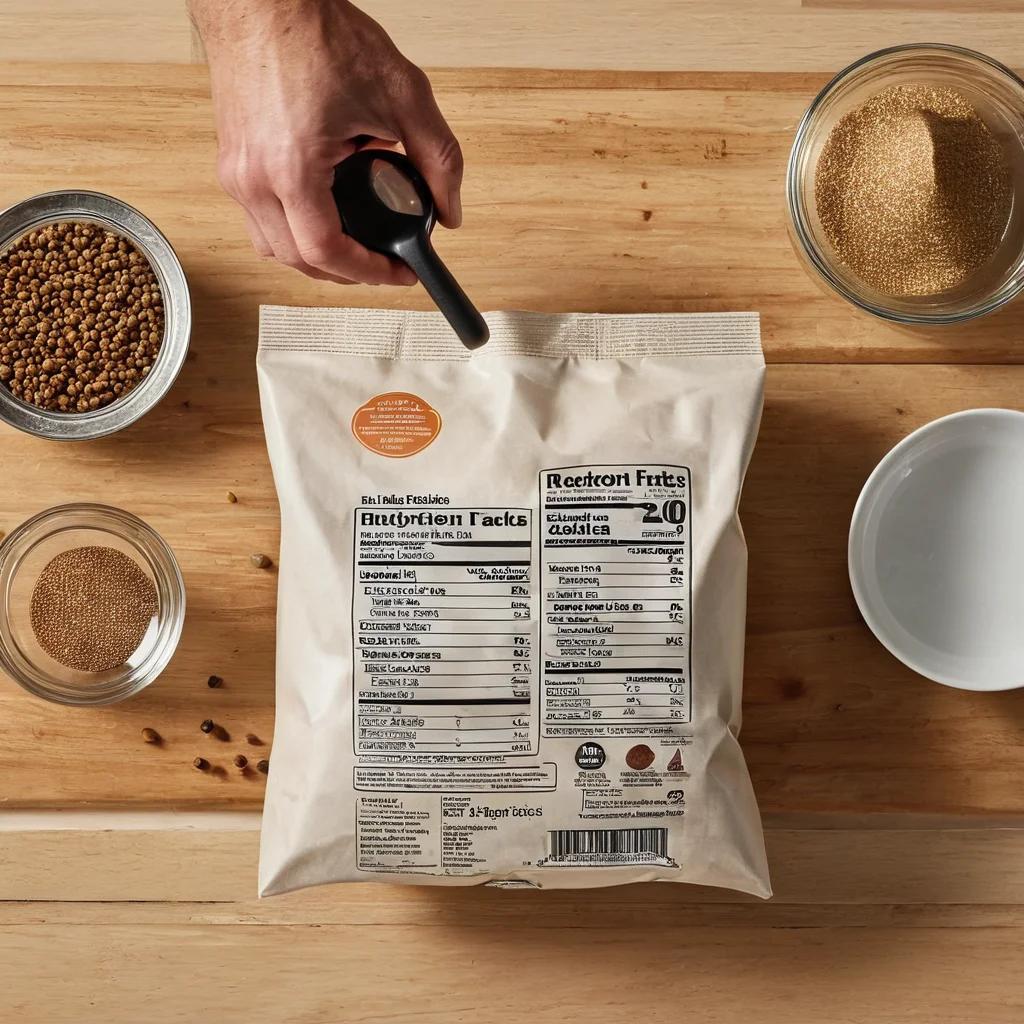

You have probably seen marketing words like "Premium," "Natural" and "Scientific formula" on pet food bags. But is it really quality food, and what is the label actually telling you? A food's real value is hidden in the label's "nutrient analysis," "ingredient list" and approval logo, not in the marketing slogan. This post teaches you how to read dog and cat food labels with a scientific eye, what the main ingredients mean and how to compare foods.
1. Parts of the Label
- Product name and type (dog/cat, life stage).
- Ingredient list.
- Nutrient analysis (the "GA" panel).
- Nutritional adequacy statement.
- Feeding guidelines.
- Manufacturer, address and expiration date.
- Approval logos (AAFCO, FEDIAF).
The most important parts: the ingredient list, the analysis and the adequacy statement.
2. Ingredient List: The First 5 Items Matter Most
Ingredients are listed in order of weight. The first 5 items show what the food is really made of.
Good Signs
- First ingredient names the meat and its type: Such as "chicken breast," "lamb" or "salmon." Just "meat" or "poultry" is vague.
- "Meat meal" is acceptable: it is protein with the water removed. "Chicken meal" is better than "chicken by-products."
- Specific vegetables and grains: "Brown rice," "sweet potato," "carrot" are clear.
- Natural omega sources: "Fish oil," "flaxseed."
Questionable Signs
- "Meat by-products": Liver, lungs, digestive tract and so on: lower-quality protein. Little value on its own.
- "4D meats" (Dead, Dying, Diseased, Disabled): found in some cheap foods.
- Vague "animal fat": Which animal? Vagueness means lower quality.
- High amounts of corn, wheat and soy: Low-cost filler.
- Artificial colors (color codes): No nutritional value; they are there to catch a child's eye.
- BHA, BHT, ethoxyquin (synthetic preservatives): Controversial; natural alternatives (vitamin E, vitamin C) are preferred.
- Sugar (in dry food): Sucrose, corn syrup: unnecessary.
3. Nutrient Analysis (GA)
This table shows the food's basic nutrient levels:
- Crude protein: Minimum protein level.
- Crude fat: Minimum fat level.
- Crude fiber: Maximum fiber.
- Moisture: Maximum moisture.
- Ash: Total minerals.
Comparing on a Dry Matter Basis (DM)
Wet food contains about 75% moisture and dry food about 10%. To compare them, use the "dry matter" (DM) calculation:
Formula: Nutrient / (100 - Moisture) × 100
Example: Wet food with 10% protein and 78% moisture → DM protein: 10 / (100 - 78) × 100 = 45%. That means it actually contains 45% protein!
Dry food with 30% protein and 10% moisture → DM protein: 30 / 90 × 100 = 33%.
The wet food contains more protein, which is why comparing on a DM basis is a must.
4. Target Levels
Dog
- Adult protein: Minimum 18% (DM); ideal 22-30%.
- Adult fat: Minimum 5% (DM); ideal 10-15%.
- Puppy protein: Minimum 22% (DM).
Cat
- Adult protein: Minimum 26% (DM); ideal 30-40%+.
- Adult fat: Minimum 9% (DM); ideal 15-20%.
- Kitten: 30%+ protein.
Cats are obligate carnivores, so they need much more protein than dogs.
5. Adequacy Statement (AAFCO Statement)
A "complete and balanced" claim requires AAFCO or FEDIAF approval. There are two kinds of statements:
- "Formulated to meet": A claim based on calculation; no feeding test was done.
- "Feeding trial": Tested on real animals for 26 weeks. This is a much stronger assurance.
The statement is on the back of the label, in small print. You need to know to look for it.
6. Feeding Instructions
Daily grams based on the dog's or cat's weight and activity. They usually suggest too many grams, since brands set high guidelines to sell more. The real portion comes from your vet's assessment of weight and body condition.
7. What the Marketing Words Mean
- "Premium" / "Super Premium": No binding standard; it is marketing.
- "Natural": AAFCO has a definition (non-synthetic ingredients), so it offers a limited assurance.
- "Holistic": No binding standard.
- "Human grade": AAFCO has a definition but it is rarely met: it means a facility truly fit for human food.
- "Gravy" / "Sauce": Water, starch and flavor: low protein.
- "Grain-free": Controversial. Some studies have linked pea-based grain-free diets in dogs with DCM (a heart disease). Discuss it with your vet.
8. Traits of a Well-Made Food
- The first ingredient names a specific meat and its type.
- 3 of the first 5 ingredients are animal protein.
- Natural preservatives (vitamin E, vitamin C).
- Specific vegetables and fruits.
- An omega-3 source (fish oil or flaxseed).
- The right protein level (dogs 25%+, cats 35%+ DM).
- AAFCO or FEDIAF approval.
- A transparent manufacturer (website and contact details).
9. Frequently Asked Questions
In what order should I read the label?
1) The first 5 ingredients. 2) The nutrient analysis (protein, fat). 3) The AAFCO/FEDIAF statement. 4) Approval logos. 5) Manufacturer transparency. Marketing words come last.
Is grain-free food good for my dog?
It is controversial. Some studies have linked grain-free foods heavy in peas or lentils with DCM (a heart disease) in dogs. If your dog does not have a true grain allergy, choose a standard food and discuss it with your vet.
It says "first ingredient: meat," but it is only 5%. What does that mean?
Ingredients are listed by "uncooked weight." Since about 70% of the water evaporates during cooking, "chicken breast" may not even make up 15% of the finished food. That is why "chicken meal" (with the water already removed) is a more reliable indicator.
Is the most expensive food at the pet shop the right choice?
Not necessarily. The price may include marketing, packaging and advertising costs. Look at the label before the price. A quality mid-range food can be enough.
Should I choose a local manufacturer or a global brand?
Either can work. What matters is quality control and ingredient transparency. A local manufacturer that is transparent and has solid quality control is a good choice.
Which approval logo can I trust?
AAFCO (the US) and FEDIAF (Europe) set nutritional adequacy standards. There is small print on the back of the label; learn to look for it.
Is a wet food label different?
The sections are the same. Since moisture is 75-80%, you just need to convert the nutrient analysis to a "dry matter basis."
Final Word
Your choice of food shapes your dog's or cat's health for years, so take a little time and read labels systematically. The first 5 ingredients, the nutrient analysis and AAFCO/FEDIAF approval: that trio helps you find the right food.
For food brands and portion notes, see DoldurKabı Pet Health Tracking.
This guide is for information only; ask your vet about special nutritional needs.









