


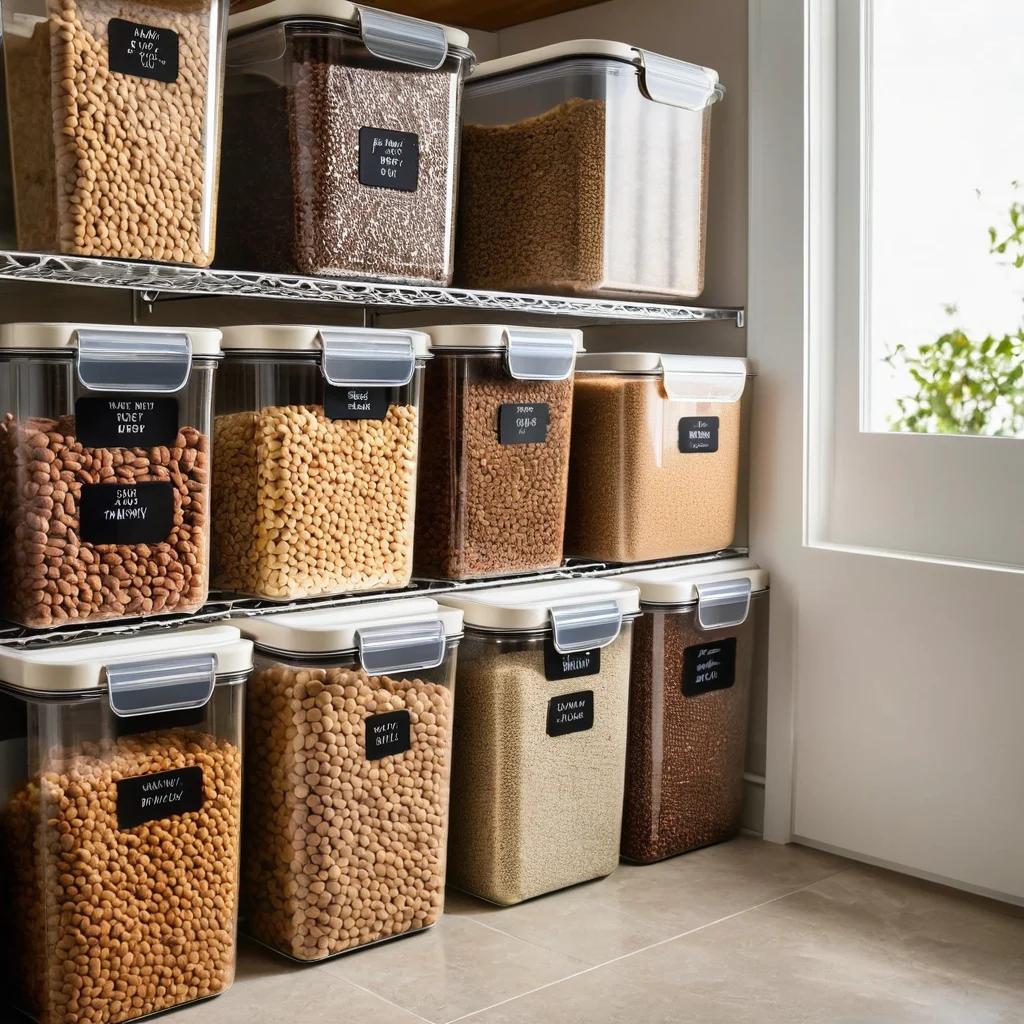

Pet food storage seems simple, but storing food the wrong way can cut its nutritional value by up to 50% + create a risk of spoilage, bugs and mold. An opened bag of dry food loses nutrients after 6 weeks, and the fats go rancid (smell bad). In this post, we take a detailed look at the right way to store dry food, wet food and freeze-dried food.
1. How Pet Food Spoils
- Fat oxidation: Air + light + heat → fats smell rancid, nutrients are lost.
- Vitamin loss: Vitamins A, D, E and C break down with light and air.
- Microbial contamination: Moisture + bacteria/mold grow.
- Insect infestation: Pantry moths, mites.
- Loss of aroma: Your pet's appetite drops.
2. Storing Dry Food (The Most Common Type)
- Use it within 6 weeks of opening.
- The original bag works great: The manufacturer's special laminate is a barrier against oxygen + light.
- Keep the bag inside a small plastic container for a double barrier against oxygen.
- An airtight lidded container (Vittles Vault, Iris); the bag can go inside it.
- A cool + dry spot: Below 22°C; a garage that gets hot in summer is not suitable.
- Away from direct sunlight.
- Track the date: Write down the date you opened it.
3. The WRONG Way to Store Dry Food
- ❌ Pouring it straight from the bag into a container (you lose the bag's laminate).
- ❌ A clear plastic container in a visible spot (UV light).
- ❌ The garage or the car (swings between hot and cold).
- ❌ A kitchen counter near the oven/stove.
- ❌ An open bag (with no seal).
- ❌ Using a 25 kg bag open for 2-3 months.
4. Choosing the Right Container
- Vittles Vault, Iris, Pet Champion: Steel or BPA-free plastic, airtight lid.
- Size: About 1 month's worth; anything bigger leaves unnecessary air inside.
- Opaque, not clear: Protects from light.
- Glass jar for small amounts: A good alternative.
- Closes tightly.
5. Big Bags: Pros and Risks
- 15-25 kg bags cost 25-30% less.
- One (medium-size) dog eats 8-10 kg in 6 weeks.
- A big bag takes 2-3 months to finish → nutrient loss.
- Solution: split the bag in half and store one half in a vacuum-sealed plastic bag.
- Big bags are economical for homes with several pets.
6. Storing Wet Food
- Unopened cans: On a cool shelf, 2-3 years.
- Opened cans: In the fridge, 2-3 days.
- Put a plastic lid on an opened can.
- When you first open it, check for spoilage by smell.
- Bring it to room temperature before serving (10-15 minutes out of the fridge).
- Cold wet food → can upset a sensitive stomach.
7. Storing Freeze-Dried Food
- Unopened, on the shelf for 2-3 years.
- Opened packs 1-2 months (reseal the original pack).
- Sensitive to moisture; keeping it dry is a must.
- For long-term storage, the fridge (1-2 years once open).
- Once rehydrated, use within 24 hours and keep it in the fridge.
8. Storing Treats
- Dry biscuits: An airtight jar.
- Semi-moist treats: In the fridge, 4-6 weeks.
- Natural dried meat treats: Cool + dry, 3-4 weeks once open.
- Homemade treats: In the fridge 1 week, in the freezer 1-3 months.
9. Preventing Bugs + Mold
- An airtight container is your strongest defense against bugs.
- For unused bags in a garage or storage room, keep heat and moisture under control.
- If you see mold in a food bag, throw ALL of it out, since it is contaminated.
- If you see small "pantry moths", check the whole storage area.
- Bay leaves + dryer sheets work as natural repellents (outside the container).
10. A Date Tracking System
- Label the date you opened it.
- Check the production date + expiration date.
- FIFO (first in, first out): use the older bag first.
- Don't buy more than 1 month ahead, or you end up with old stock.
- When buying in bulk, make sure the expiration date isn't close.
Storing food correctly protects your pet's nutrition + health + appetite. The basic formula is original bag + airtight container + cool + dry + the 6-week rule. NEVER give spoiled food (bad smell, mold, bugs): it leads to vomiting + diarrhea + long-term health problems. In the DoldurKabı app, you can find vet clinics experienced in nutrition on a map.









