


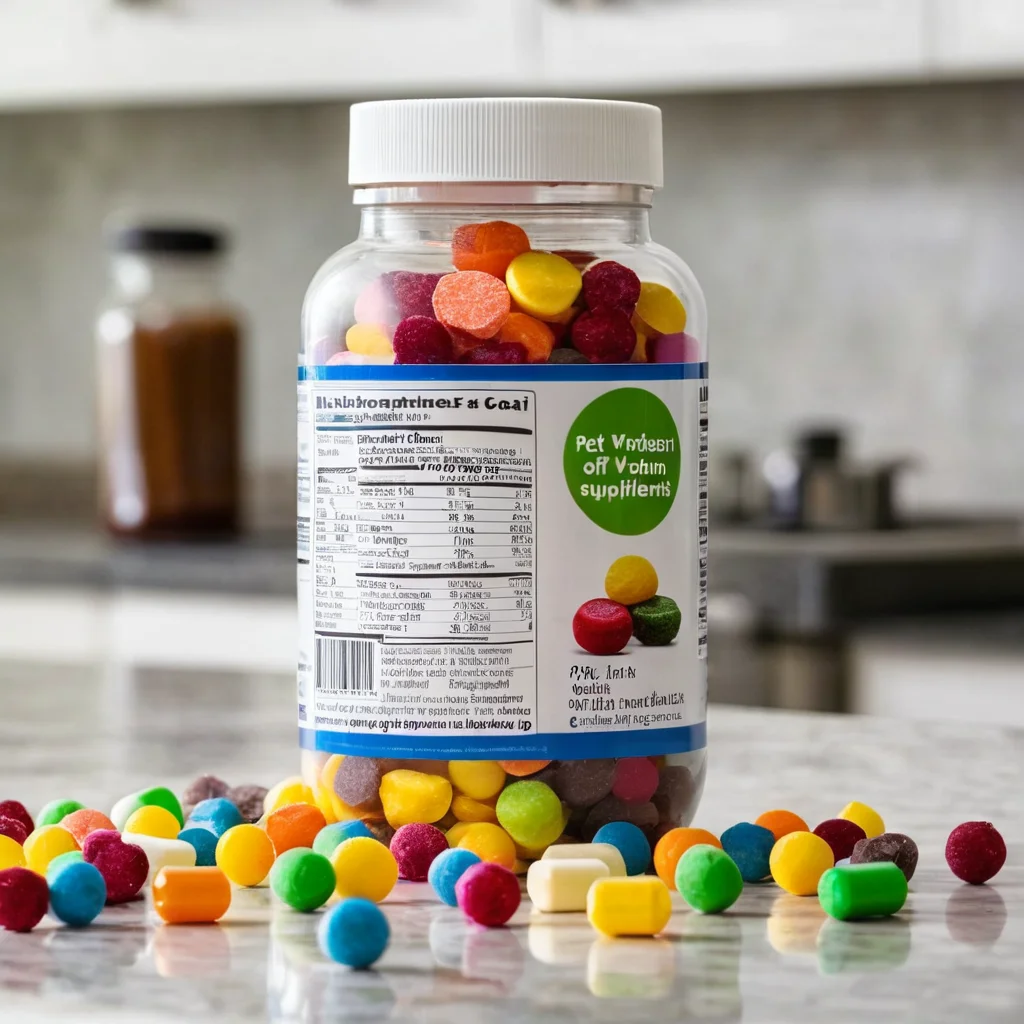

Multivitamin supplements: many owners give them by reflex, but quality pet food contains all the vitamins. Too much of certain vitamins (especially A and D) can cause serious poisoning. In this post we look at when a multivitamin is really needed, a safe-use protocol and homemade diet cases.
1. Is a Multivitamin Necessary?
For a healthy adult eating quality food, it is generally not necessary. An AAFCO "complete and balanced" label covers all vitamins and minerals.
When it is needed:
- Homemade food (if it is not a balanced formulation).
- BARF/raw diet (mineral balance is hard).
- Recovery from illness.
- Senior pets (reduced absorption).
- Pregnant and nursing.
- Puppies growing very fast (large breeds).
- Sports and intense activity.
- Hypoallergenic restricted diets.
2. The Risk of Too Many Vitamins
Water-soluble vitamins (B, C) leave the body in urine when there is too much. Fat-soluble vitamins (A, D, E, K) build up and can become toxic:
- Too much vitamin A: Bone deformities, liver damage, vision problems.
- Too much vitamin D: Calcium buildup → kidney failure, heart problems.
- Too much vitamin E: A tendency to bleed.
- Too much calcium: Disrupted bone development in puppies.
- Too much iron: Liver damage.
- Too much zinc: Copper deficiency and anemia.
3. Multivitamin Options for Dogs
- Vet-approved:
- VetIQ Multi-Vitamin.
- Nutri-Vet Multi-Vite.
- NaturVet All-in-One.
- Available without a prescription, but vet approval is recommended.
- Price: 200-500 Turkish lira/month.
4. Multivitamin Options for Cats
- Be careful with multivitamins for cats: cats are obligate carnivores and get all their vitamins from meat.
- Taurine supplements: The most critical supplement for cats (in homemade diet cases).
- Combined brewer's yeast and fish oil products are popular.
- Vetri-Cat Multi-Vit, NaturVet Hairball.
5. Homemade Food and Multivitamins
If you make homemade food, vitamin/mineral supplements are a MUST:
- BalanceIT: A vet-approved premix.
- Dinovite: A complete supplement system.
- Have a veterinary nutritionist write a custom recipe.
- Calcium carbonate / dicalcium phosphate (as a bone source).
- A multivitamin and specific supplements (taurine, B12, omega-3).
6. Caution With Vitamins for Puppies and Kittens
- Unbalanced vitamins during growth = permanent bone problems.
- Too much calcium in large-breed puppies = a trigger for hip dysplasia.
- If they eat food made for puppies or kittens, multivitamins are a NO.
- Vet guidance is a must for homemade puppy and kitten food.
7. Supplements for Senior Pets
Specific supplements for pets aged 10+:
- Omega-3 (cognition, joints).
- Glucosamine and chondroitin (joints).
- Antioxidants (E, C, selenium).
- L-carnitine (heart, muscles).
- SAM-e (liver and cognition).
- Probiotics (gut).
- Vitamin B12 (absorption declines in senior cats).
8. Supplements for Sporting Dogs
- If high-calorie food is enough, a multivitamin isn't needed.
- L-carnitine (fat burning).
- Creatine (short bursts of extra strength).
- Electrolyte supplements after long distances.
- Antioxidants after intense exercise.
9. Multivitamin Side Effects
- Giving too much: vomiting, diarrhea.
- Too much over a long time: the vitamin toxicities listed above.
- Check for overlap between the food label and the multivitamin.
- Eating a fortified food and getting a multivitamin = overdose.
10. Why Vet Guidance Matters
- A blood test for your pet's specific needs.
- A specific vitamin deficiency (such as a B12 absorption problem) can be detected.
- Targeted supplements instead of a "general" multivitamin.
- Illness can affect vitamins (for example, vitamin A conversion in the liver).
Multivitamins are not necessary for a healthy adult eating quality food. In special cases like homemade diets, illness, old age or growing young pets, use them with vet approval. "More = better" is WRONG: too many vitamins can poison your pet. In the DoldurKabı app you can find vet clinics experienced in nutrition on a map.









