


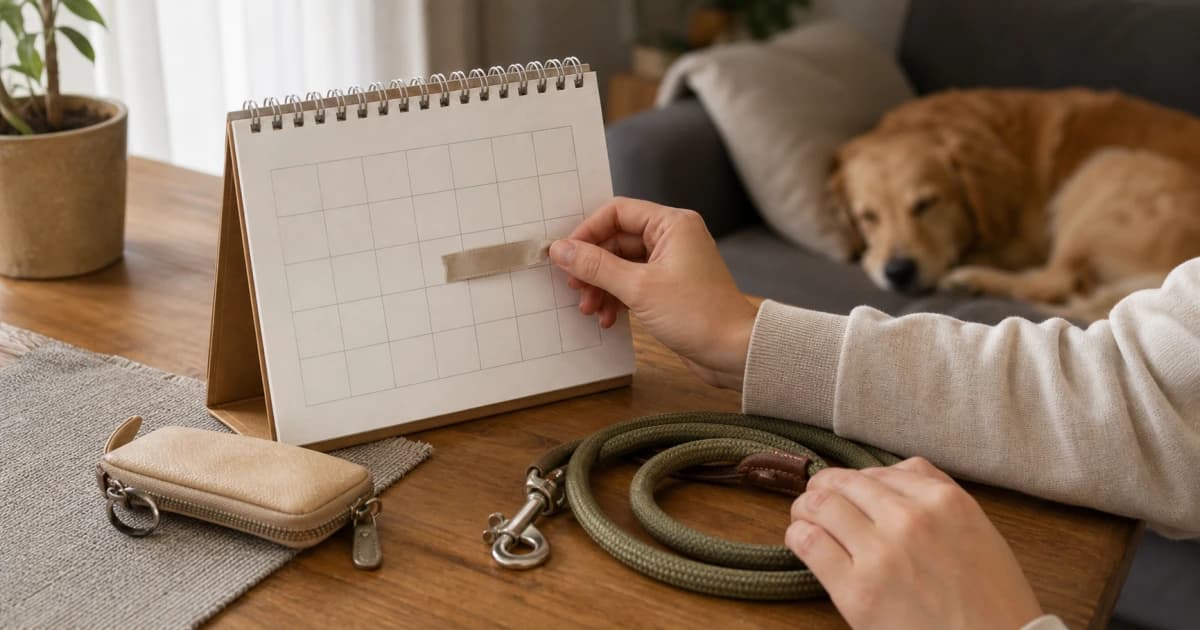

A cancellation policy isn't there to punish clients; it exists so both sides know what to expect when plans change. An overly strict policy can scare off new clients, while unlimited flexibility undercuts the time you have set aside. Depending on your type of service, you can choose one of three basic approaches or build a clear hybrid.
Instead of explaining how to start in the profession from scratch, this article focuses only on one topic: how to set your cancellation policy for pet care, using one of three approaches. To build a workable system, you'll first define the scope, then put the record-keeping and communication steps in place. Using the same check order with every client cuts down on improvised decisions that vary from person to person.
The flexible approach
For short, frequently repeated jobs that are easy to fill again on your calendar, you can offer free changes up to a certain point. The advantage is a relaxed experience for the client. The risk is that you carry the full cost of last-minute gaps, so write down where the flexibility ends.
When you apply this, base your decision on visible information, not assumptions. For the flexible approach, record what was discussed in a dated note, confirm the other side understood it and don't keep going on an old agreement when conditions change. Resolving a small uncertainty before the job starts is safer than making a rushed decision during care.
The tiered approach
You can set up a system where the terms change as the cancellation gets closer to the service date. Instead of giving numerical deductions, explain the logic: more flexibility with early notice, and an outcome that protects your schedule at the last minute. Clarify the date ranges and which channel counts for valid notice with expert advice.
When you apply this, base your decision on visible information, not assumptions. For the tiered approach, record what was discussed in a dated note, confirm the other side understood it and don't keep going on an old agreement when conditions change. Resolving a small uncertainty before the job starts is safer than making a rushed decision during care.
The schedule-protecting approach
For overnight stays, long holiday periods or bookings that make you turn down other work, you can ask for a stronger commitment. Show up front which payment confirms the booking and what happens if it's canceled. Also state how you'll handle force majeure or unexpected situations.
When you apply this, base your decision on visible information, not assumptions. For the schedule-protecting approach, record what was discussed in a dated note, confirm the other side understood it and don't keep going on an old agreement when conditions change. Resolving a small uncertainty before the job starts is safer than making a rushed decision during care.
Don't forget sitter cancellations
The policy shouldn't cover only client cancellations. It should also spell out how you'll give notice in case of illness, a transportation problem or a personal emergency, whether you can suggest a backup and how any payment already received will be handled. Don't promise backup service you can't actually provide.
When you apply this, base your decision on visible information, not assumptions. For sitter cancellations, record what was discussed in a dated note, confirm the other side understood it and don't keep going on an old agreement when conditions change. Resolving a small uncertainty before the job starts is safer than making a rushed decision during care.
The animal welfare exception
If the animal's health, aggression risk or home safety is different from what was stated, you may need to stop the service. Don't treat this like an ordinary client cancellation. Hand over safely, call the owner, refer to a vet if needed and record the incident.
When you apply this, base your decision on visible information, not assumptions. For the animal welfare exception, record what was discussed in a dated note, confirm the other side understood it and don't keep going on an old agreement when conditions change. Resolving a small uncertainty before the job starts is safer than making a rushed decision during care.
Keep the policy visible and short
Don't add the terms in small print after the quote; share them where the client can see them before the date is booked, and get their approval. For the professional workflow, check out the service provider hub, and for walking work, the dog walker guide.
When you apply this, base your decision on visible information, not assumptions. For keeping the policy visible and short, record what was discussed in a dated note, confirm the other side understood it and don't keep going on an old agreement when conditions change. Resolving a small uncertainty before the job starts is safer than making a rushed decision during care.
How do you keep a decision record?
Record not only the outcome of your decision on this, but also the information it was based on. The detail the client told you, your own observation, the method you agreed on and any later change should each be visible separately. Instead of scattering messages across different apps, use a single record thread for the service. That way, when the question “did we talk about this?” comes up during care, you don't have to rely on memory.
The language of the record should be short, neutral and only as detailed as the job requires. Don't add personal comments, diagnoses, accusatory wording or unnecessary private information. For example, when a problem comes up, write only what was seen and when, who was called and what response you got. If a photo is needed, take it without framing private areas of the home or personal documents. When the job ends, also review which information you'll keep and for how long.
Do a small trial run before the first job
Use a low-risk trial run to see whether the plan on paper works in real life. With the owner present, check that the key opens the door, the contact numbers are current, where the needed equipment is and the reporting channel. This trial isn't a sign of distrust; it's a practical check showing both sides understand the same process.
Don't cover up a gap you notice during the trial with temporary fixes. If it can be fixed before the job starts, confirm the new arrangement in writing; if it can't be made safe, postpone or decline the service. Especially if there are health symptoms, an escape risk or a problem accessing the home, don't give in to time pressure. A calm postponement is a more responsible decision than a care promise made under unclear conditions.
A short, practical checklist
- Confirm the scope and critical information in writing before starting.
- Postpone or decline anything that goes beyond your safety or skill limits.
- During care, record only observable information with the date and time.
- When something changes, get the owner's approval; don't proceed on a verbal assumption.
- When the job is done, close out the handover, report and any payment record in the same file.
This list won't solve every scenario on its own; its purpose is to keep critical steps from being forgotten. Simplify it regularly to fit the way you work, but try not to remove the animal safety, clear communication and record-keeping items.
Frequently Asked Questions
Which approach is right?
Choose based on the service that affects your schedule most. Flexibility can make more sense for frequent, short jobs, and schedule protection for long bookings. Double-check the answer against your own service terms and current information; settle any uncertainty in writing before the job starts.
Is verbal notice enough?
To reduce misunderstandings, keep the notice and acceptance in a written channel. Double-check the answer against your own service terms and current information; settle any uncertainty in writing before the job starts.
Do the same terms apply in case of illness?
Decide on your exception approach ahead of time; use a consistent, humane process instead of making arbitrary decisions each time. Double-check the answer against your own service terms and current information; settle any uncertainty in writing before the job starts.
This is not accounting or legal advice; for your own situation, consult your local tax office, an accountant or a lawyer.









