


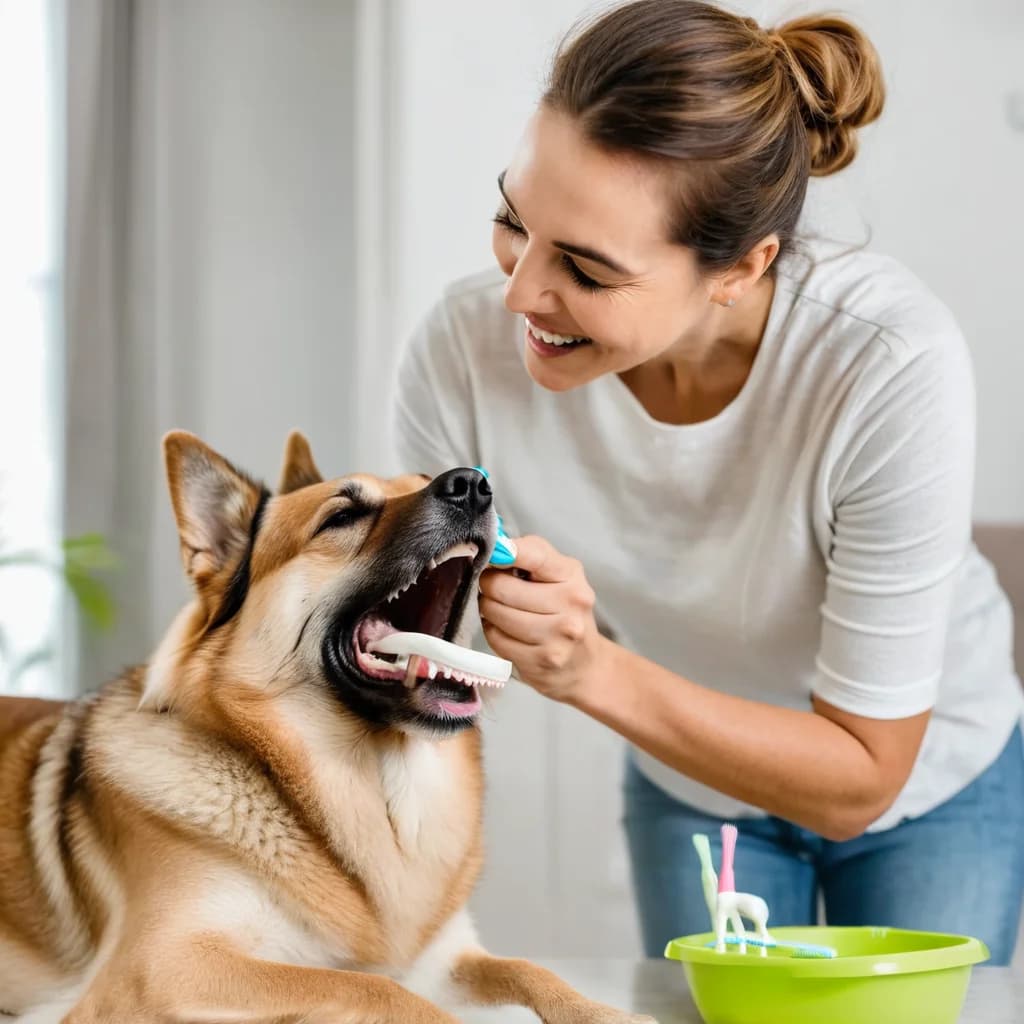

Dental disease in pets is common: by age 3, 80% of dogs + cats have gum inflammation / tartar. Tooth decay + tooth loss + bacteria entering the bloodstream = heart/kidney disease. Start brushing at home when your pet is a puppy or kitten, with pet toothpaste, the right brush type and frequency. When clinical scaling is needed. In this post, we take a detailed look at pet dental care.
1. Why Pet Dental Disease Matters
- By age 3, 80% of dogs + cats have periodontal disease.
- Gum inflammation → tartar → tooth loss.
- Bacteria enter the bloodstream → heart + kidney + liver infection.
- Pets suffer pain silently.
- Eating slowly and chewing on one side are signs.
- Bad breath is the most common sign.
- Prevention = a long + good-quality life.
2. Choosing a Toothpaste
- Human toothpaste is ABSOLUTELY OFF-LIMITS (fluoride and xylitol are toxic).
- Enzymatic pet toothpaste is the standard (Virbac, Petsmile, Petrodex).
- It is edible, no rinsing needed.
- Flavors: chicken, beef, tuna.
- Try the flavor your pet likes (for training).
- Vets recommend chlorhexidine paste (advanced cases).
- Price: 150-500 Turkish lira.
3. Brush Type
- Pet toothbrush: Double-headed (large + small), soft bristles.
- Finger brush: Silicone finger cover, for getting started.
- Electric brush: Made for pets (your pet needs to tolerate the sound).
- A human toothbrush doesn't fit (too big + too hard).
- Size should suit your pet.
- Replace the brush every 3 months.
- Price: 50-300 Turkish lira.
4. Training a Puppy or Kitten (8 weeks+)
- Start at the puppy or kitten stage = lifelong acceptance.
- Stage 1: Stroke around the mouth with a finger (1 week).
- Stage 2: Massage the gums with a finger (1 week).
- Stage 3: Finger brush without toothpaste (1 week).
- Stage 4: First brushing with pet toothpaste (1 week).
- Stage 5: The whole mouth every day.
- 4-6 weeks of getting used to it in total.
- Positive reinforcement (treats, praise).
5. How Often to Brush
- Ideal: Daily.
- Minimum: 3-4 times a week.
- Every other day: Enough protection.
- Irregular = little benefit.
- Adult pets learning for the first time: go gradually.
- Senior pets: tooth loss + pre-existing problems.
- A regular routine = acceptance + health.
6. Brushing Technique
- Your pet in a calm position (sitting or lying down).
- Lift the upper lip at the side.
- Hold the brush at a 45° angle to the gum line.
- Gentle circular motions.
- Focus on the outer surfaces (the most important).
- Most owners can't reach the inner surfaces (the tongue side), so just a light rub there.
- 2-3 minutes for the whole mouth.
- A reward at the end of every session.
7. Dental Chews (Treats)
- Greenies, Whimzees, Dentastix are common.
- Chewing cleans the tooth surface.
- NOT a replacement for brushing, but an ADDITION.
- 1 chew a day (watch the calories).
- Prefer VOHC (Veterinary Oral Health Council) approved products.
- A chew that suits your pet's size (choking risk).
- Price: 100-400 Turkish lira a pack.
8. Water Additives (Dental Additive)
- Added to drinking water.
- Helps prevent soft tartar.
- Kills bacteria.
- Some pets don't like the change in taste.
- Vet-approved products (Healthymouth, TropiClean).
- Not a replacement for brushing, but an ADDITION.
- Price
The fee depends on the city, whether it is a clinic or hospital, after-hours visits, imaging/hospitalization and the animal's weight and age. The provincial Chamber of Veterinarians (Veteriner Hekimleri Odası) publishes a yearly minimum fee schedule; the schedule is a floor, not the final bill. Ask the clinic for a written or verbal estimate.
9. Clinical Dental Cleaning (Scaling)
- Professional cleaning at a vet clinic.
- Anesthesia is needed (long + detailed work).
- An ultrasonic scaler removes tartar.
- Polishing.
- Dental X-rays (root problems).
- Extracting decayed teeth if needed.
- Frequency: 1-2 times a year (some pets more often).
- Price
The fee depends on the city, whether it is a clinic or hospital, after-hours visits, imaging/hospitalization and the animal's weight and age. The provincial Chamber of Veterinarians publishes a yearly minimum fee schedule; the schedule is a floor, not the final bill. Ask the clinic for a written or verbal estimate.
10. Signs: See a Vet Urgently
- Strong bad breath.
- Bloody saliva.
- Red, swollen gums.
- Chewing on one side.
- Eating slowly.
- Loss of appetite.
- Loose teeth.
- Facial swelling.
- Pawing at the mouth.
- These signs = book a vet appointment.
Pet dental care comes down to the formula of daily brushing + pet toothpaste + dental chews + yearly clinical scaling. Owners who start at the puppy or kitten stage = lifelong health. Neglected teeth = systemic disease. Pets suffer pain silently, so check regularly as an owner. In the DoldurKabı app, you can find vets who focus on dentistry on a map.









