


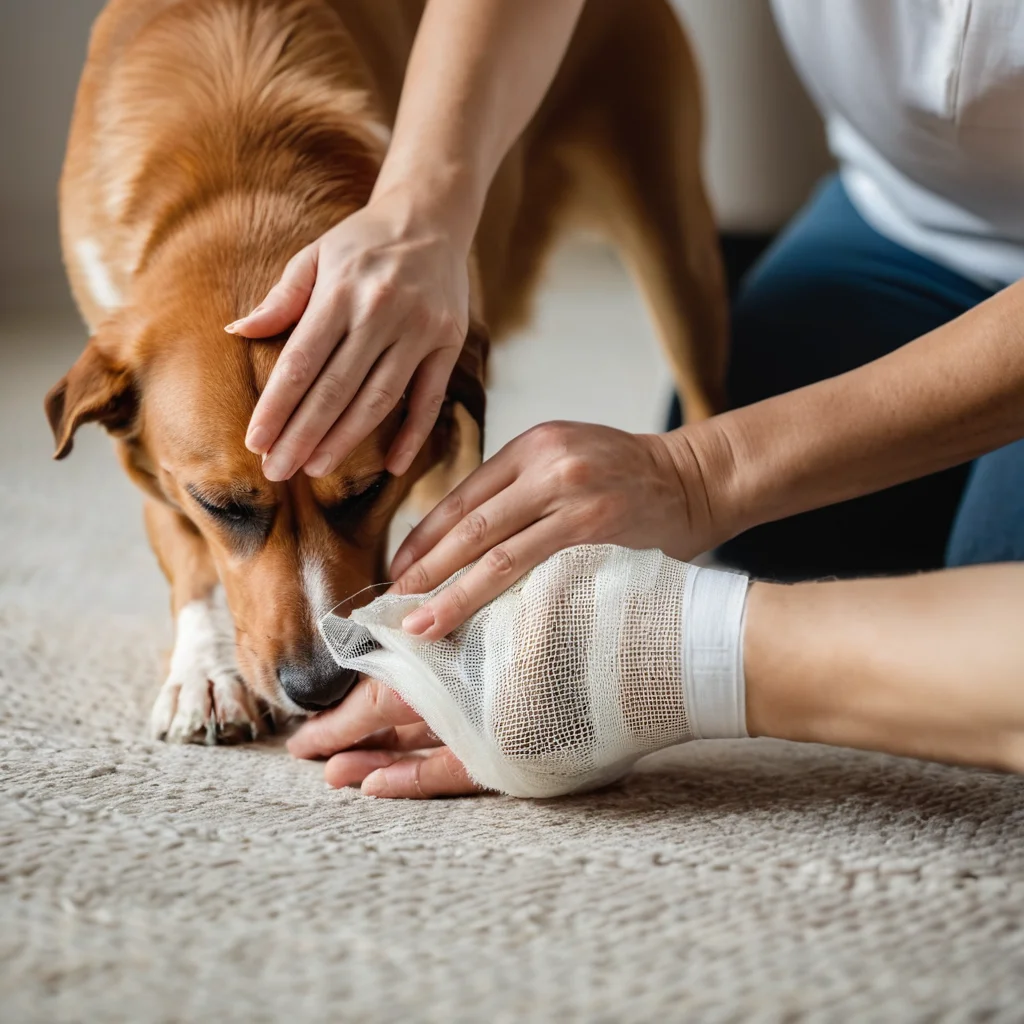

When a pet is bleeding, quick action is essential: severe bleeding can become life-threatening within 5-10 minutes. Applying direct pressure, a tourniquet (last resort), cleaning the wound, bandaging and getting to the vet. Telling arterial from venous bleeding, deep cuts, bites and paw injuries. In this article, we take a detailed look at treating bleeding in pets.
1. Types of Bleeding
- Arterial: Bright red, spurting with each heartbeat. SEVERE.
- Venous: Dark red, steady flow. Moderate danger.
- Capillary: Slow oozing. Mild.
- Internal bleeding: Invisible; pale gums and weakness are the signs.
2. First Response (Step by Step)
- Calm the pet (the owner's stress rubs off on the pet).
- Put on gloves (risk of infectious disease).
- PRESS a clean cloth or towel on the wound for 5-10 minutes.
- DON'T lift it to wipe away the blood and check.
- If the cloth soaks through, add a new cloth on top.
- Keep pressing on the same spot.
- If it's a leg, raise it (above heart level).
- Get ready to go to the vet.
3. How Long to Apply Pressure
- Arterial: 5-10 minutes of firm pressure.
- Venous: 3-5 minutes.
- Capillary: 2-3 minutes is enough.
- If the bleeding continues after you release the pressure = emergency vet.
- If pressure doesn't control it, more serious help is needed.
4. Pressure Points
- Hind leg: The femoral artery on the inner thigh.
- Front leg: The brachial artery in the armpit.
- Neck: Carotid (DANGEROUS, leave it to the vet).
- The pressure point is not on the wound but on the vessel just before the wound.
- A backup method if direct pressure isn't enough.
5. Tourniquet (Last Resort)
- For legs only.
- Only when direct pressure isn't enough.
- Between the wound and the heart, not right next to the wound.
- Tourniquet material (a wide belt, a necktie).
- Tighten until the bleeding stops.
- Note the time (15-20 minutes is the upper limit).
- The owner does not release the tourniquet (until you reach the vet).
- Risk of tissue death → EMERGENCY vet.
6. Cleaning the Wound
- After the bleeding has stopped.
- Sterile saline (body temperature, NOT tap water).
- Flush the wound (by holding it under the stream).
- Diluted antiseptic (vet approved).
- NO cotton balls (fibers get stuck in the wound).
- Gauze or a clean towel.
- Cover the wound with dry sterile gauze.
- Keep the bandage soft so it doesn't cut off circulation.
7. Paw Injuries
- Glass, stones and hot asphalt are common causes.
- Limping on a walk = check the paws.
- Licking the paw = risk of infection (Elizabethan collar).
- Pet boots or socks protect the wound.
- A deep cut = needs stitches (vet).
- See the vet within 6 hours of the injury (infection).
8. Bite Wounds
- Common after dog fights.
- The skin wound is small, but there is tissue damage underneath.
- Lots of bacteria (dog and cat mouth flora).
- Wound cleaning and a vet visit are a MUST.
- Antibiotics are needed (usually).
- High risk of abscess.
- Possible rabies (stray animals).
9. Signs of Internal Bleeding
- Pale or white gums.
- Weakness and loss of balance.
- A fast, weak pulse.
- Fast, shallow breathing.
- A swollen belly.
- Bloody vomit or stool.
- Signs of shock.
- EMERGENCY vet, without waiting.
10. First Aid Kit
- Sterile gauze (5×5, 10×10 cm).
- Elastic bandage.
- Cohesive bandage (self-adhesive).
- Elizabethan collar.
- Antiseptic solution (vet approved).
- Thermometer (rectal).
- Wound ointment (vet approved).
- Gloves (vinyl).
- Scissors (rounded tip).
- Your pet's health file and vet contact details.
Treating bleeding in pets comes down to direct pressure + a calm pet + clean materials + getting to the vet fast. Severe bleeding becomes life-threatening within 5-10 minutes. A tourniquet is a last resort. Wound cleaning and a vet visit are a MUST (risk of infection). An owner who stays calm and acts can save a life. In the DoldurKabı app, you can find a pet first aid guide and a list of 24-hour emergency vets on a map.









