


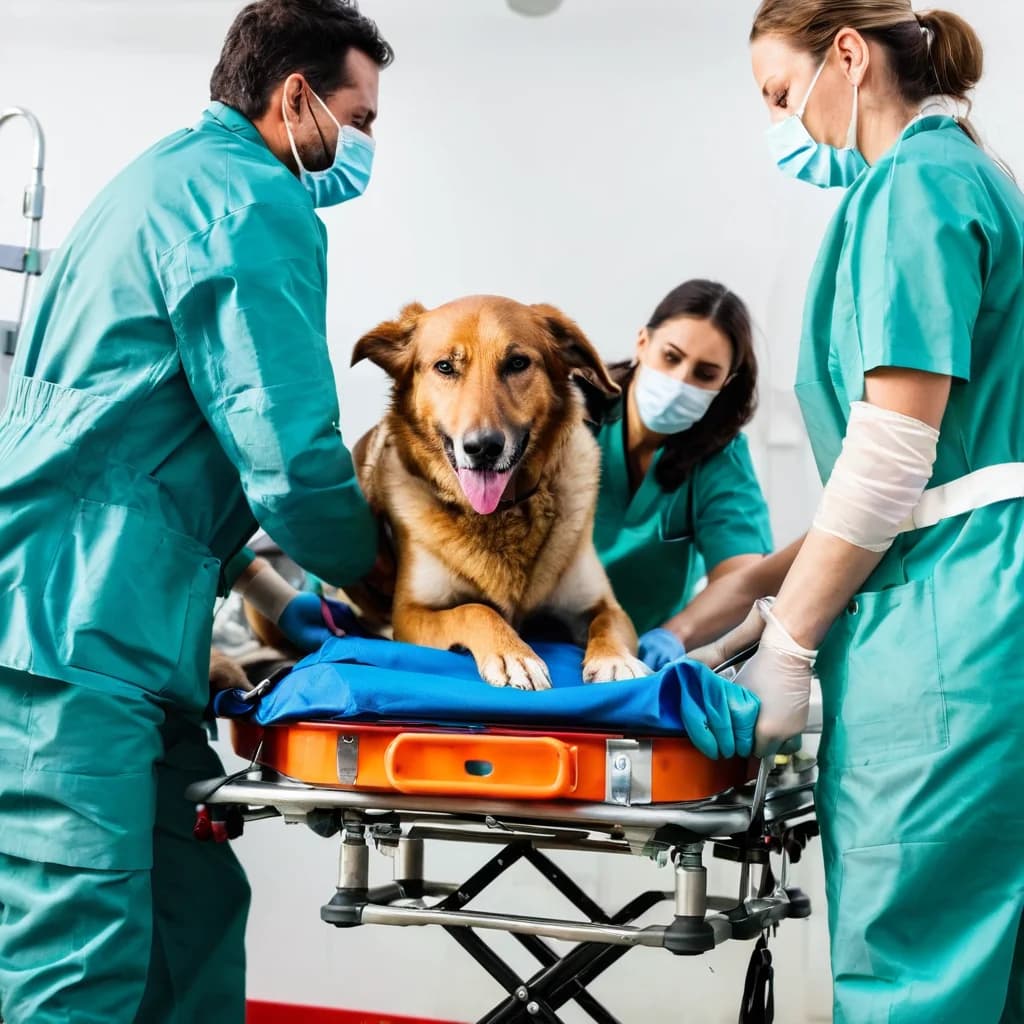

A fracture is suspected after a pet falls, bumps into something or is hit by a car. Moving the pet is OFF LIMITS, the spine is sensitive, splints, carrying on a blanket or cardboard, emergency vet care. Telling an open fracture (bone outside) from a closed fracture matters. Moving the pet the wrong way can cause permanent disability. In this article, we take a detailed look at managing fractures and trauma in pets.
1. Signs of a Fracture
- Limping and not putting weight on the leg.
- Crying out in pain (barking, meowing).
- Swelling and bruising.
- Abnormal position (joint bent the wrong way, leg looks short).
- Open fracture: The bone is outside the skin.
- Closed fracture: The skin is intact but the bone underneath is broken.
- Greenstick fracture (young pets): The bone is partly broken.
- Complete fracture: Two separate pieces.
2. Spinal Trauma (The Most Critical)
- The pet has no feeling and no movement in its legs.
- No control over urine or stool.
- Difficulty breathing.
- Clouded consciousness.
- Neck pain, not moving.
- MOVING THE PET IS OFF LIMITS.
- Carry it flat on a blanket or a piece of cardboard.
- Moving it improperly = permanent paralysis.
3. Emergency Action (Step by Step)
- Keep the pet in a safe place.
- Move it away from traffic (get help if needed).
- Calm it down and watch its mouth (risk of biting).
- A soft muzzle (if needed) for a pet you can't control.
- If there is bleeding, apply pressure.
- Check consciousness and breathing.
- If there are signs of shock, keep it warm.
- Get to the vet without moving the pet more than necessary.
4. Moving Your Pet Safely
- Small pets: A cardboard box with a blanket on the bottom.
- Medium pets: Sturdy cardboard with a blanket, or a pet carrier.
- Large pets: Two people carrying it on a blanket (kept level and steady).
- Suspected spinal injury: Carry it FLAT on a firm base (cardboard or wood).
- Squeezing the legs or belly when lifting the pet is OFF LIMITS.
- Support under the legs.
- Get to the vet quickly but carefully.
5. Open Fractures
- The bone is visible outside the skin.
- High risk of infection.
- Do NOT try to put the bone back in place.
- Cover with clean, damp gauze.
- Stop the bleeding (pressure).
- EMERGENCY vet care: surgery is necessary.
- Treatment success is high within the first 6 hours.
- IV antibiotics and surgery.
6. Splints (Improvised)
- For the owner, only for the time it takes to get to the vet.
- Materials: folded newspaper, cardboard, a magazine.
- On both sides of the pet's leg = steady.
- Secure with a soft wrap.
- Not tight (blood circulation).
- Include the joint below and the joint above.
- A splint is ONLY for getting to the vet; when it comes off = vet right away.
- If in doubt, don't apply a splint.
7. Common Types of Fractures
- Femur (thigh): Being hit by a car and falls from a height.
- Tibia (shin): Falls and bumps.
- Pelvis (hip): Severe car accidents.
- Scapula (shoulder blade): Falls.
- Jaw: Falling face first.
- Spine: Falls from a height and car accidents.
- Paw: Glass, a closing door.
- Young pets have more flexible bones (greenstick).
8. Vet Diagnosis and Treatment
- X-rays to assess the fracture.
- CT scan (if a spinal injury is suspected).
- Treatment: immobilization (a thick wrap) or surgery.
- Plates and screws (major fractures).
- External fixator.
- Pin (intramedullary).
- Open fracture: surgery is necessary.
- Healing takes 6-12 weeks.
9. The Healing Process
- Crate rest (restricted movement).
- Pain relief (NSAID, opioid).
- Physical therapy afterward.
- Rich nutrition (bone healing).
- Patience from the pet owner.
- Elizabethan collar (to stop licking the wrap).
- Follow-up X-ray after 4-6 weeks.
- Full recovery in 3-6 months.
10. Prevention
- A pet seat belt or crate in the car.
- Balcony safety (cats falling).
- Netting on high windows.
- Care with slopes and stairs during the young stage.
- Check where your pet is when closing doors.
- Fractures linked to young pets' play.
- Joint problems in senior pets raise fracture risk.
- Pet bone health: calcium, vitamin D and exercise.
Pet fractures and trauma come down to this formula: don't move the pet, protect the spine, transport safely, emergency vet care. Moving the pet the wrong way can cause permanent disability. If a spinal injury is suspected, use a FLAT base and carry with two people. Open fractures mean infection risk, so surgery is urgent. In the DoldurKabı app, you can find a list of 24-hour emergency vets and surgical specialist vets on a map.









