


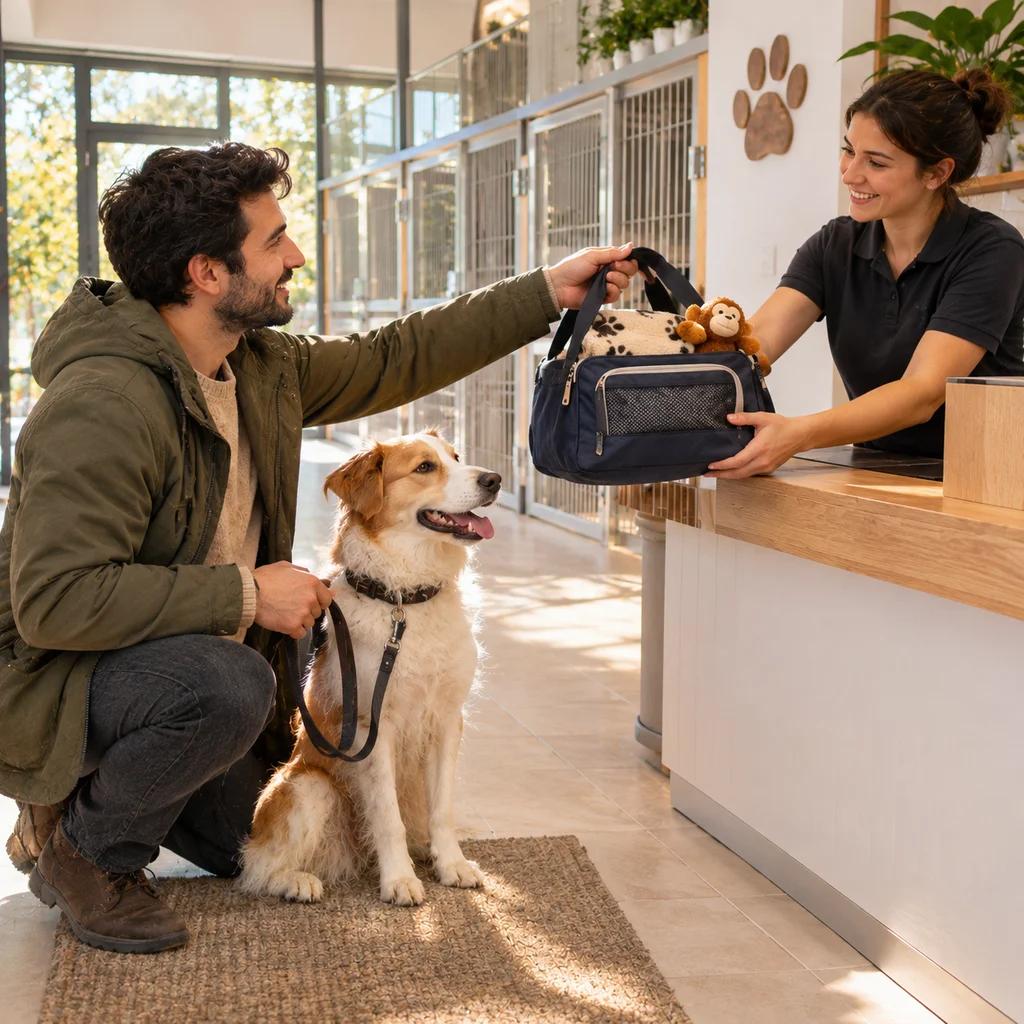

You picked a pet hotel, saw the place and you feel good about it. What's left is the hard part: leaving your dog or cat there and walking out the door. The first time, most people spend the whole vacation with their mind back there. Your pet, too, has to adjust for a few days to a new environment, new smells and new sounds.
Some of this tension is unavoidable. But with a few steps you can make the first stay much more comfortable for both you and your pet. This post is not about choosing a hotel; it is about getting ready after you have chosen one.
Sort out the documents first
Most pet hotels ask for some documents about the animal's health before accepting it. Don't leave this to the last day; a missing vaccine may take time to complete.
- Vaccination record or pet passport, with up-to-date vaccines
- The date of the last parasite treatment
- Medications it takes and how to give them, as written by the vet
- Notes on any known allergies or chronic conditions
- The name and phone number of the vet clinic you regularly visit
If the hotel hasn't told you which documents it needs, ask. If your pet's vaccines are incomplete or it has recently had a health problem, it is a good idea to talk with your vet before the stay. The vet decides whether your pet is fit for boarding.
A trial day or trial night
Instead of starting the first stay with a long vacation, doing a short trial makes things easier. Many hotels accept daycare or a single-night stay. Ask about it.
Why does a trial help?
Your pet gets to know the hotel and sees its smells and routine once. On the second visit, the place doesn't feel strange. You also see how the hotel works, how they keep you updated and what condition your pet is in when they hand it back.
What to look for after the trial
- How tired is your pet when it gets home? A little tiredness is normal; extreme exhaustion is not.
- Did it eat its food? Did the hotel tell you?
- Is there any irritation or wound on its coat, paws or neck?
- How does it behave the next day? Does it get restless when the hotel is mentioned or when getting in the car?
If the trial went smoothly, you head into the long stay with more peace of mind. If there was a serious problem, you have time to look for another solution before the vacation.
Packing the bag
The things your pet brings along give it both a familiar smell and a sense of routine. But ask ahead of time what the hotel accepts; some places use their own beds and bowls.
Food
Bringing its own food is important for keeping its stomach settled. Bring enough portions for the length of the stay plus a day or two extra. If you bag each portion separately and write the day and meal on it, the hotel's job gets easier and the risk of mix-ups goes down. Put treats in a separate bag too, and write how many can be given per day.
Items that carry its scent
- A small blanket it uses at home or an old T-shirt that carries your scent
- A favorite toy, the kind that doesn't tear apart easily
- For cats, a small amount of the litter used at home, if the hotel accepts it
Also accept the chance that these items may not come back. Don't pack anything very valuable or irreplaceable.
Medications and collar
Hand over medications in their original box with your pet's name written on it. Also write the instructions on a separate piece of paper. Make sure the collar, harness and ID tag are in good shape; your current phone number should be on the tag.
The week before the stay
In the days before going to the hotel, a few small preparations make things easier. They're not hard, but when they're left to the last day, they get rushed.
- Nail and coat care. Long nails can cause slipping or snagging on a new floor. If your pet's coat tends to mat, brushing it a few days beforehand is a good idea.
- Write down the routine. When it wakes up, when it eats, walk times, where it sleeps at night. The hotel may not follow the same routine exactly, but it will try to keep it close.
- Changing food. Switching to a new food right before the stay can upset its stomach. If a change is needed, leave it until after you're back.
- Bring out the carrier. For a cat, leaving the carrier open in the living room a few days ahead makes the day you leave easier.
Also talk ahead of time about whether your dog will join a play group with other dogs. Some dogs are happy in a group, while others prefer to spend time alone or with people. You are the one who knows your dog closely; tell the hotel clearly.
A separate note for cats
Cats can be more sensitive to a change of place than dogs. If you're leaving your cat at a hotel, ask whether cats stay in a quieter area separate from dogs. Having a box or an enclosed space where the cat can hide makes the first days easier.
For some cats, staying in the home environment is much more suitable. If your cat is the type that stops eating and hides for hours in an unfamiliar place, a pet sitter visiting your home may be less stressful. This decision depends on your cat's personality.
Saying goodbye: short and calm
Long hugs and talking in a teary voice at drop-off don't help your pet. It notices your tension and gets tense too. Say goodbye in a calm voice, hand the leash to the staff and leave.
- Before dropping off your dog, take it for a short walk so it can burn off energy and go potty.
- Bring your cat in its carrier and open the carrier in an enclosed area at the hotel.
- At handover, go over the food, medication and contact information one last time with the staff.
Staying in touch during the stay
Talk from the start about how and how often the hotel will update you. A photo or a short message once a day is enough for most people. Calling constantly wears out both the staff and you. Knowing they'll call you right away if there's a problem is reassurance enough.
Also don't forget to discuss which vet your pet will be taken to in an emergency and how your approval will be obtained. Settling this in writing from the start keeps you from losing time in a bad moment.
Coming home: the first few days
A few days at a hotel are intense for a pet. New sounds, other animals, a different routine. When it comes home, let it have a few calm days.
- It is normal for it to sleep a lot on the first day.
- Out of excitement, it may suddenly drink a lot of water and try to eat. Splitting the meal into a few small portions can ease its stomach.
- Avoid long walks and intense play on the first day.
- If diarrhea, vomiting, coughing or loss of appetite lasts more than a few days, consult your vet.
If you're thinking about in-home care instead of a pet hotel, you can also look at the in-home dog sitter option. You can find a list of hotels in your area on the pet hotels page.
Frequently Asked Questions
Is a trial night a must?
It isn't required, but it helps a lot, especially before the first stay. Your pet gets to know the hotel, and you get the chance to spot problems before a long vacation.
What happens if my pet doesn't eat at the hotel?
A drop in appetite on the first day is common. Ask the hotel to let you know about it. If not eating lasts for a few meals, the hotel and the vet should decide together what to do.
Should I bring its own bed?
If the hotel accepts it, a small blanket or bed comforts your pet. Instead of a big, expensive bed, choose something easy to wash that won't be a problem if it gets lost.









