


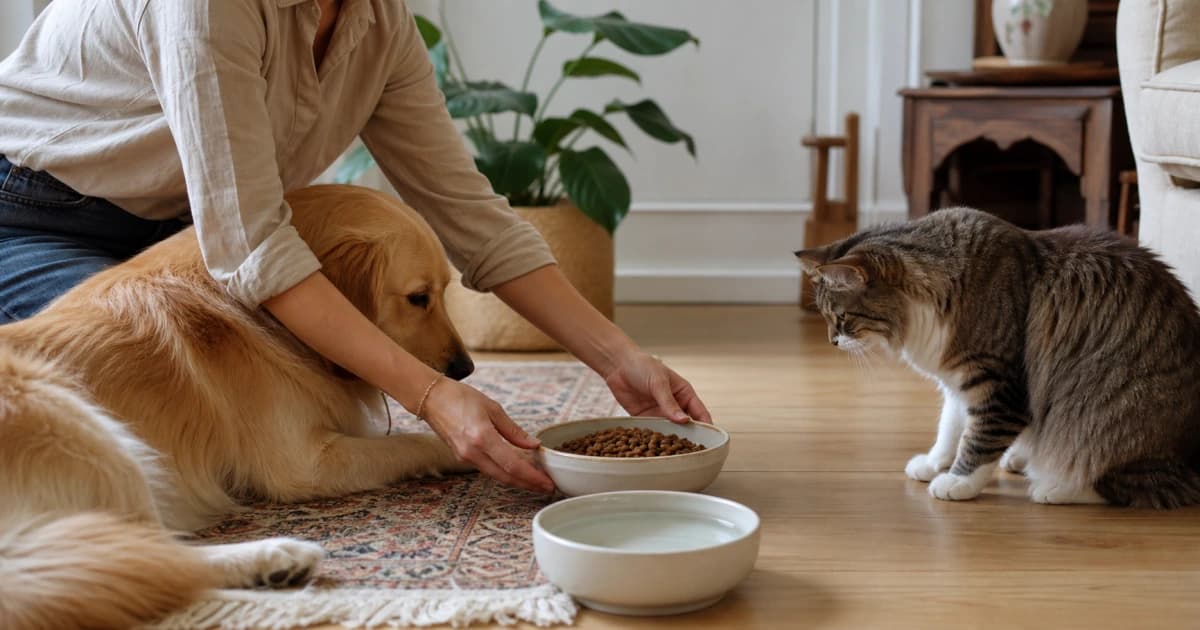

A pet sitter is someone who keeps up a pet's daily routine when the owner temporarily can't provide care. In Turkish, the role is called evcil hayvan bakıcısı. The job isn't just filling the food bowl; safe access, watching behavior, cleaning, meeting the need for exercise and regular communication all go hand in hand.
Rather than explaining from scratch how to get started in the profession, this article focuses only on the question “What Is a Pet Sitter and What Do They Do?” To build a routine that works, you'll first define the scope, then set up your record-keeping and communication steps. Using the same order of checks with every client cuts down on improvised decisions that change from person to person.
Where the service takes place
The most common model is scheduled visits in the pet's own home. Some sitters may offer overnight stays or care in their own space; but each model comes with different conditions for the home, the neighbors, how the animals get along and safety. You need to clearly define in your offer where the service takes place and the moment your responsibility begins.
When you apply this step, base your decision on what you can actually see, not on assumptions. Record what you discussed about where the service takes place in a dated note, confirm that the other person understood it, and don't carry on with an old agreement when conditions change. Clearing up a small uncertainty before the job starts is safer than making a rushed decision during care.
What daily tasks include
Checking food and water, cleaning the litter box or living area, walks, play and a short status report may be among the core tasks. Every animal's routine is different; the task list is written according to the owner's instructions. Extra household chores aren't automatically part of the care.
When you apply this step, base your decision on what you can actually see, not on assumptions. Record what you discussed about what daily tasks include in a dated note, confirm that the other person understood it, and don't carry on with an old agreement when conditions change. Clearing up a small uncertainty before the job starts is safer than making a rushed decision during care.
Observation is an important part of care
The sitter notices visible changes in appetite, toilet habits, movement and behavior and passes them on to the owner. This observation isn't a diagnosis. When there's a sign of a health problem, the sitter pauses the care routine, calls the owner and points them toward a vet's assessment.
When you apply this step, base your decision on what you can actually see, not on assumptions. Record what you discussed about observation in a dated note, confirm that the other person understood it, and don't carry on with an old agreement when conditions change. Clearing up a small uncertainty before the job starts is safer than making a rushed decision during care.
Trust and record-keeping responsibility
House keys, alarm and camera details and personal data are handled with care and restraint. Arrivals, departures and completed tasks are recorded. Being professional is less about always appearing online and more about keeping your word in a way that can be verified.
When you apply this step, base your decision on what you can actually see, not on assumptions. Record what you discussed about trust and record-keeping in a dated note, confirm that the other person understood it, and don't carry on with an old agreement when conditions change. Clearing up a small uncertainty before the job starts is safer than making a rushed decision during care.
What a pet sitter is not
A pet sitter is not a vet, a behavior specialist, a house cleaner or a payment intermediary. Medical procedures outside their skills and tasks outside the agreed scope should be clearly declined. DoldurKabı can bring the two sides together; it doesn't act as a payment intermediary, doesn't take a commission and makes no promises about how a service turns out.
When you apply this step, base your decision on what you can actually see, not on assumptions. Record what you discussed about what a pet sitter is not in a dated note, confirm that the other person understood it, and don't carry on with an old agreement when conditions change. Clearing up a small uncertainty before the job starts is safer than making a rushed decision during care.
Where to start researching the profession
First figure out which species and which type of service you have safe experience with. For a general roadmap, check out the service provider hub, and for species-specific advice, the cat and dog sitting guides.
When you apply this step, base your decision on what you can actually see, not on assumptions. Record what you discussed about where to start in a dated note, confirm that the other person understood it, and don't carry on with an old agreement when conditions change. Clearing up a small uncertainty before the job starts is safer than making a rushed decision during care.
How do you keep a decision log?
For every decision you make on this, record not only the outcome but also the information it was based on. The detail the client gave you, your own observation, the method you agreed on and any later change should each be visible on their own. Instead of scattering messages across different apps, use a single record thread for each service. That way, when the question “did we talk about this?” comes up during care, you won't have to rely on memory.
The language of your records should be short, neutral and only as detailed as the job needs. Don't add personal comments, diagnoses, accusing language or unnecessary private information. For example, when a problem comes up, write only what was seen and when, who was called and what answer you got. If you need a photo, take it without getting private areas of the home or personal documents in the frame. When the care ends, also review which information you'll keep and for how long.
Do a small trial run before the first job
See whether the routine on paper works in real life with a low-risk trial run. While the owner is with you, check that the key opens the door, that the contact numbers are up to date, where the necessary equipment is kept and how reports will be sent. This trial run isn't a sign of mistrust; it's a practical check that shows both sides understand the same process.
Don't cover up a gap you notice during the trial run with a temporary fix. If it can be fixed before the job starts, confirm the new arrangement in writing; if it can't be made safe, postpone or decline the service. Especially if there's a health symptom, a risk of escape or a problem getting into the home, don't give in to pressure to hurry. A calm postponement is a more responsible decision than a promise of care made under unclear conditions.
A short, practical checklist
- Before starting, confirm the scope and key information in writing.
- Postpone or decline anything that goes beyond safety limits or your skills.
- During care, record only observable information, with the date and time.
- When something changes, get the owner's approval; don't move ahead on a verbal assumption.
- When the job is done, close out the handover, the report and any payment record in the same file.
This list won't solve every scenario on its own; its purpose is to keep critical steps from being forgotten. Simplify it regularly to fit your own type of service, but try not to drop the sections on animal safety, clear communication and record-keeping.
Frequently Asked Questions
Is a pet sitter the same as a dog walker?
The roles can overlap, but they're not the same. A dog walker focuses on walks, while a pet sitter may take on a wider range of in-home care tasks. Double-check the answer against your own service terms and current information; settle any uncertainty in writing before the job starts.
Does a pet sitter stay at the home?
It depends on the service model. Visits and overnight stays should be discussed from the start as separate scopes. Double-check the answer against your own service terms and current information; settle any uncertainty in writing before the job starts.
Does a pet sitter carry out veterinary procedures?
They can only accept limited tasks that are within their skills and covered by written instructions from a vet; diagnosis and treatment belong to the vet. Double-check the answer against your own service terms and current information; settle any uncertainty in writing before the job starts.









