


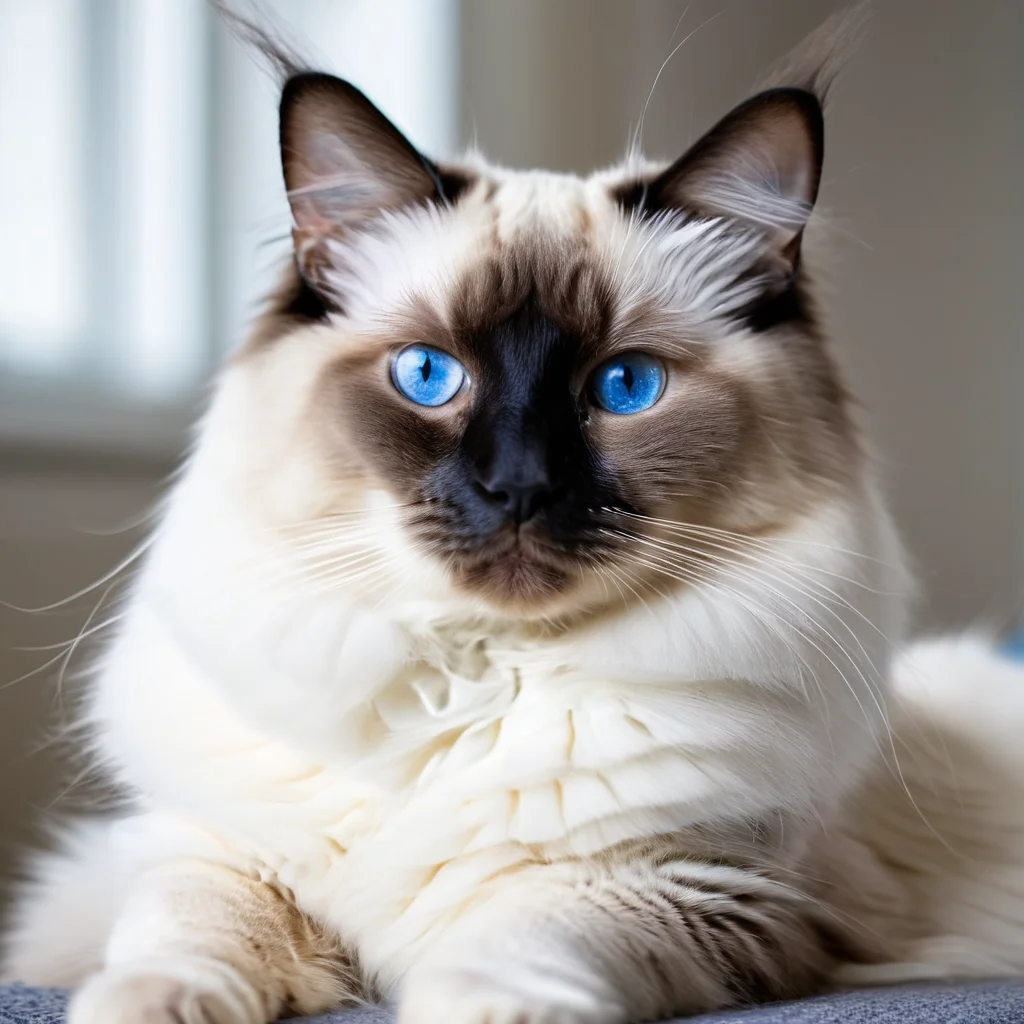

The Ragdoll is a breed from the US that gets its name from the way it relaxes "like a rag doll when you pick it up." With its blue eyes, colorpoint pattern, long silky coat, and extremely gentle nature, it has quickly grown popular in recent years. It's friendly with families, other animals, and kids, calm and social, and suited to apartment living. However, HCM heart disease, urinary tract diseases, and obesity are problems it's prone to. In this article, we look at every detail of Ragdoll care.
1. Ragdoll Temperament
- Very gentle + affectionate: The "rag doll" personality.
- Social: Great with families + kids + other animals.
- Calm + low-energy.
- Follows its owner around "like a dog."
- Meows little.
- Matures slowly: Not fully grown until 3-4 years old.
- An indoor cat: Its defensive instinct is weak, so it shouldn't go outside.
2. Physical Traits
- Weight: Males 5-9 kg, females 4-7 kg.
- Coat: Medium-length and silky (little undercoat).
- Color: Colorpoint (darker face + legs + tail): seal, blue, chocolate, lilac, red, cream + tabby/mitted/bicolor variants.
- Eyes: Blue (in all Ragdolls).
- Lifespan: 12-17 years.
3. Coat Care
- Brush 2-3 times a week.
- Less matting (little undercoat), but still check.
- Bathe every 2-3 months or when dirty.
- If mats form, use a detangling spray.
4. An Indoor Cat (Important)
The Ragdoll's defensive instinct is weak, so the outdoors is risky:
- It won't run away if attacked by another cat or dog.
- Traffic danger.
- High risk of getting lost.
- A balcony safety net is a MUST.
- Supervised outings on a leash are an option.
5. Breed-Specific Health
- HCM (heart): Genetic test (the Ragdoll-specific HCM mutation) + yearly echo screening from age 2.
- Urinary tract diseases (FLUTD): Prone to them, so plenty of water + wet food.
- Polycystic Kidney Disease (PKD).
- Obesity: Common.
- Dental tartar.
6. Nutrition
- Kittens: kitten food for 12 months.
- Adults: 70-120 g/day of premium dry + wet food.
- Wet food (to prevent FLUTD): 1 can a day.
- Plenty of water: a fountain + several bowls + a filter.
- Portion control to prevent obesity.
7. Exercise + Play
- Low-to-moderate energy: 20-30 min of play a day.
- A scratching post is a must.
- Interactive toys + a feather wand.
- A slow + calm play style.
8. Training
- Positive reinforcement.
- Socialization from kittenhood + getting used to nail/teeth care.
- Leash + harness training is possible.
- Keep stress low with a calm environment.
9. Things to Consider Before Adopting
- Monthly cost: 1,500-2,700 Turkish lira.
- Ethical breeder: Parents tested for Ragdoll HCM + PKD.
- Indoor life: A balcony safety net is mandatory.
- A 12-17 year responsibility.
- Limited tolerance for being alone; another pet or a busy family home is recommended.
10. Lifespan and Cost
- Lifespan: 12-17 years.
- Total lifetime cost: 280,000-550,000 Turkish lira.
The Ragdoll: an extremely gentle, lovable, family-friendly cat. The Ragdoll HCM test + indoor life + balcony safety + FLUTD prevention + socialization are critical. In the DoldurKabı app you can find Ragdoll adoption listings and vet clinics on a map.









