


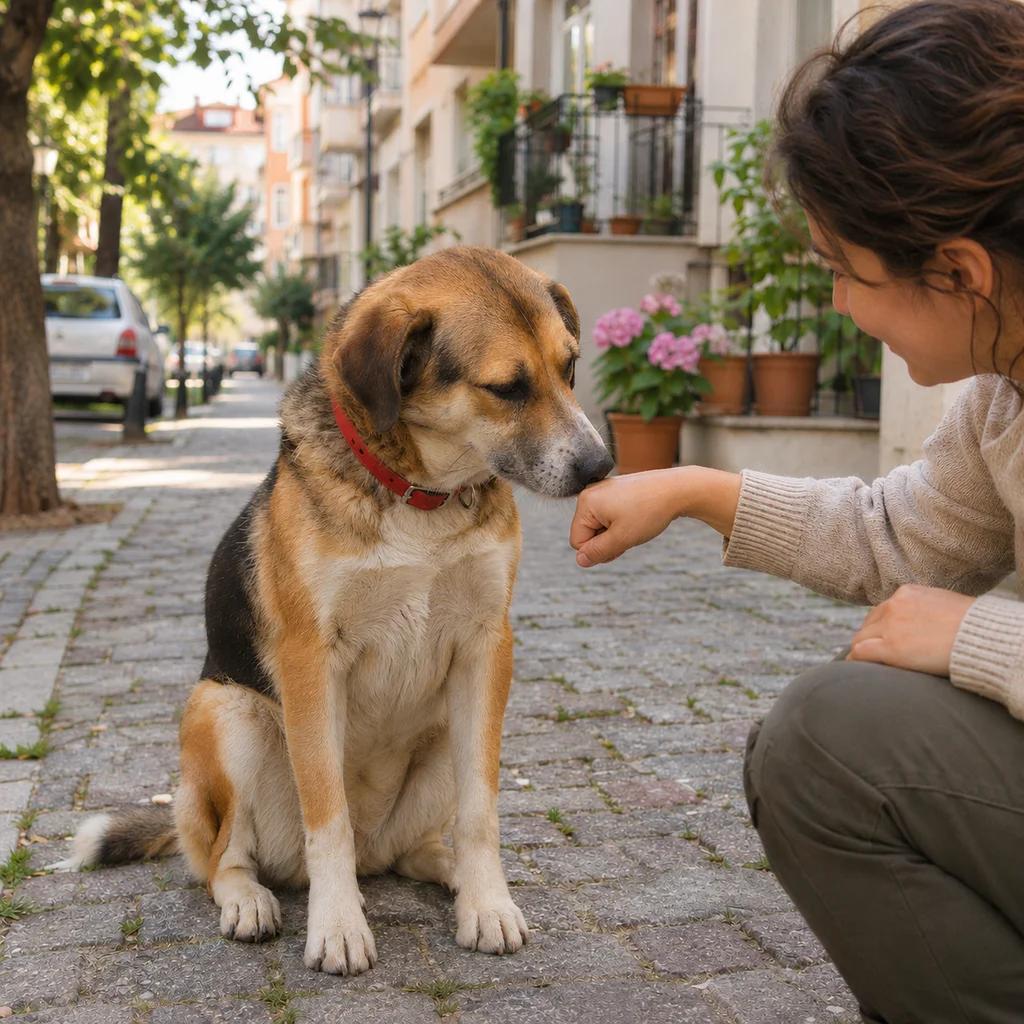

You spotted a dog with a collar looking around in confusion on the street, or a cat with a spotless coat cuddling up to people at your building's entrance. You think, "This is someone's pet, it must be lost." You may be right. In this article, we walk you through the steps you can take, in order, to safely get an animal like this back to its owner.
If you found an injured or sick animal, take care of its health first and contact an emergency vet clinic without delay. The steps below are for animals that look healthy but may be lost.
Look first: is it owned, or does it belong to the neighborhood?
Not every clean, gentle animal is lost. Some cats and dogs have lived in a neighborhood for years and are fed by shopkeepers and neighbors. Taking an animal like that away cuts it off from the place it knows. Before you decide, look for these signs:
- Does it have a collar, harness or ID tag? If so, it most likely got out of a home.
- Is there an ear tag or notch? This usually means a stray animal that the municipality spayed or neutered and returned to the area. That spot may already be its home.
- How is it behaving? Lost pets are often nervous, not used to traffic and noise, and they follow people or wait in front of a door.
- What do people nearby say? Ask the shopkeepers or the building superintendent nearby. An answer like "I have never seen this dog before" is an important clue.
Approach safely
A lost animal may be scared, and fear can sometimes lead to unexpected reactions. Don't walk straight toward it; crouch down, sit sideways and talk in a calm voice. Instead of reaching out your hand, wait for it to come and sniff you.
If the dog comes up to you, it's a good idea to wait a few seconds before grabbing its collar. If you don't have a leash with you, a belt or a sturdy rope can work for the time being. If you want to pick up a cat, wrap it in a towel and put it in a box or carrier. Remember there's a risk of bites or scratches; keep children away at this stage.
Check the ID tag and collar
Many owners have their phone number engraved on the ID tag. If there's a number, call right away. If you can't get through, leave a message: say where the animal is, how it's doing and how to reach you. Some tags only have a name; even then, knowing the name will help you verify the owner later when someone claims the animal.
Check the inside of the collar too. Some owners write their number on or inside the collar.
If there's no number on the tag but the collar looks carefully chosen, clean and new, that may suggest the animal went missing recently. In that case, searching a bit more thoroughly around where you found it increases the chances of reaching the owner.
Get it scanned for a microchip
If there's no tag or you can't reach the number, take the animal to a vet clinic and ask them to scan for a microchip. The scanner shows the number of the chip under the animal's skin in a few seconds. The clinic can try to reach the registered owner using that number. You can find clinics near you in the vet directory.
Municipal veterinary services departments are often helpful with this too. If you can't get to a clinic, you can call the municipality of the district you're in and ask.
Spread the word where you found it
Lost animals are usually found not far from home. The owner is most likely walking the same streets. So the first thing to do is let the area around you know:
- Leave a note with a photo at building entrances and shops near where you found the animal.
- Ask building superintendents and complex staff; they often know the animals in the area.
- Let nearby vet clinics know; the owner may call them first.
Don't put every detail about the animal in the note. Writing its species, color and where it was found is enough. Keep its distinguishing marks to yourself; you'll need them to verify the owner when they call.
Check lost pet listings
The owner has most likely already posted a listing. Look at the lost pet listings in your area and compare the photos and the places where pets went missing. Check your neighborhood's social media groups and building group chats too. You can also post a "found" listing yourself; since listings on DoldurKabı show up on the map, someone searching nearby can find you more easily.
When you share on social media
Sharing the animal you found in neighborhood groups or on social media is one of the fastest ways to reach its owner. A clear photo, the area where it was found and the date are enough. Don't write your full address or its distinguishing marks.
Don't trust the first comment or the first message you get right away. Asking the person who says they're the owner for older photos of the animal, asking about the detail you kept to yourself and, if needed, checking the microchip number against the registration keeps the animal from ending up in the wrong hands. After you hand the animal over to its owner, update or remove your post so no one keeps contacting you.
If it's going to stay with you for a while
If the owner doesn't turn up right away, you may need to keep the animal with you for a few days. If you have other pets at home, keep it in a separate room. A lost animal's vaccination status and parasite history are unknown, so it's safer to hold off on contact with your own pets until it has been checked.
Put water, plain food, a litter box if it's a cat, and a quiet corner in the room. Since you can't know what food it's used to at home, give small, frequent meals for the first few days. If you notice diarrhea, vomiting or lethargy, consult a veterinarian.
If you're keeping the animal for a few days, jot down what you notice about it during that time: what it eats, what its bathroom habits are like, what it's afraid of. When the owner turns up, these notes will be valuable to them. If the owner doesn't turn up, they'll help you describe the animal better when you look for a new home.
Verify when the owner turns up
It's natural to be happy when someone calls saying "that's my pet," but do a quick check before handing it over. You can ask for earlier photos of the animal or ask about the distinguishing mark you kept to yourself. How the animal reacts to that person often tells you a lot as well. If possible, do the handover during the day in a busy place.
If the owner doesn't turn up
Despite all your efforts, you may not be able to reach the owner. Give yourself a reasonable amount of time for this; keep your listings up and call the clinics again every so often. If the owner never turns up, you could consider adopting the animal yourself, or you can post an adoption listing to find it a loving home. When you make this decision, having the animal checked by a vet also reassures its new family.
Frequently Asked Questions
Can I take the animal I found straight into my home?
You can, but it's important to make an effort to reach the owner first. Check the ID tag, get it scanned for a microchip, let the area where you found it know and check lost pet listings. If you have pets of your own, keep the newcomer separate for a while.
Where should I go to get a microchip scanned?
You can go to a nearby vet clinic or to the veterinary services department of your district municipality. Scanning takes only a moment and doesn't hurt the animal.
Should I take away a dog that has an ear tag?
An ear tag usually means a stray animal that was spayed or neutered and returned to its area. If it's healthy and at ease where it is, leaving it there may be the better choice. If it looks injured or sick, let the municipality or a veterinarian know.
If the owner doesn't turn up, should I take the animal to a shelter?
That depends on your situation. If you can keep it with you, looking for a home for it while keeping your listings up may be less stressful for the animal. If you can't care for it, you can talk to your district municipality and ask where the animal can stay safely for the time being.









