


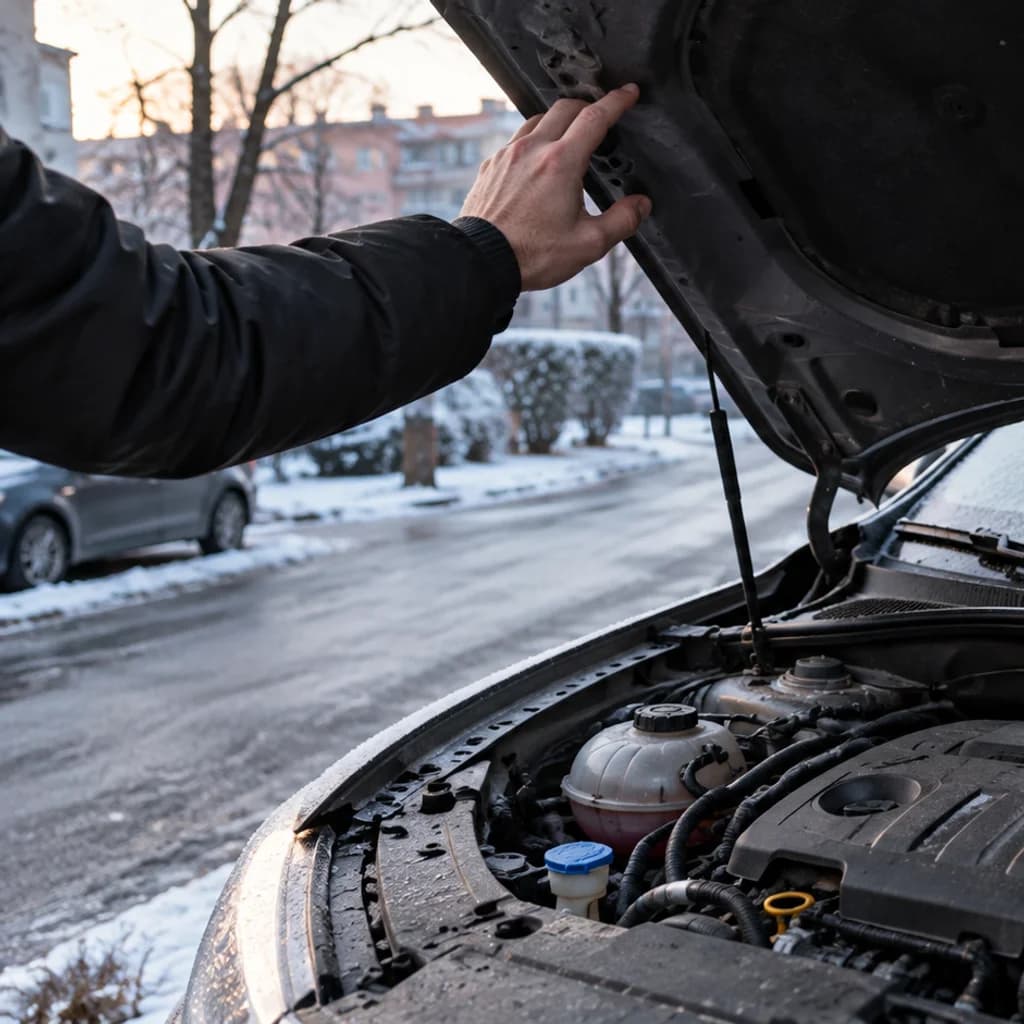

When the weather turns cold, the engine bay of a parked car becomes a sensible spot for a cat living on the street. The wind can't get in, the surface stays warm for a long time, and it is an enclosed space that dogs and people can't reach. The cat goes in not because it is dangerous, but because it looks safe.
The trouble starts in the morning when the key is turned. Once the engine runs, the belt, the fan and the hot surfaces all kick in at once; an animal sleeping inside has nowhere to escape. Most of these accidents can be prevented with a check that takes a few seconds before you get in the car.
The habits below don't need any special equipment. Repeated every morning through the winter, they become automatic, and they also spare the driver an unnecessary trauma.
Why does a cat choose the engine bay?
After the engine stops, the bay stays warm for several hours. A cat can sense that warmth from a distance. The underside of the car, the wheel wells and the gap right under the hood offer three separate hiding spots. Kittens and young cats slip through narrow gaps more easily, so they can climb up and settle right on top of the engine.
In rain and snow this choice becomes even more obvious. If the underside of cars is the only dry place, many cats in the neighborhood use the same few cars. So not seeing anyone one morning doesn't mean no one will be there the next.
Some of the spaces inside the bay are tight for a cat but warm; once the animal squeezes in, it can have trouble getting back out. That is why, on cold nights, cats that settle into the narrow gap between the hood and the engine block sometimes can't get out on their own in the morning. An animal being inside doesn't mean it can easily escape.
The same behavior applies to hedgehogs, puppies and sometimes birds. You get better results by doing the check on the assumption that “there may be a living creature inside,” not by thinking about one species.
The habit of tapping the hood
The well-known method is to tap the hood a few times by hand before opening the door. It works not because of the sound itself, but because of the vibration. An animal pressed against the engine block feels that vibration directly and usually moves.
- Before opening the door, tap the hood three or four times with your palm.
- Wait a few seconds. Don't rush; it takes time for a sleeping animal to wake up and get out.
- Honking the horn also works, but at night and early in the morning, be kind to your neighbors and tap the hood instead.
- After turning the key, let the engine idle for a few seconds and don't drive off right away.
If you use a remote start system in winter, this habit becomes even more important. With remote start, the hood-tapping step is skipped completely; the engine starts running before you even reach the car. If you plan to use this feature on cold days, walk to the car first, check, and then start it.
These steps take about ten seconds in total. The hard part is remembering, which is why many people put a small tag on their car key in winter or set a morning reminder on their phone.
Checking the hood and wheels
Tapping isn't always enough. A frightened cat may curl up tighter instead of moving, and kittens especially tend to freeze at a noise. For cars that have been parked for a long time or left outside all night in cold weather, it is safer to take a look with your own eyes.
What should you look for?
Crouch in front of the car and scan the underside. Use your phone's flashlight. Check behind the wheels, inside the wheel wells and under the bumper. If there is snow or mud, look for paw prints on the ground; if the prints lead under the car and don't come back out, the animal may still be inside.
When should you open the hood?
If you heard a sound, saw prints or watched a cat go under the car, open the hood. If the engine is cold, this is completely safe. When you see the animal, don't reach in and try to pull it out; a panicked cat will flee deeper and can get stuck.
Instead, keep the engine off, leave the hood open and step a few meters away. Most cats come out on their own once the way out is clear and no one is around. The smell of pet food or wet food speeds this up.
What if the animal won't come out?
If an animal is stuck, injured or refuses to come out, do not start the car under any circumstances. Here is the order to follow:
- Leave the hood open, keep the area quiet and wait at a distance for about fifteen minutes.
- If it doesn't come out, call for help. The municipality's animal services unit and the fire department respond to calls like this.
- If the animal is visibly injured or can't move, don't try to get it out on your own; keep your emergency vet options ready.
- If the animal you got out has bleeding, a limp, fur that touched a hot surface or changes in its breathing, take it to a vet the same day. You can find places near you in the vet list.
Not walking around the car while you wait helps. The animal is more likely to come out when it doesn't feel watched. To make sure no one starts the car while the hood is open, keep the key in your pocket and let others nearby know.
Even an animal with no visible wound can have internal injuries. After an incident that could have caused harm, don't decide on a checkup just by how the animal looks.
If you found an injured or ownerless animal
Sometimes the cat that comes out of the engine bay has an owner. If it has a collar, a tag or a well-groomed look, it may have come from a home in the neighborhood. In that case check the lost pet listings; if an animal has gone missing in that area recently, you may be able to reach its owner.
If it is ownerless and needs care, local shelters and volunteers step in. You can see the options in your area on the shelters page. If you start looking for a forever home, you can share a listing in the adoption section.
If you are taking an animal into your home temporarily, try not to let it have direct contact with your own pets in the first days. This makes for an easier start, both for disease risk and for stress.
Alerting the neighborhood
One person building the habit protects their own car; it doesn't reduce the risk on the street. As winter sets in, sending a short message to your apartment or complex group helps. Instead of a long explanation, a one-sentence reminder is enough: tap the hood before turning the key in the morning.
In complexes with a parking lot, you can suggest the manager put up a note. A short warning sign can stay on the board at the entrance all winter.
This reminder matters especially for neighbors who leave early in the morning and jump into the car in a hurry. A short message protects every cat spending the winter on that street at the same time. Repeating the same message in spring, when kitten season starts, is also useful; kittens squeeze into narrow gaps more easily.
If you regularly leave food out on the street, moving it to a corner away from where cars park also lowers the risk. When a simple shelter is set up, protected from the wind and with an insulated floor, cats often choose that box over the engine.
Frequently Asked Questions
Won't tapping the hood scare the cat and make it go deeper?
In most cases the animal moves outward. Still, kittens may freeze, so it is safer to wait a few seconds after tapping and, if possible, check with your eyes too.
Do I need to open the hood every morning?
No. The routine check is tapping the hood and waiting a few seconds. Opening the hood is an extra step for when you hear a sound, see prints or the car has sat unused for a long time.
Is there a risk in indoor parking garages too?
Yes. Indoor garages are windless and dry, so cats favor them in winter. Keep up the checking habit whether you park outdoors or indoors.
I got the cat out and it looks fine. Should I still take it to the vet?
If the car was started or the animal touched a hot surface, get it checked even if there is no visible wound. If it was only sleeping and came out with no contact at all, it is not an emergency; still, watch its behavior for a few days.









