


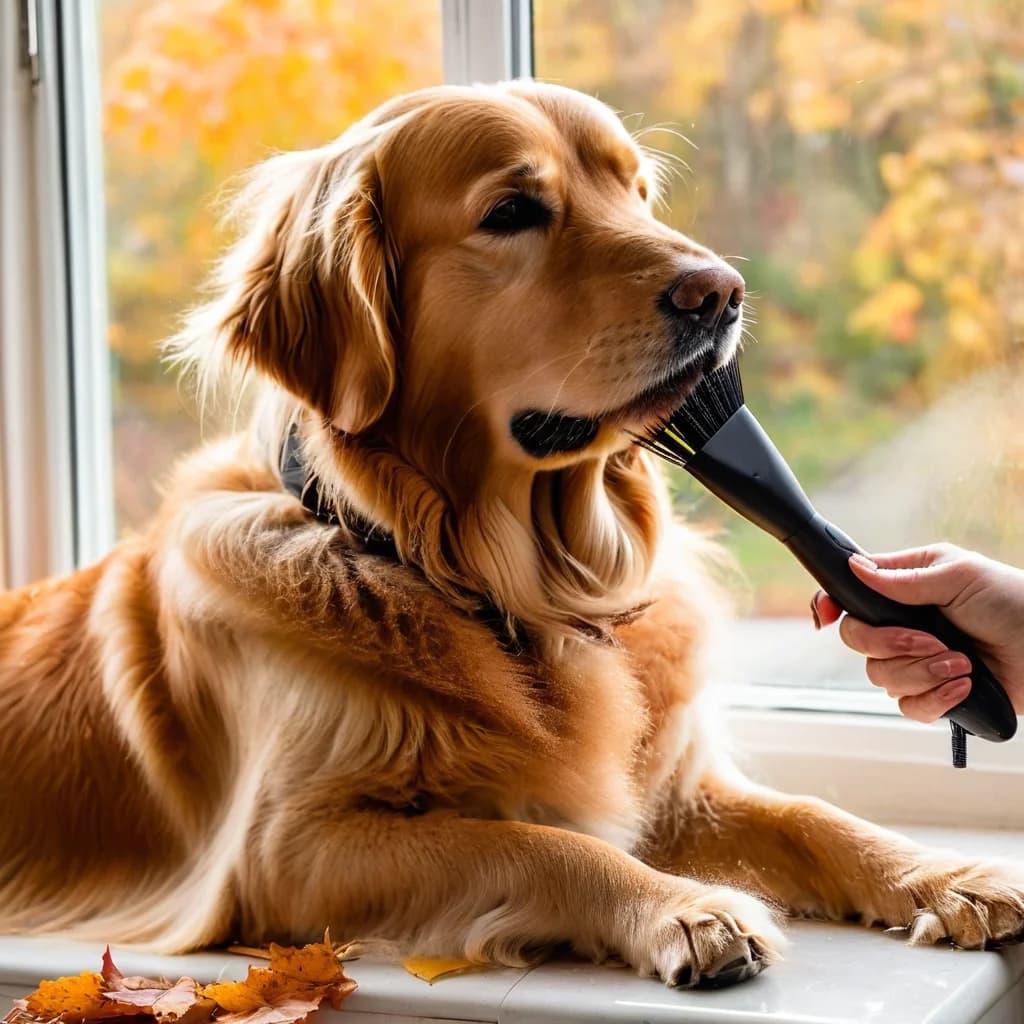

In fall, pets grow their winter coat and shed their old summer coat. Managing heavy shedding comes down to daily brushing, an undercoat rake, omega-3 supplements, the right bathing frequency and a vet check (to rule out skin problems). Shedding is natural, but without management it turns your home into a fur storm. In this article, we take a detailed look at managing fall shedding.
1. The Shedding Cycle
- Spring: The thick winter coat sheds.
- Fall: The thin summer coat sheds and a thick winter coat grows in.
- Two major shedding periods a year.
- Each lasts 2-6 weeks.
- Light shedding continues all year.
- Indoor pets see less change in temperature and light, so they shed more continuously.
2. Coat Types
- Double coat: Outer guard hairs plus an undercoat. Husky, Malamute, Golden, Lab, German Shepherd, Akita.
- Single coat: One layer. Greyhound, Boxer, Pit Bull.
- Wire-haired: Coarse, wiry hair. Schnauzer, Terrier.
- Long-haired: Long coat. Maltese, Yorkie, Shih Tzu.
- Hairless: No coat. Mexican Hairless, Sphynx.
- Double-coated pets shed the MOST in fall.
3. How Often to Brush
- Double coat: Daily, 10-15 minutes.
- Single coat: 2-3 times a week.
- Long-haired: Daily (to prevent matting).
- Wire-haired: Twice a week, plus hand-stripping every 3-6 months.
- Puppies and kittens: Short, gentle sessions (to get them used to it).
- Brush extra intensively for 1-2 weeks in fall.
4. Types of Brushes
- Slicker brush: Fine wire bristles, suits most breeds.
- Undercoat rake: For double-coated breeds (Furminator).
- Pin brush: For long coats.
- Bristle brush: Adds shine to short coats.
- Deshedding tool: The Furminator brand, removes undercoat.
- Rubber brush: For bathing and massage.
- A pricier first brush lasts longer (name brands are worth it).
5. How Often to Bathe
- Too many baths in fall dry out the skin.
- 1-2 times a month at most.
- Brush before the bath (to prevent matting).
- Hypoallergenic shampoo.
- Human shampoo is OFF-LIMITS (different pH).
- Dry completely after the bath (to prevent skin infections).
- Use a force dryer to blow out the undercoat.
6. Nutrition and Omega-3
- Omega-3 supports skin and coat health.
- Fish oil supplements (dose approved by your vet).
- Egg white (with your vet's approval).
- Enough protein.
- Whole-food pet food (whole herbs, vegetables).
- More water (for skin moisture).
- Probiotics for digestive support.
7. When to See the Vet
- Patchy hair loss (parasites or fungus).
- Redness and scratches.
- Bad smell (infection).
- Excessive scratching (allergies).
- Excessive licking.
- Lethargy (systemic illness).
- Increased thirst and urination (Cushing's, diabetes).
- Thyroid deficiency (hair loss).
8. Cleaning the House
- A vacuum with a HEPA filter.
- A robot vacuum is a lifesaver in fall.
- Washable covers for pet beds.
- Vacuum carpets often.
- Use a tape roller on your pet's favorite furniture spots.
- A lint roller for clothes.
- Fur builds up in air conditioner filters.
- 4-6 weeks of intensive cleaning in fall.
9. Pet Groomers and Professional Care
- 2-3 professional grooming sessions a year.
- Bath, force dryer and a trim when needed.
- Long-haired breeds like Maine Coons and Persians need regular grooming.
- Matted fur means shaving is a must.
- One grooming session at the start of fall keeps the season under control.
- Senior pets get stressed and tired, so brushing at home is better for them.
- Price
The fee depends on the city, the scope, the timing and the animal's weight and age. There is no binding minimum rate for these services; discuss the scope with the provider and get an estimate.
10. Causes of Excessive Shedding
- Normal: Seasonal change.
- Pathological: Parasites, fungus, allergies.
- Hormonal: Cushing's, thyroid, after neutering.
- Diet: Poor nutrition, too little omega-3.
- Stress: Moving, a new pet, losing an owner.
- Old age: Skin moisture decreases.
- With excessive shedding, a vet check makes sense.
For fall shedding, the formula is daily brushing, omega-3, a clean home and a vet check to rule out problems. Shedding is natural, but managing it makes life more pleasant for both owner and pet. Double-coated pets take extra effort. Get them used to brushing early, while they're still young. Professional grooming 2-3 times a year. In the DoldurKabı community, you'll find pet care tips and a list of grooming centers, all on a map.









