


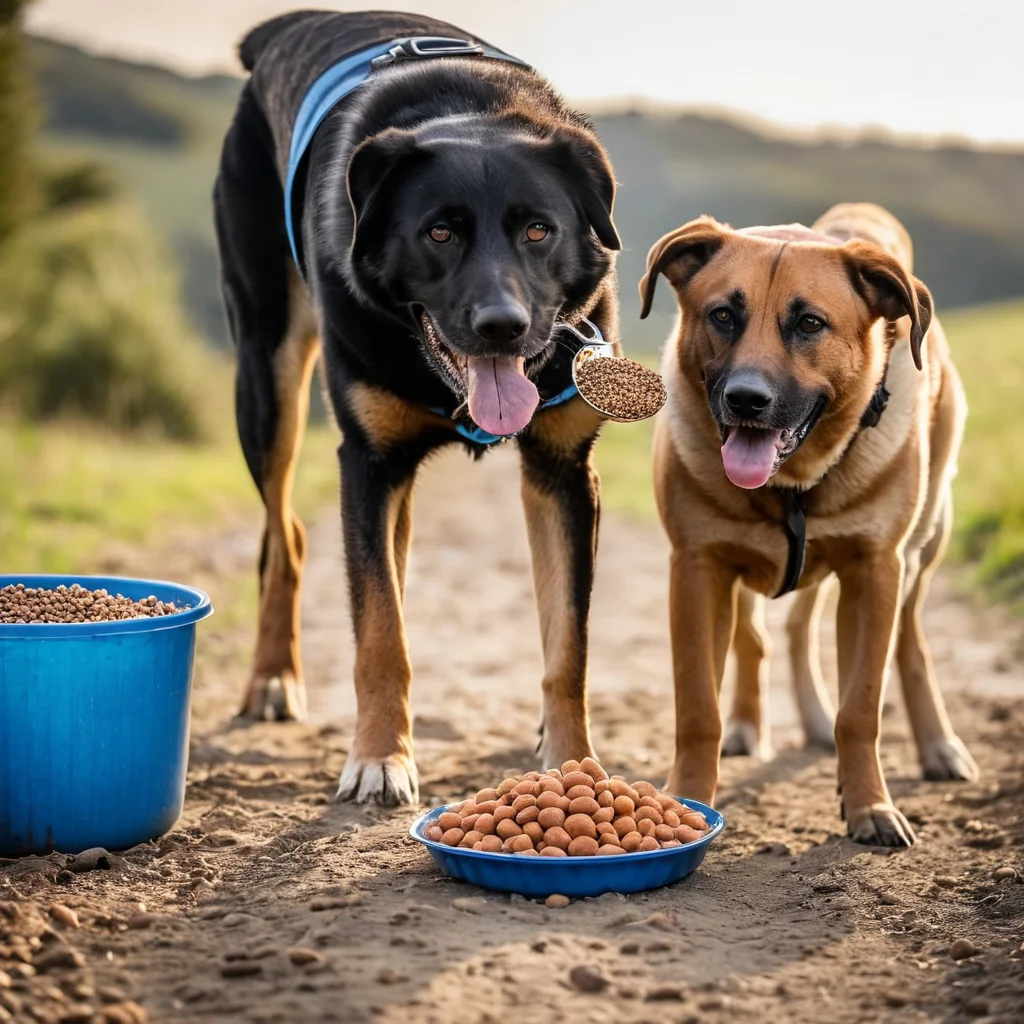

Sporting and active dogs (sled pulling, hunting, agility, running sports, police and military dogs) do 2-4 hours of intense physical activity a day. Their calorie needs are 2-4 times those of a typical adult dog, and their protein and fat profiles are special. Performance and working dog formulas are made for this job. In this article, we look at the details of feeding an active dog, plus water management and the warm-up protocol.
1. What Counts as an Active Dog
- 2-4 hours of moderate to intense activity a day.
- Pulling sports (sled, canicross).
- Hunting dogs (Pointer, Setter, Retriever).
- Agility and obedience sports.
- Disc dog, flyball, dock diving.
- Police and military working dogs.
- Herding and livestock dogs (Kangal Shepherd Dog, Akbash, Border Collie at work).
2. Calorie Needs
| Activity Level | Calorie Multiplier |
|---|---|
| Sedentary (apartment) | RER × 1.2-1.4 |
| Lightly active (walks) | RER × 1.4-1.6 |
| Moderately active (daily sports) | RER × 1.6-2.0 |
| Highly active | RER × 2.0-3.0 |
| Extremely active (racing) | RER × 3.0-5.0 |
RER (Resting Energy Requirement) = 70 × (kg)^0.75
3. Protein Needs
- Typical adult: 22-26% protein.
- Moderately active: 26-30%.
- Highly active: 30-35%.
- Very highly active: 35-40% (for long-distance sled dogs).
- High-quality animal protein.
- Eggs and salmon as extras (BV 100%, the highest biological value).
4. Fat Needs (Energy Dense)
- Fat is a dog's preferred energy source (unlike humans, who rely on carbohydrates).
- Typical adult: 12-15% fat.
- Highly active: 20-30% fat.
- Sled dogs (long distance): can be 50%+ fat.
- EPA and DHA (omega-3) reduce inflammation and support recovery.
5. The Role of Carbohydrates
- Not essential for dogs, but useful for short anaerobic activity.
- Sprint sports (agility, flyball): moderate carbs.
- Long distance (sled, canicross): low carbs and high fat.
- Rice, oats and sweet potatoes are good sources.
6. Performance Food Brands
- Royal Canin Energy 4800: Pulling and high activity, calorie dense.
- Eukanuba Premium Performance: Sporting dogs.
- Purina Pro Plan Sport / Performance: High protein and fat.
- Acana Heritage Sport & Agility: Natural, for highly active dogs.
- Orijen Tundra / Six Fish: Super-premium for active dogs.
- Price: 400-800 Turkish lira/kg.
7. Meal Timing
- BEFORE activity: A large meal 4-6 hours before. A light snack shortly before is OK.
- DURING activity: Water is a must. For long distances, electrolyte and glucose support (mini treats).
- AFTER activity: Eat after a 1-2 hour cool-down (so the digestive system can return to normal).
- Fast eating and heavy activity is FORBIDDEN: risk of bloat (GDV).
8. Water Management
- An active dog needs 80-120 ml/kg of water a day (sedentary: 50-70).
- This doubles in high heat.
- Small sips every 15-20 minutes during activity.
- Drinking too much at once is FORBIDDEN (risk of vomiting and bloat).
- Electrolytes (sodium and potassium) after long distances.
- Dog-specific fluids (Hydra-Lyte, Rebound) when needed.
9. Warm-Up and Cool-Down Protocol
- Warm-up (10-15 min): Slow walking, light jogging, dynamic stretching.
- Main activity: Intense.
- Cool-down (15-20 min): Slow walking, water, letting body temperature drop.
- No jumping without a warm-up: risk of joint injury.
- Extra care in hot weather.
10. Recovery and Supplements
- Omega-3 (EPA+DHA): reduces inflammation and protects joints.
- Glucosamine and chondroitin: joints.
- L-carnitine: fat burning and heart.
- Vitamins E and C: oxidative stress.
- Probiotics: gut (intense activity is stressful).
- Annual blood work and orthopedic screening.
Feeding sporting and active dogs comes down to a formula of high protein, high fat and energy-dense food. Performance and working formulas are made for this job. Combining water management, warm-up and cool-down, and recovery supplements extends both career and health. In the DoldurKabı app, you can find vet clinics experienced with sporting dogs on a map.









