


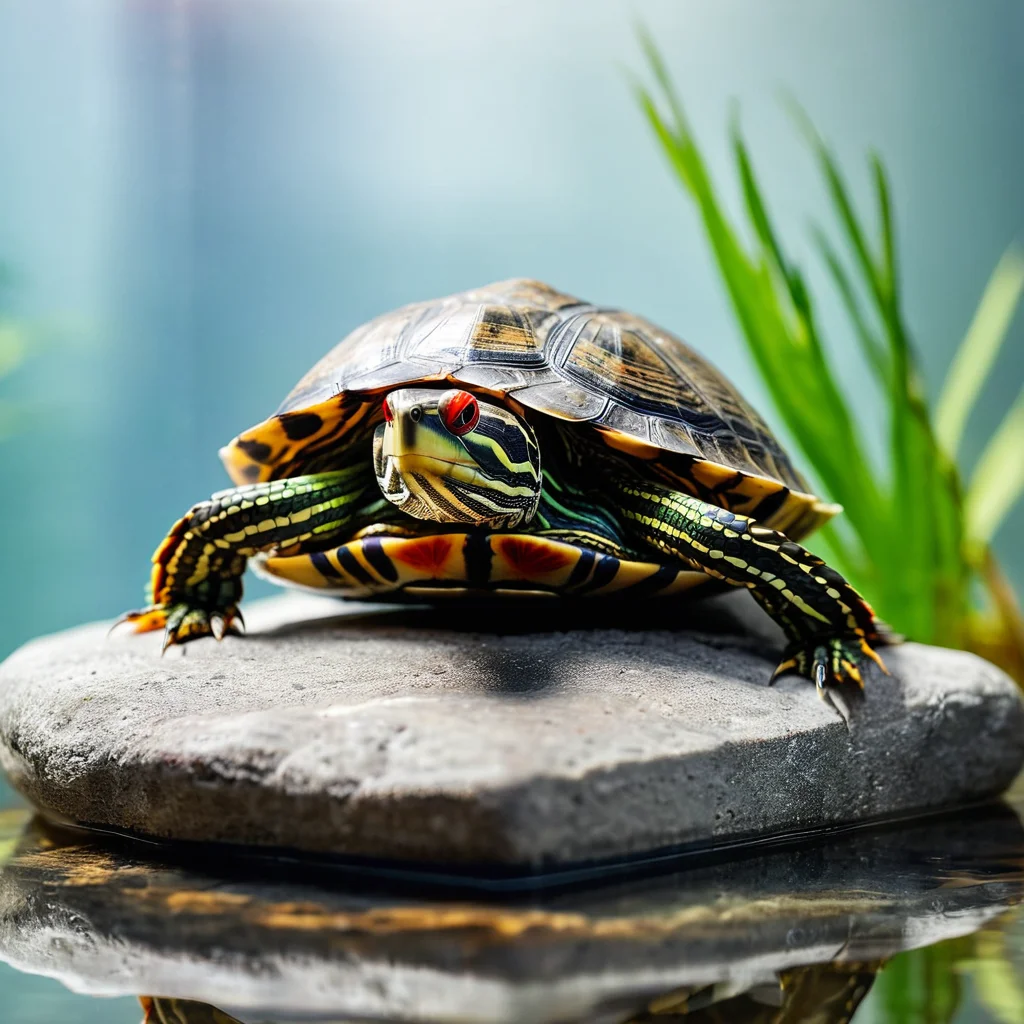

Owning a turtle is a long commitment: some species live 40-80+ years. But "turtles are easy to care for" is a myth. Caring for an aquatic turtle and a tortoise is completely different, and keeping the wrong species in the wrong environment leads to metabolic bone disease, respiratory problems and early death. This article covers the differences between the two main groups, plus the right setup and diet.
Important: In Türkiye, some native turtle species (Testudo graeca, known locally as Tosbağa) are protected, and keeping them is prohibited. Buy from a pet shop or a certified breeder; collecting from the wild is illegal and unethical.
1. Aquatic Turtle vs Tortoise
| Feature | Aquatic Turtle | Tortoise |
|---|---|---|
| Habitat | Water plus a basking platform | Land, dry |
| Diet | Omnivore (meat and plants) | Mostly herbivore |
| Lifespan | 20-40 years | 40-80+ years |
| Typical size | 15-30 cm | 15-50+ cm |
| Temperature | Water 24-28°C, basking 32°C | Day 25-30°C, night 20°C |
| Care costs | Heavy on filter, UV and heater | UV, heat and a varied diet |
2. Common Species in Türkiye
Aquatic Turtles
- Red-Eared Slider (Trachemys scripta elegans): The red-eared turtle. Common in pet shops. Grows up to 30 cm. An invasive species in Türkiye's wild: releasing it into nature is prohibited and unethical.
- Yellow-Bellied Slider: Yellow belly, similar care.
- Türkiye's native aquatic turtle (Emys orbicularis): Protected; keeping it is prohibited.
Tortoises
- Testudo graeca (Tosbağa): Native to Türkiye and protected. Prohibited as a pet.
- Hermann's Tortoise (Testudo hermanni): European in origin, available in some pet shops. It must have CITES documentation.
- Russian Tortoise (Agrionemys horsfieldii): A common pet species. Adapted to a continental climate.
- Sulcata Tortoise (Centrochelys sulcata): Grows very large (60-80 cm), so it is not suitable for a home with limited space.
3. Aquatic Turtle Setup
Tank (Aquarium)
- Minimum: 200 liters for an adult (40 L per 10 cm of shell length). Even a young turtle needs 100+ L.
- Water depth: 2-3 times the shell length.
- Basking platform: A drying area above the water, under a heat lamp.
- Filter: Rated for 3-4 times the tank volume, because turtles produce a lot of waste.
Lighting
- UVB lamp: Essential for vitamin D synthesis. 10.0 UVB.
- Basking heat lamp: 32-35°C above the platform.
- 10-12 hours of light a day.
Water Temperature
- Adult: 24-26°C.
- Young: 26-28°C.
- Aquarium heater plus thermometer.
Diet
Omnivore, and the diet changes with age:
- Young: 70% protein (fish, pellets) plus 30% plants.
- Adult: 30% protein plus 70% plants (aquatic plants, lettuce, zucchini).
- High-quality pellet food makes up 40-50%, fresh food the rest.
- 1-2 fasting days a week.
- Calcium plus D3 supplement (if UVB is insufficient).
4. Tortoise Setup
Habitat
- Indoors: At least 1-1.5 m² of space plus vertical walls (to prevent escapes).
- Outdoors (summer): A sunny, enclosed yard, depending on your setup.
- Substrate: A mix of soil, hay and dried leaves. Aspen shavings are acceptable.
- Hiding spot: A cardboard box or a wooden hide.
- Shallow water dish: For bathing and drinking. Water depth about half the shell height.
Lighting and Heat
- A UVB lamp is essential (10.0).
- Basking spot: 32-35°C.
- Ambient: 25-28°C during the day, 20-22°C at night.
- Natural sunlight is very valuable, so take your tortoise outside (in summer).
Diet
Mostly herbivore:
- 80% greens: lettuce (the leaves, not the heart), beet greens, mâche, cilantro, mint.
- 15% vegetables: zucchini, cucumber, peppers.
- 5% fruit (1-2 times a week): apple without seeds, strawberries.
- Calcium supplement (a small amount sprinkled on food).
- Tortoise pellet food as a supplement.
FORBIDDEN: Milk, meat (for tortoises), bread, chocolate, onion, garlic, rhubarb.
5. Health and Common Problems
- Metabolic bone disease (MBD): Lack of UVB and calcium. Soft shell and leg deformities. PREVENTION: proper lighting and supplements.
- Respiratory infection: Nasal discharge, mouth breathing, caused by low temperatures and unbalanced humidity. Emergency vet.
- Soft spot on the shell: A sign of a health problem.
- Loss of appetite and lethargy: Check temperature and UVB.
- Parasites: Yearly fecal test.
See an exotic animal vet; a regular cat and dog vet may not be enough.
6. Hibernation
Some tortoise species (Testudo) hibernate naturally. Under the right conditions, they rest for 3-5 months at 5-10°C. Improper hibernation can mean death. It should be done under veterinary supervision; skipping hibernation in the first year is the safe choice.
Aquatic turtles mostly do not hibernate and need to stay warm.
7. Kids and Turtles
- Salmonella risk: turtles are natural carriers. Kids must wash their hands after touching one.
- Children under 5 should have limited contact with turtles.
- A turtle is not an "easy pet"; think about whether it is the right choice for a child.
8. Frequently Asked Questions
Can a turtle be released into the wild?
No. There is the risk of an invasive species, damage to the local ecosystem and the risk of the turtle dying (it cannot adapt). Adoption platforms and shelters are the better choice.
How often should an aquatic turtle tank be cleaned?
Change 25% of the water every week. Deep-clean the whole tank every 2-3 months. Rinse the filter sponge gently in aquarium water (the CHLORINE in tap water kills the bacteria).
How long does a UVB lamp last?
Even if it still looks like it works, UVB output drops within 6-12 months, so it must be replaced once a year. It can be measured with a UVB meter.
My turtle isn't eating. Is it sick?
The temperature may be too low, or it may be a seasonal slowdown (in fall for some tortoise species). If it does not improve once you check these, see a vet.
Do turtles bite?
Some aquatic species (especially the snapping turtle) bite hard. A red-eared slider's bite is manageable, but an adult can injure a finger. A tortoise's bite is weak.
My turtle died. Can I get a new one in the future?
Clean the tank and equipment and check for parasites. The cause of the previous turtle's death should be investigated (a necropsy) so the same thing does not happen to the new turtle.
How old should the turtle I get be?
Adults (2+ years) are hardier. Young turtles are more delicate and need more intensive care. The reliability of the source matters: CITES documentation and a registered breeder.
Final Word
Owning a turtle is a 40-80 year commitment. The right setup, UVB, diet and follow-up with an exotic vet add up to a long, healthy life. Wrong information and a cheap pet shop setup lead to an early death. An informed owner means a happy turtle.
For turtle records and UVB replacement reminders, use DoldurKabı Pet Health Tracking.
This guide is for information only; work with an exotic animal vet.









