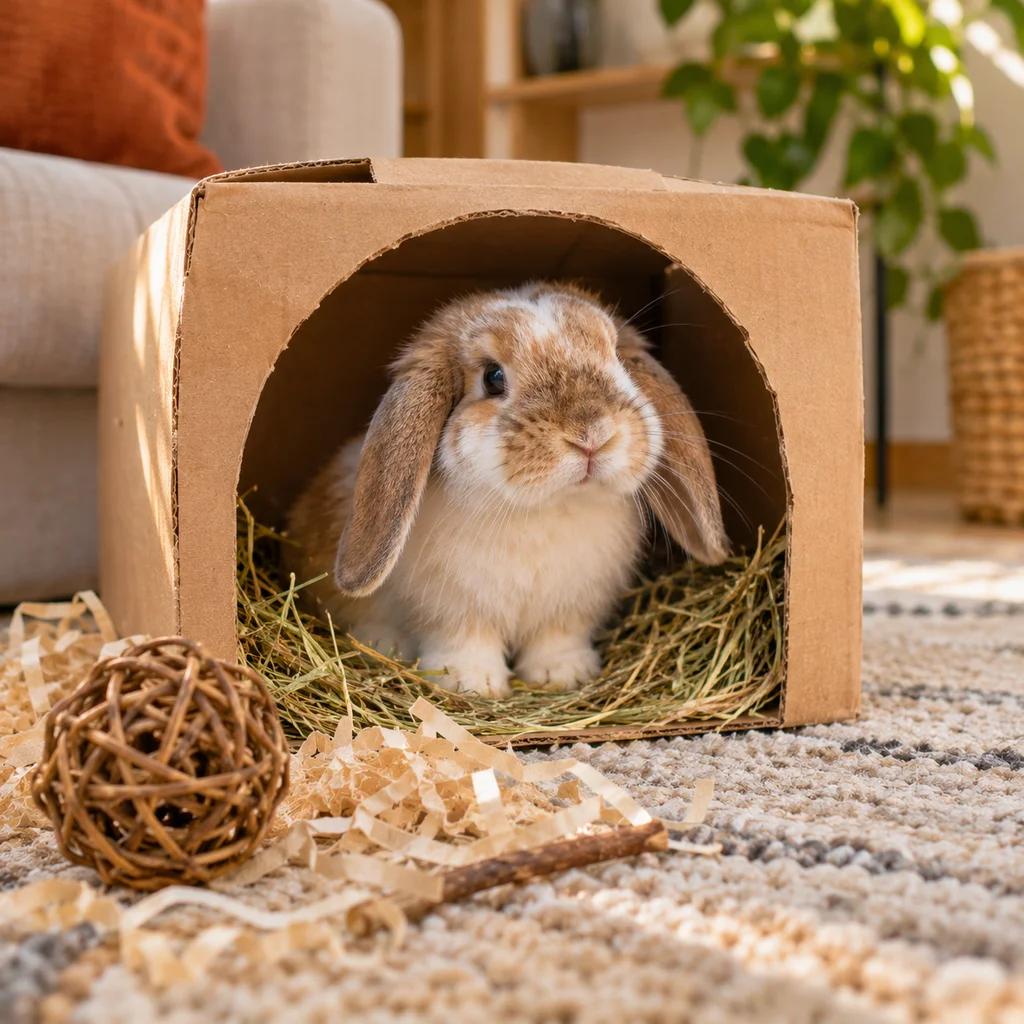

When people think of rabbits, most picture an animal quietly eating hay in its cage. In fact, rabbits are curious, active animals that get quite playful at certain times of day. Their energy peaks early in the morning and late in the afternoon, and they want to explore, dig somewhere and chew on something.
When these needs aren't met, a rabbit either gets bored and listless or turns its energy toward cables, carpet edges and furniture legs. The good news is that you don't need expensive toys for enrichment. Cardboard boxes around the house, hay and a little creativity do most of the work.
Get to know your rabbit's natural behaviors
Before moving on to play ideas, understanding what a rabbit needs makes things easier. In the wild, rabbits spend most of their day on these four activities:
- Digging: They dig into the ground to make burrows and hide.
- Chewing: Because their teeth grow throughout their lives, they need to chew on something constantly.
- Hiding: Since they are prey animals, they look for an enclosed space where they feel safe.
- Foraging: They find their food by gathering it among plants, not from a single bowl.
The goal of enrichment at home is to give these behaviors a safe outlet. When a rabbit can meet these needs, it also turns to unwanted places less often.
Digging box
The urge to dig usually shows up on carpets and sofa corners. Setting up a place where digging is allowed makes things easier.
- Get a medium-sized cardboard box and open the top, or cut a hole in one side that your rabbit can get through.
- Fill it with shredded, ink-free paper or hay.
- Hide a few leaves of fresh greens or a handful of your rabbit's favorite hay in between.
- Place the box near the corner where your rabbit often digs.
Some owners also put an old towel or cotton fabric in the box. If you use fabric, choose a sturdy piece that doesn't shed threads or fibers, and watch whether your rabbit eats it. If it starts chewing and swallowing it, take it out.
Safe options for chewing
Chewing is essential for a rabbit's dental health. But not every piece of wood or cardboard is suitable.
Suitable options
- Plenty of hay. Hay actually covers most of the need to chew.
- Unpainted, unprinted cardboard boxes and toilet paper rolls
- Branches from fruit trees you're sure haven't been sprayed, such as apple or willow, washed well and dried
- Untreated natural wood toys made for rabbits
Things to keep away
- Varnished, painted or glued wood
- Plastic and rubber toys, which are dangerous if swallowed
- Tape, staples and glossy printed packaging
- Branches from trees and ornamental plants you don't know
If you're not sure whether a branch or plant is safe, it's better not to give it. If you notice your rabbit has eaten something questionable, or if it suddenly stops eating, talk to a vet who treats exotic animals without losing time.
Hiding spots
Your rabbit should always have a place to escape to and hide. This spot is its safe zone, and it shouldn't be disturbed there.
- A hideout with two entrances keeps your rabbit from feeling trapped. You can make one yourself by cutting holes in two sides of a cardboard box.
- Tunnels made of cardboard or wicker serve as both hiding and running space.
- The space under a low coffee table with a cover over it is another favorite spot. Make sure it's clear of cables.
When your rabbit hides, don't try to pull it out. Disturbing the place where it feels safe makes it more timid. Wait for it to come out on its own.
Foraging games
Instead of putting your rabbit's daily greens in a bowl, making it search a little works its mind. You don't need complicated setups for this.
- Stuff a toilet paper roll with hay and tuck a few leaves of greens inside.
- Scatter greens in different corners of the room, in low spots.
- Crumple ink-free paper and put a few pellets inside.
- Split the hay into different spots instead of piling it in one place.
These games don't replace daily food; they serve it in a different way. If you use fruit as a treat, give very small pieces; hay should make up the foundation of a rabbit's diet. If you're curious about feeding routines, you can find care information by breed on the rabbits encyclopedia page.
Room to run and jump
Rabbits need to run and jump for a few hours a day outside the cage, in a safe area. To see that move where a happy rabbit leaps into the air and twists its body, you need to give it room.
- Clear the area of cables, small objects and plants that could be toxic.
- Lay a rug or kilim over slippery floors; a rabbit that slips gets scared and can get hurt.
- Block off narrow gaps, the space under the sofa and behind the fridge.
- Keep other pets separate during this time.
Inside the cage or living area
The cage or pen where your rabbit spends part of the day is also part of enrichment. A rabbit that spends hours in an empty space gets bored quickly. You can make the inside more interesting with a few simple items.
- Put the hay rack or hay box next to the litter area; rabbits like to eat hay while they use the litter box.
- Place a small hideout in one corner of the area and a rug on the floor in another.
- Always keep a branch or cardboard roll inside for chewing.
- Secure the water bowl and food bowl so they can't tip over.
The bigger the area, the more freely your rabbit moves. A small cage should only be a place for sleeping and resting; the whole day shouldn't be spent there.
What is your rabbit telling you during play?
Rabbits are quiet animals, but their body language says a lot. Recognizing these signs during play helps you understand what it enjoys.
- Leaping into the air and twisting its body: A sign of happiness and energy.
- Flopping over onto its side: It feels safe.
- Nudging with its nose: It wants attention or wants you to get out of the way.
- Thumping its hind foot on the ground: Something bothered or scared it. Check whether there's a sudden noise or movement nearby.
Playing with you
Rabbits often don't like being picked up. The way to bond with them is to sit on the floor and get down to their level. Sit quietly on the floor and let your rabbit come and sniff you. Have a leaf of greens in your hand. Over time it starts coming to you, nudging you with its nose and circling around you.
Changing toys once a week also keeps its interest alive. If the same cardboard box seems boring after a week, replace it with a new tunnel or a box cut in a different shape. When you bring the old one back after a while, it gets attention as if it were new.
In senior rabbits, the pace of play slows down, but the need doesn't go away. Instead of high jumps, tunnels close to the ground, low boxes and foraging games suit them better. If you notice stiffness in its joints, avoid slippery floors and talk to your vet.
Frequently Asked Questions
My rabbit isn't interested in games. What should I do?
Getting used to a new item can take a few days. Put the toy where your rabbit often spends time and hide a handful of greens inside. If the lack of interest comes with listlessness and loss of appetite, talk to a vet.
Are cardboard boxes safe for rabbits?
Unprinted, tape-free and unpainted cardboard is generally safe. It's normal for a rabbit to chew and tear up cardboard, but if it's eating large amounts, take the box away.
How long should a rabbit spend outside the cage each day?
A rabbit needs to move freely in a safe area for a few hours every day. This time varies with its age, the size of its living space and how your home is set up.