


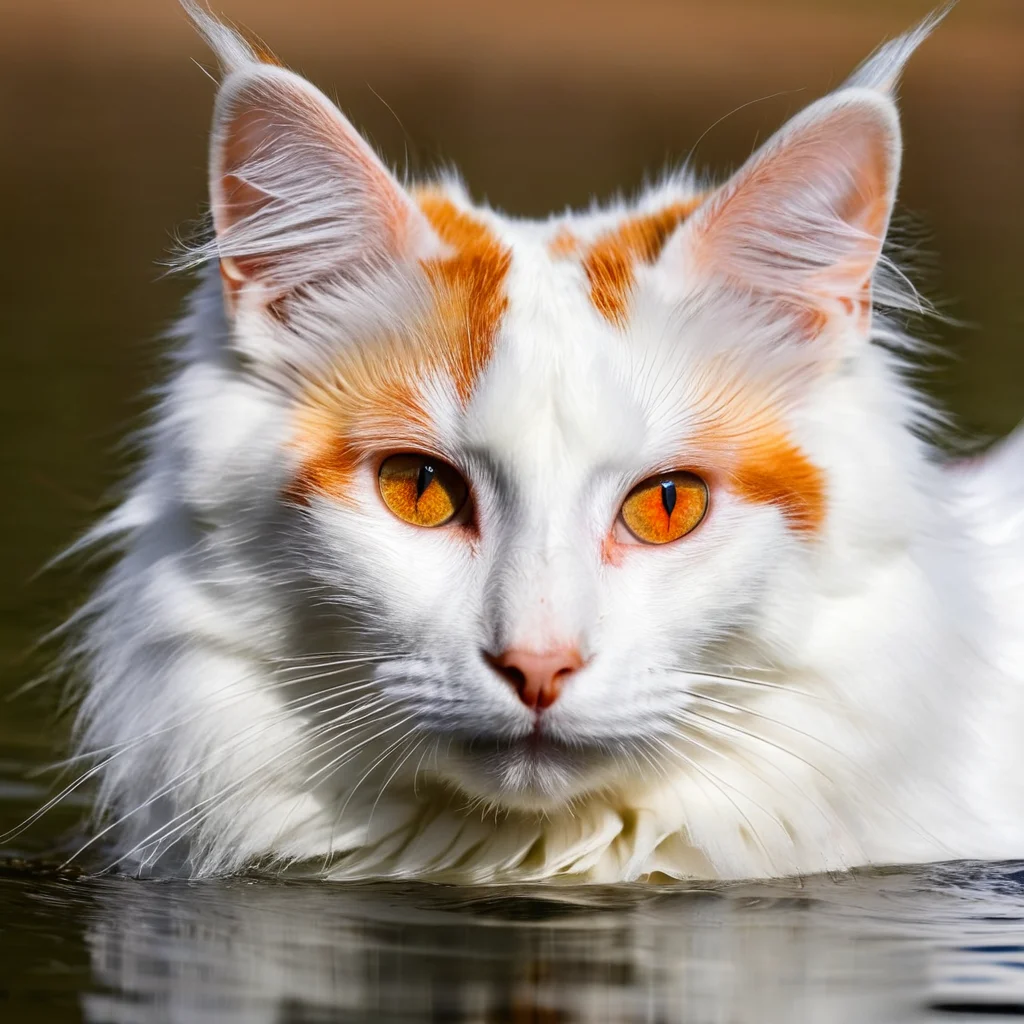

The Turkish Van cat is Türkiye's native national treasure, a breed endemic to the area around Lake Van. With its white body + red/black head + tail + eyes of different colors (heterochromia) + love of swimming, it is a breed unlike any other in the world. It is known by the nickname "the swimming cat", and its friendship with water is one of a kind. In this post, we look at the Turkish Van's personality + care + conservation efforts + adoption details.
1. Turkish Van Personality
- Independent + smart: Not a "lap cat".
- High energy: Active + athletic.
- Loves water: Swimming + diving is its trait known around the world.
- Social but selective: Prefers one or two people.
- Expert climber + jumper: Rules vertical spaces.
- Talkative: A vocal cat.
- Shy with strangers: Socialization is a must.
2. Physical Traits
- Weight: Males 5-9 kg, females 3.5-6 kg.
- Coat: Medium-long, water-resistant, "single coat" with very little undercoat.
- Pattern: White body + colored head + tail (van pattern).
- Color: Red (auburn), cream, black, blue, tortoiseshell.
- Eyes: Blue, amber, heterochromia (each eye a different color), the Turkish Van's iconic trait.
- Lifespan: 13-17 years.
3. Love of Swimming (A Unique Trait)
Because of the Turkish Van's water-resistant coat + its evolution around Lake Van:
- Many Turkish Vans enjoy baths.
- Skilled at swimming + diving.
- Be ready to share the sink + tub with your cat.
- A pet pool (kiddie pool) in the yard.
- After a swim, dry the coat with a bath towel.
4. Coat Care
- Brushing 1-2 times a week is enough, since a single coat doesn't mat.
- Brush more often when the seasons change.
- Baths aren't hard because Turkish Vans enjoy them; every 1-2 months.
- White fur stains, so clean it regularly.
5. Exercise + Activity
High energy, so 45-60 minutes of active play a day:
- A tall scratching post + cat tree (180+ cm).
- Cat shelves for the jumping instinct.
- Interactive toys.
- A bird-watching spot (a screened window).
- Fun in the water during the summer months.
- Even walks on a leash + harness are possible.
6. Breed-Specific Health
- HCM (heart).
- Deafness: In some blue-eyed white Turkish Vans.
- Urinary tract (FLUTD).
- Dental tartar.
- Food allergies.
- General health is good; as a natural breed, its gene pool is robust.
7. Nutrition
- Kittens: kitten food for 12 months.
- Adults: 70-110 g/day of high-protein dry + wet food.
- High activity, so portions on the larger side of medium.
- Plenty of water.
8. Conservation Efforts (Important)
The Turkish Van cat is an endangered native breed:
- Van Yüzüncü Yıl University has the "Van Cat Research and Application Center".
- Breeding programs to protect the gene pool.
- The purebred white Turkish Van with a red/black tail is declining.
- Get one from an ethical breeder or the Van Cat House to help protect the pure breed.
- Taking them out of Türkiye is strictly regulated.
9. Think It Over Before Adopting
- Monthly costs: 1,500-2,700 Turkish lira.
- Ethical source: The Van Cat House (Van YYÜ) or an ethical breeder.
- Managing high energy: An active family + lots of play.
- A chance to swim (optional, but the cat loves it).
- Shy with strangers, so socialize from kittenhood.
- A 13-17 year responsibility.
10. Lifespan and Cost
- Lifespan: 13-17 years.
- Total lifetime cost: 250,000-450,000 Turkish lira.
The Turkish Van cat is Türkiye's unique native treasure, an extraordinary cat that is athletic + clever + loves water. An ethical source + managing high energy + awareness of national conservation are key. Help protect the pure breed. In the DoldurKabı app, you can find Turkish Van adoption listings + vet clinics on a map.









